Peterson Leah M, Weckerly Floyd W
Department of Biology, Texas State University, San Marcos, TX, United States of America.
PLoS One. 2017 Nov 9;12(11):e0187829. doi: 10.1371/journal.pone.0187829. eCollection 2017.
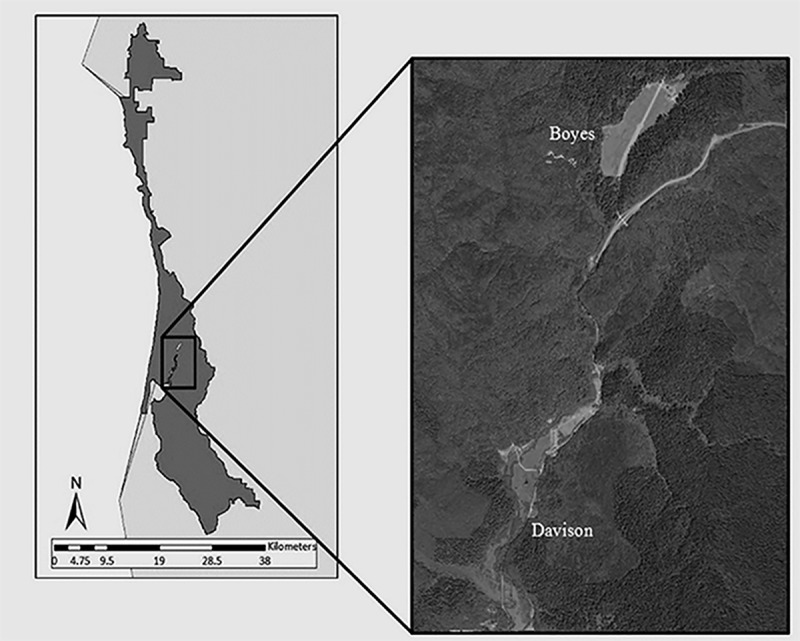
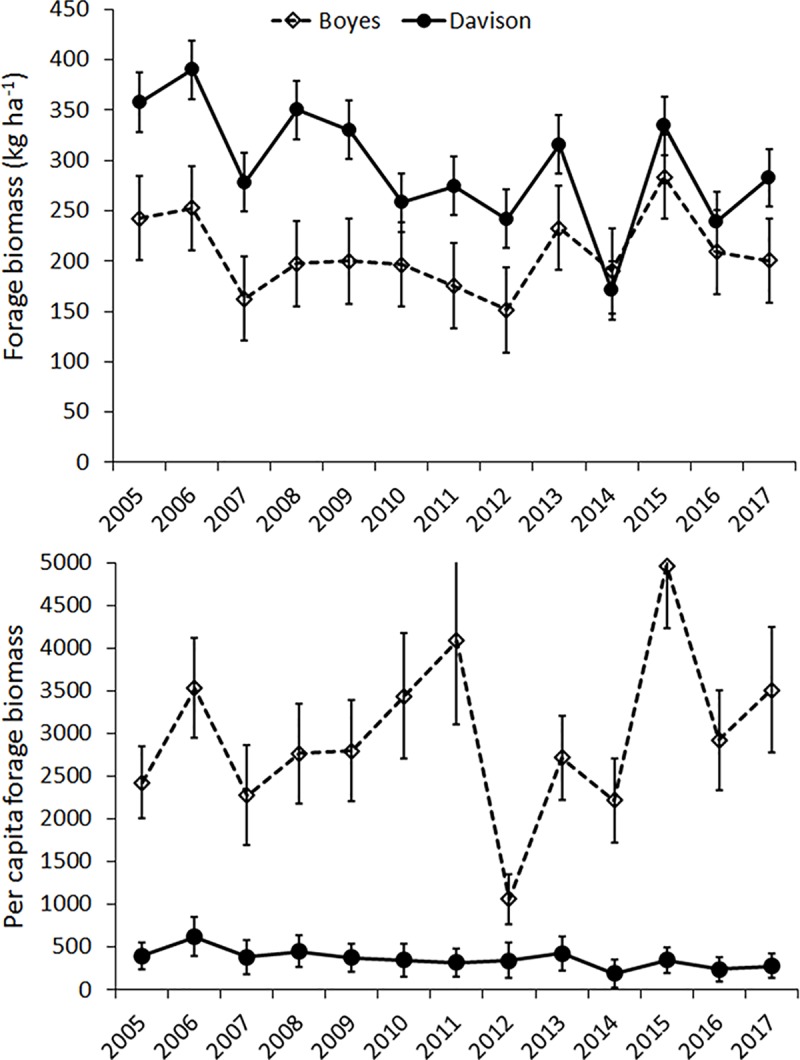
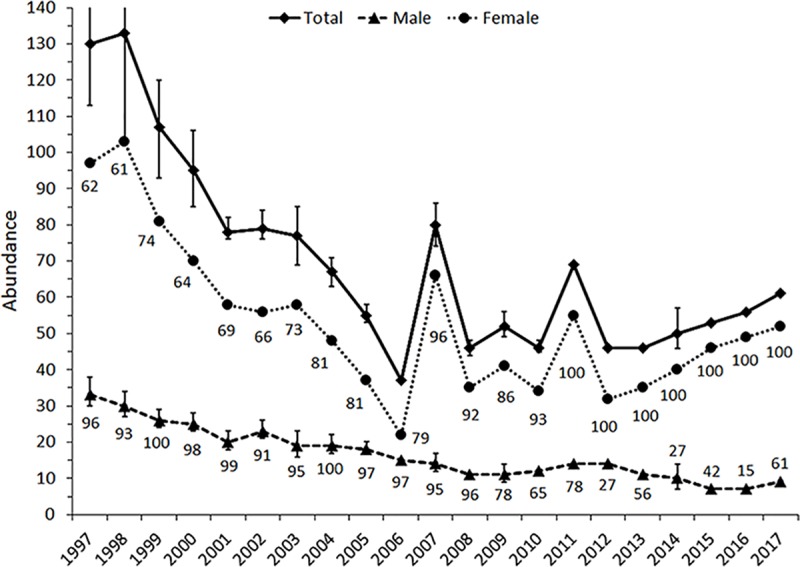
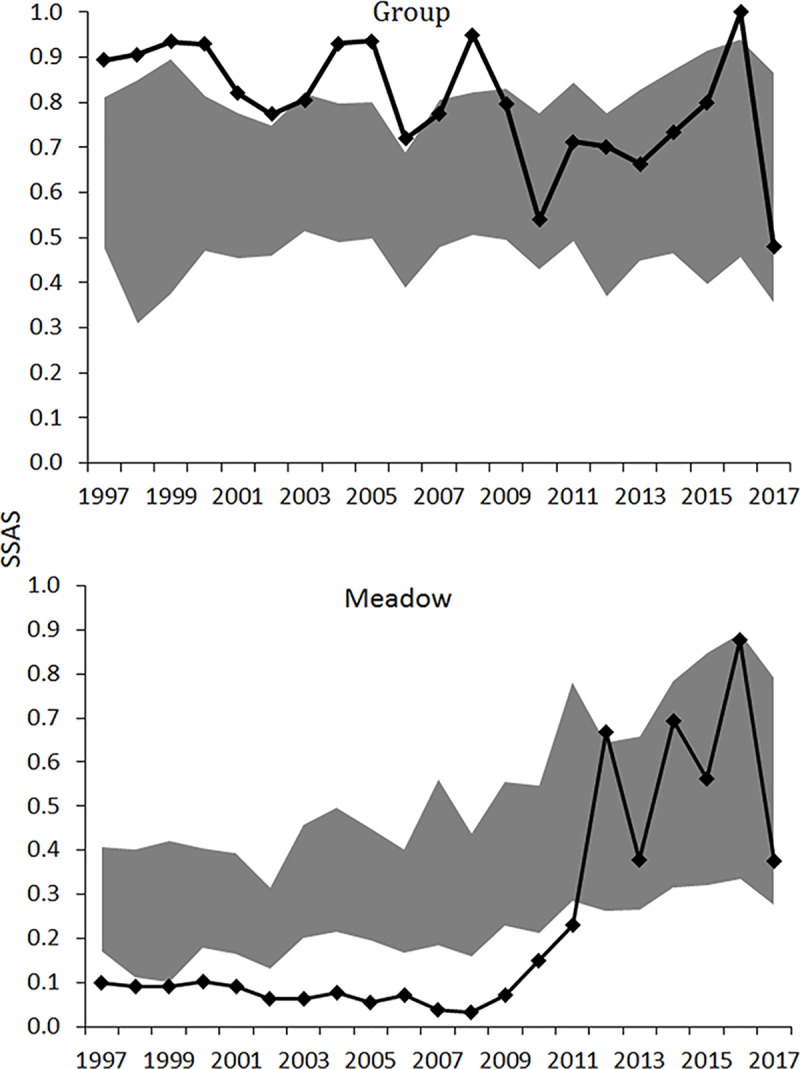
Sexual segregation, or the differential use of space by males and females, is hypothesized to be a function of body size dimorphism. Sexual segregation can also manifest at small (social segregation) and large (habitat segregation) spatial scales for a variety of reasons. Furthermore, the connection between small- and large-scale sexual segregation has rarely been addressed. We studied a population of Roosevelt elk (Cervus elaphus roosevelti) across 21 years in north coastal California, USA, to assess small- and large-scale sexual segregation in winter. We hypothesized that male group size would associate with small-scale segregation and that a change in female distribution would associate with large-scale segregation. Variation in forage biomass might also be coupled to small and large-scale sexual segregation. Our findings were consistent with male group size associating with small-scale segregation and a change in female distribution associating with large-scale segregation. Females appeared to avoid large groups comprised of socially dominant males. Males appeared to occupy a habitat vacated by females because of a wider forage niche, greater tolerance to lethal risks, and, perhaps, to reduce encounters with other elk. Sexual segregation at both spatial scales was a poor predictor of forage biomass. Size dimorphism was coupled to change in sexual segregation at small and large spatial scales. Small scale segregation can seemingly manifest when all forage habitat is occupied by females and large scale segregation might happen when some forage habitat is not occupied by females.
性隔离,即雄性和雌性对空间的不同利用方式,被认为是体型二态性的一种表现。由于多种原因,性隔离也可能在小空间尺度(社会隔离)和大空间尺度(栖息地隔离)上表现出来。此外,小尺度和大尺度性隔离之间的联系很少被探讨。我们在美国加利福尼亚州北部沿海地区对罗斯福马鹿(Cervus elaphus roosevelti)种群进行了为期21年的研究,以评估冬季的小尺度和大尺度性隔离。我们假设雄性群体大小与小尺度隔离有关,而雌性分布的变化与大尺度隔离有关。饲料生物量的变化也可能与小尺度和大尺度性隔离相关。我们的研究结果与雄性群体大小与小尺度隔离有关、雌性分布变化与大尺度隔离有关的假设一致。雌性似乎会避开由社会地位占主导的雄性组成的大群体。雄性似乎占据了雌性 vacated 的栖息地,原因是其觅食生态位更宽、对致命风险的耐受性更强,或许还为了减少与其他马鹿的接触。两个空间尺度上的性隔离都不能很好地预测饲料生物量。体型二态性与小尺度和大尺度空间上性隔离的变化相关。当所有觅食栖息地都被雌性占据时,小尺度隔离似乎就会出现;而当一些觅食栖息地未被雌性占据时,大尺度隔离可能就会发生。 (注:原文中 vacated 可能有误,推测可能是 vacated ,暂按此翻译,若有正确信息可进一步修正)