Paterson John Terrill, Proffitt Kelly M, DeCesare Nicholas J, Gude Justin A, Hebblewhite Mark
Department of Ecology Montana State University Bozeman Montana USA.
Montana Fish Wildlife and Parks Bozeman Montana USA.
Ecol Evol. 2022 Aug 11;12(8):e9201. doi: 10.1002/ece3.9201. eCollection 2022 Aug.
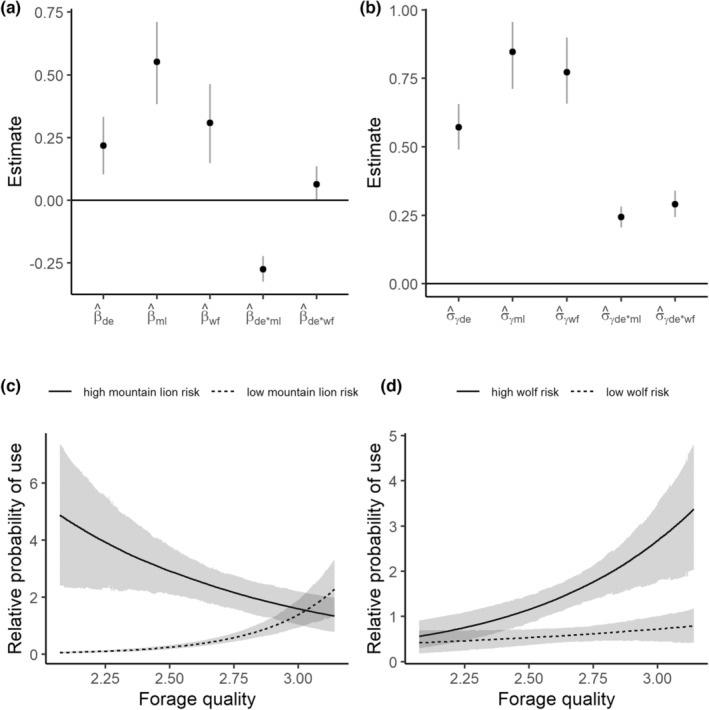
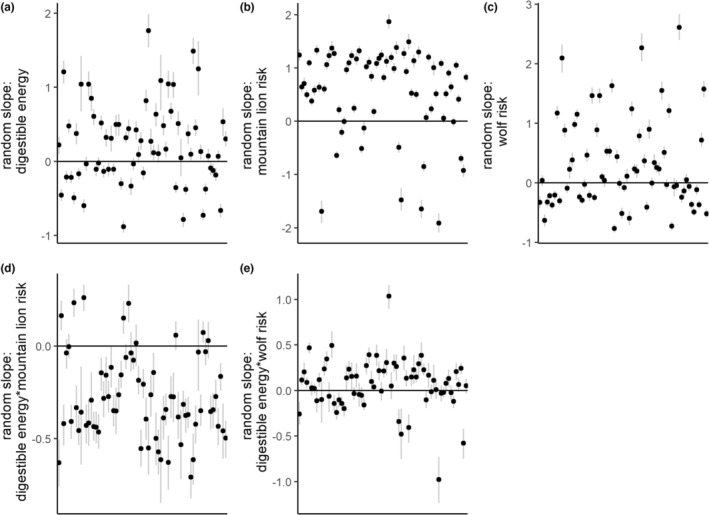
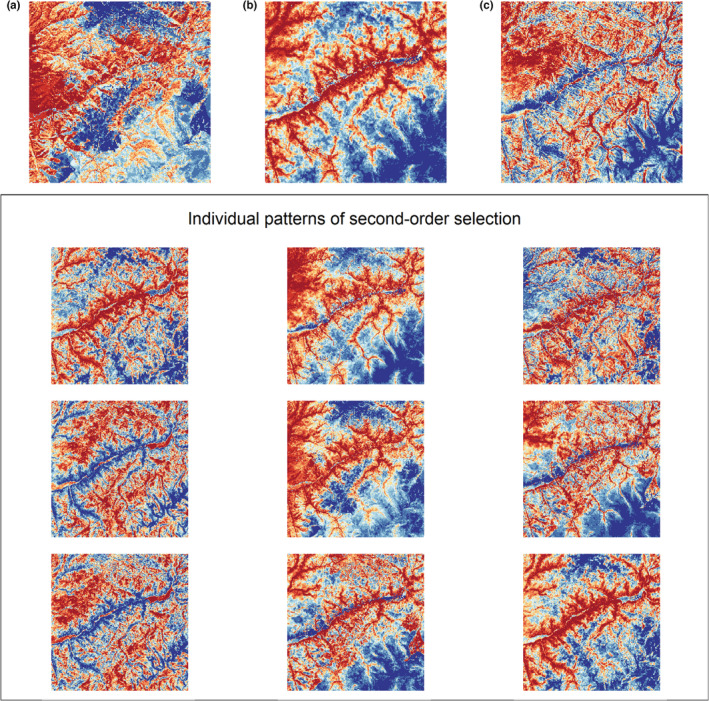
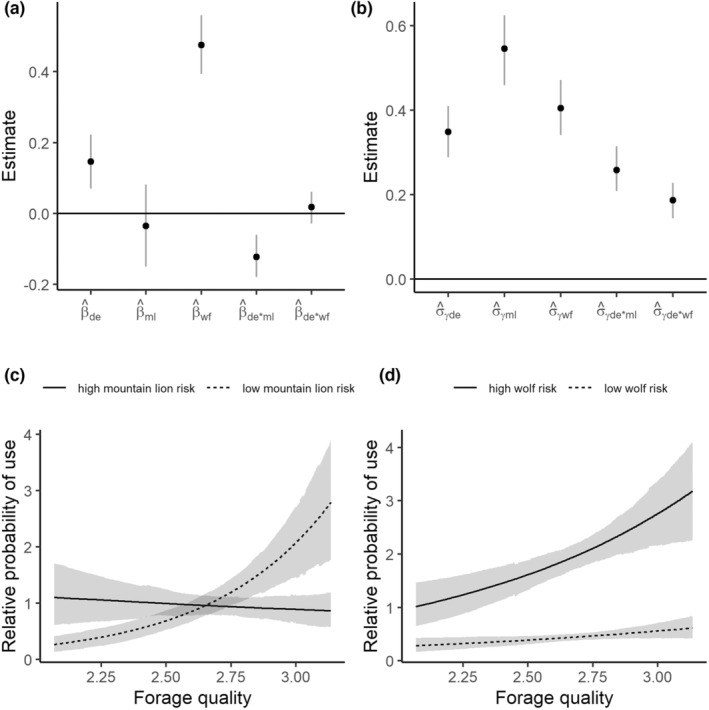
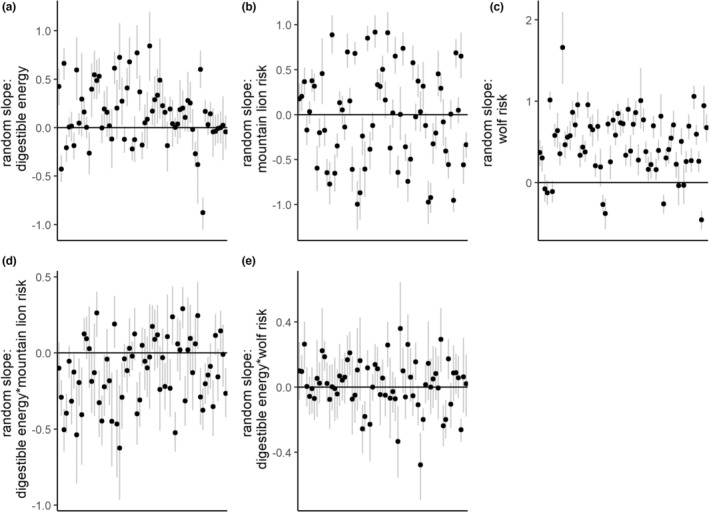
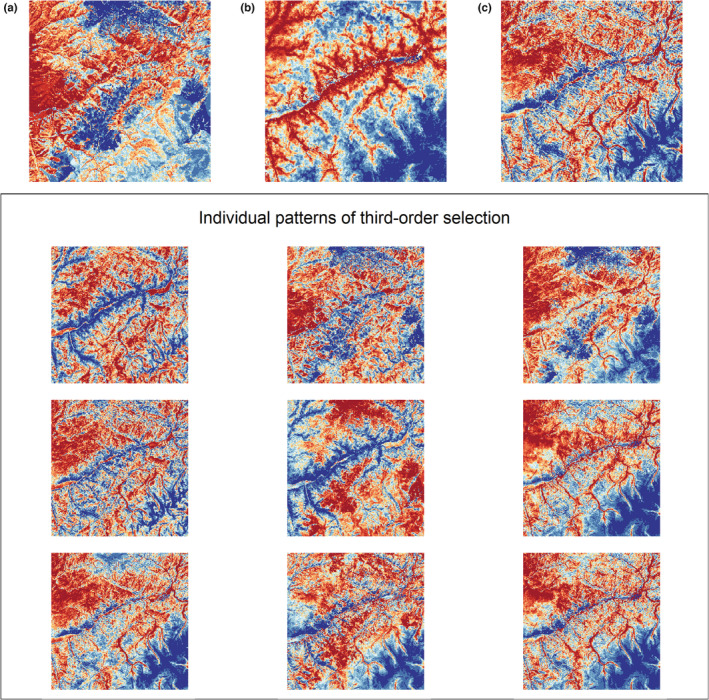
The recovery of carnivore populations in North American has consequences for trophic interactions and population dynamics of prey. In addition to direct effects on prey populations through killing, predators can influence prey behavior by imposing the risk of predation. The mechanisms through which patterns of space use by predators are linked to behavioral response by prey and nonconsumptive effects on prey population dynamics are poorly understood. Our goal was to characterize population- and individual-level patterns of resource selection by elk () in response to risk of wolves () and mountain lions () and evaluate potential nonconsumptive effects of these behavioral patterns. We tested the hypothesis that individual elk risk-avoidance behavior during summer would result in exposure to lower-quality forage and reduced body fat and pregnancy rates. First, we evaluated individuals' second-order and third-order resource selection with a used-available sampling design. At the population level, we found evidence for a positive relationship between second- and third-order selection and forage, and an interaction between forage quality and mountain lion risk such that the relative probability of use at low mountain lion risk increased with forage quality but decreased at high risk at both orders of selection. We found no evidence of a population-level trade-off between forage quality and wolf risk. However, we found substantial among-individual heterogeneity in resource selection patterns such that population-level patterns were potentially misleading. We found no evidence that the diversity of individual resource selection patterns varied predictably with available resources, or that patterns of individual risk-related resource selection translated into biologically meaningful changes in body fat or pregnancy rates. Our work highlights the importance of evaluating individual responses to predation risk and predator hunting technique when assessing responses to predators and suggests nonconsumptive effects are not operating at a population scale in this system.
北美食肉动物种群的恢复对营养级相互作用和猎物的种群动态产生了影响。除了通过捕杀对猎物种群产生直接影响外,捕食者还可以通过施加被捕食风险来影响猎物的行为。捕食者的空间利用模式与猎物行为反应以及对猎物种群动态的非消费性影响之间的机制尚不清楚。我们的目标是描述麋鹿()在面对狼()和美洲狮()的风险时,在种群和个体水平上的资源选择模式,并评估这些行为模式的潜在非消费性影响。我们检验了这样一个假设:夏季麋鹿个体的风险规避行为会导致其接触到质量较低的草料,进而降低体脂率和怀孕率。首先,我们采用使用-可利用抽样设计评估个体的二阶和三阶资源选择。在种群水平上,我们发现二阶和三阶选择与草料之间存在正相关关系,并且草料质量与美洲狮风险之间存在相互作用,即在低美洲狮风险下,随着草料质量的提高,使用的相对概率增加,但在高风险下,在两个选择阶次上使用的相对概率均下降。我们没有发现草料质量和狼的风险之间存在种群水平权衡的证据。然而,我们发现资源选择模式在个体之间存在很大差异,以至于种群水平的模式可能会产生误导。我们没有发现个体资源选择模式的多样性随可用资源可预测地变化的证据,也没有发现个体与风险相关的资源选择模式转化为体脂或怀孕率的生物学上有意义变化的证据。我们的研究强调了在评估对捕食者的反应时,评估个体对捕食风险和捕食者捕猎技术的反应的重要性,并表明在这个系统中,非消费性影响并没有在种群规模上发挥作用。