Menicucci Andrea R, Versteeg Krista, Woolsey Courtney, Mire Chad E, Geisbert Joan B, Cross Robert W, Agans Krystle N, Jankeel Allen, Geisbert Thomas W, Messaoudi Ilhem
Division of Biomedical Sciences, University of California, Riverside, Riverside, CA, United States.
Galveston National Laboratory, Galveston, TX, United States.
Front Immunol. 2017 Oct 26;8:1372. doi: 10.3389/fimmu.2017.01372. eCollection 2017.
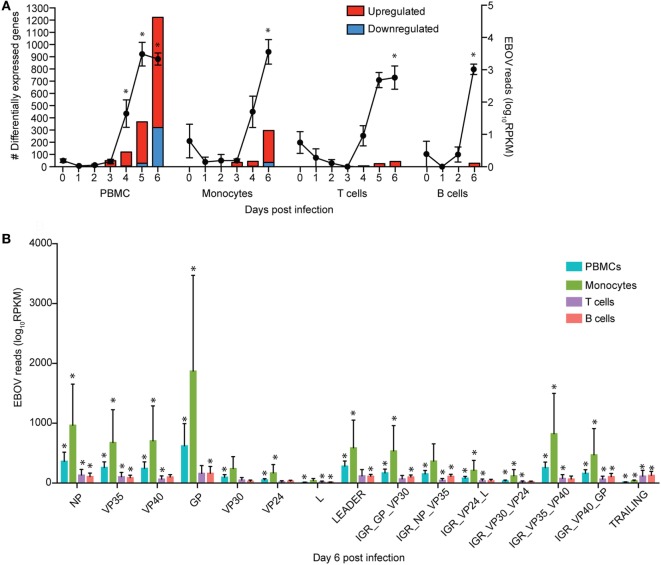
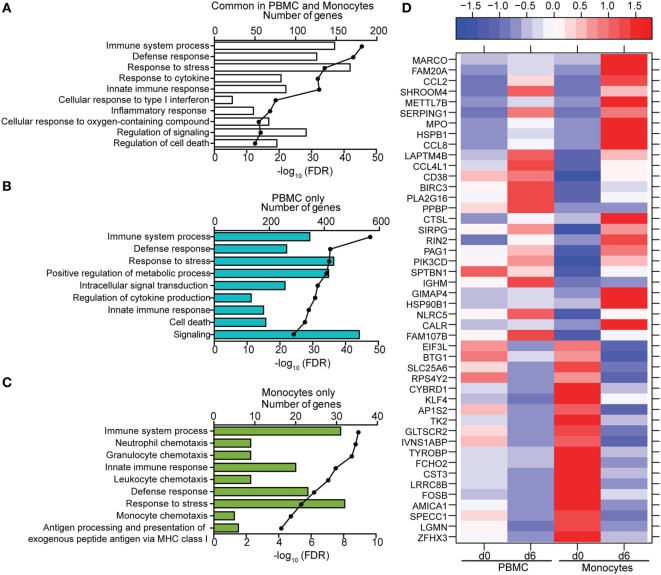
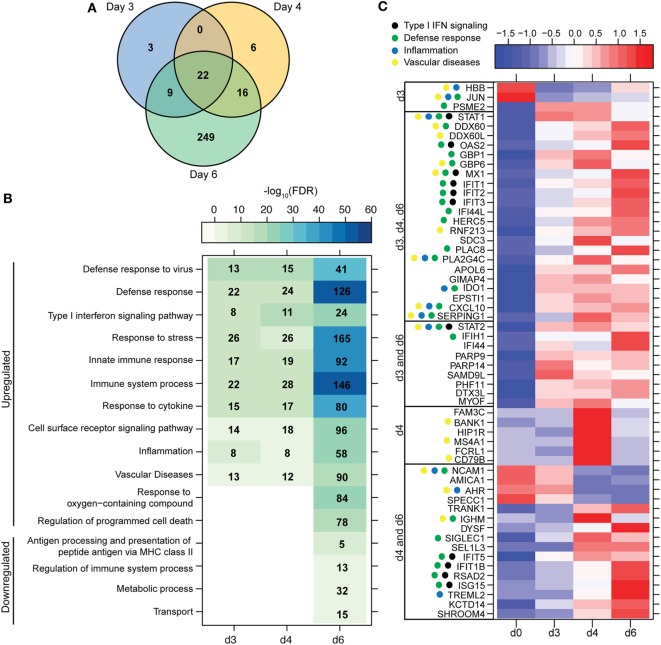
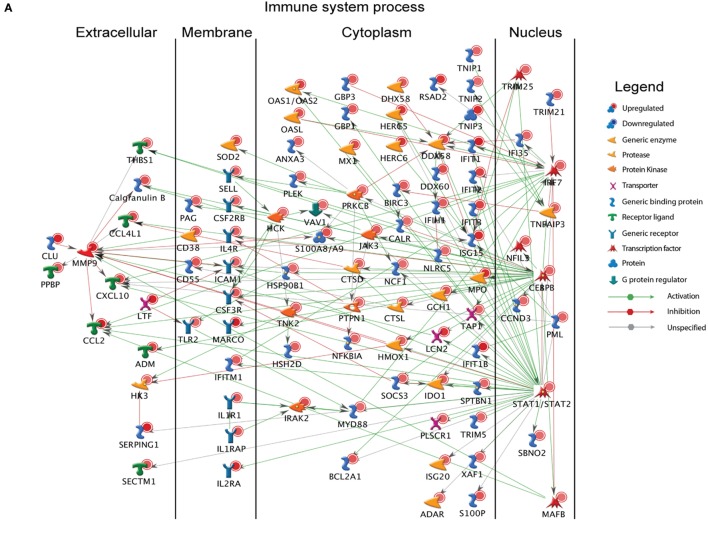
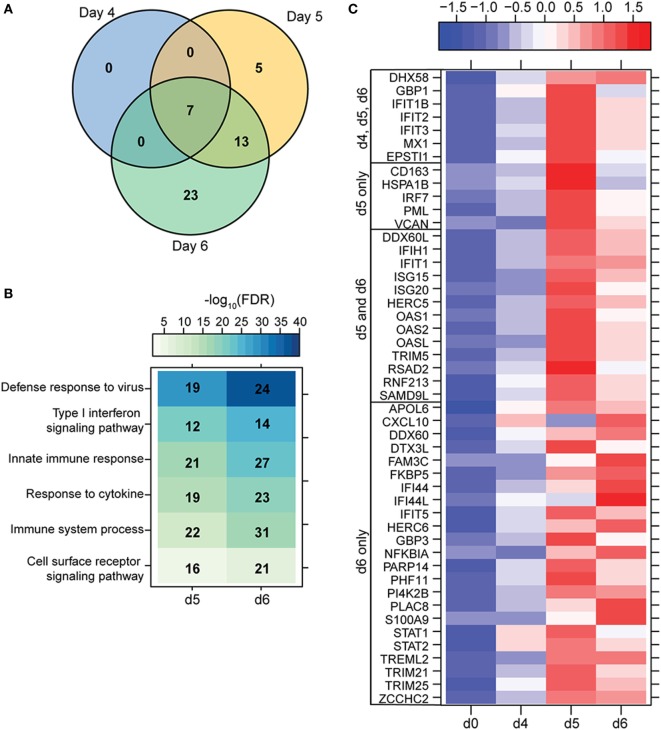
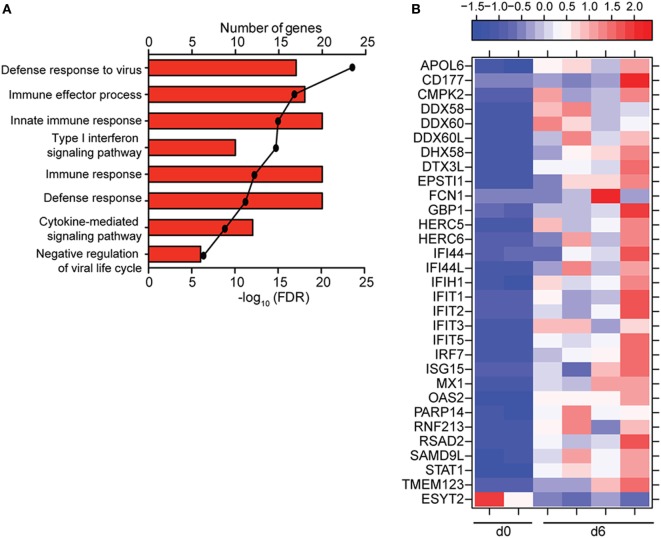
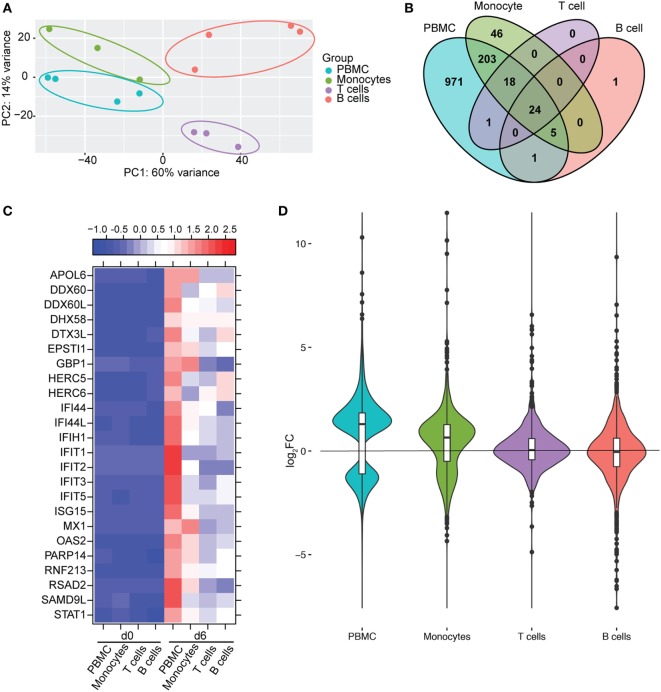
Existing models of Ebola virus disease (EVD) suggest antigen-presenting cells are initial targets of (ZEBOV). studies have shown that ZEBOV infection of monocytes and macrophages results in the production of inflammatory mediators, which may cause lymphocyte apoptosis. However, these findings have not been corroborated by studies. In this study, we report the first longitudinal analysis of transcriptional changes in purified monocytes, T-cells, and B-cells isolated from cynomolgus macaques following infection with ZEBOV-Makona. Our data reveal monocytes as one of the major immune cell subsets that supports ZEBOV replication . In addition, we report a marked increase in the transcription of genes involved in inflammation, coagulation, and vascular disease within monocytes, suggesting that monocytes contribute to EVD manifestations. Further, genes important for antigen presentation and regulation of immunity were downregulated, potentially subverting development of adaptive immunity. In contrast, lymphocytes, which do not support ZEBOV replication, showed transcriptional changes limited to a small number of interferon-stimulated genes (ISGs) and a failure to upregulate genes associated with an antiviral effector immune response. Collectively, these data suggest that ZEBOV-infected monocytes play a significant role in ZEBOV-Makona pathogenesis and strategies to suppress virus replication or modify innate responses to infection in these cells should be a priority for therapeutic intervention.
现有的埃博拉病毒病(EVD)模型表明,抗原呈递细胞是扎伊尔埃博拉病毒(ZEBOV)的初始靶标。研究表明,ZEBOV感染单核细胞和巨噬细胞会导致炎症介质的产生,这可能会导致淋巴细胞凋亡。然而,这些发现尚未得到其他研究的证实。在本研究中,我们报告了对食蟹猴感染ZEBOV-Makona后分离出的纯化单核细胞、T细胞和B细胞转录变化的首次纵向分析。我们的数据显示,单核细胞是支持ZEBOV复制的主要免疫细胞亚群之一。此外,我们报告单核细胞内参与炎症、凝血和血管疾病的基因转录显著增加,这表明单核细胞促成了EVD的表现。此外,对抗原呈递和免疫调节重要的基因被下调,这可能会破坏适应性免疫的发展。相比之下,不支持ZEBOV复制的淋巴细胞显示转录变化仅限于少数干扰素刺激基因(ISG),并且未能上调与抗病毒效应免疫反应相关的基因。总的来说,这些数据表明,ZEBOV感染的单核细胞在ZEBOV-Makona发病机制中起重要作用,抑制这些细胞中病毒复制或改变对感染的先天反应的策略应成为治疗干预的优先事项。