Liu Xuan, Speranza Emily, Muñoz-Fontela César, Haldenby Sam, Rickett Natasha Y, Garcia-Dorival Isabel, Fang Yongxiang, Hall Yper, Zekeng Elsa-Gayle, Lüdtke Anja, Xia Dong, Kerber Romy, Krumkamp Ralf, Duraffour Sophie, Sissoko Daouda, Kenny John, Rockliffe Nichola, Williamson E Diane, Laws Thomas R, N'Faly Magassouba, Matthews David A, Günther Stephan, Cossins Andrew R, Sprecher Armand, Connor John H, Carroll Miles W, Hiscox Julian A
National Institute of Health Research, Health Protection Research Unit In Emerging and Zoonotic Infections, Liverpool, UK.
Centre for Genomic Research, Institute of Integrative Biology, University of Liverpool, Liverpool, L69 7ZB, UK.
Genome Biol. 2017 Jan 19;18(1):4. doi: 10.1186/s13059-016-1137-3.
In 2014, Western Africa experienced an unanticipated explosion of Ebola virus infections. What distinguishes fatal from non-fatal outcomes remains largely unknown, yet is key to optimising personalised treatment strategies. We used transcriptome data for peripheral blood taken from infected and convalescent recovering patients to identify early stage host factors that are associated with acute illness and those that differentiate patient survival from fatality.
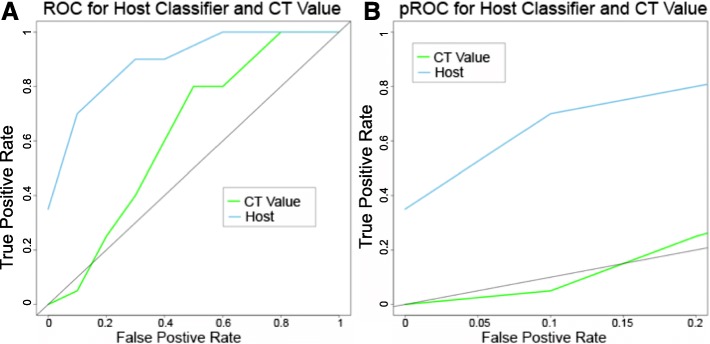
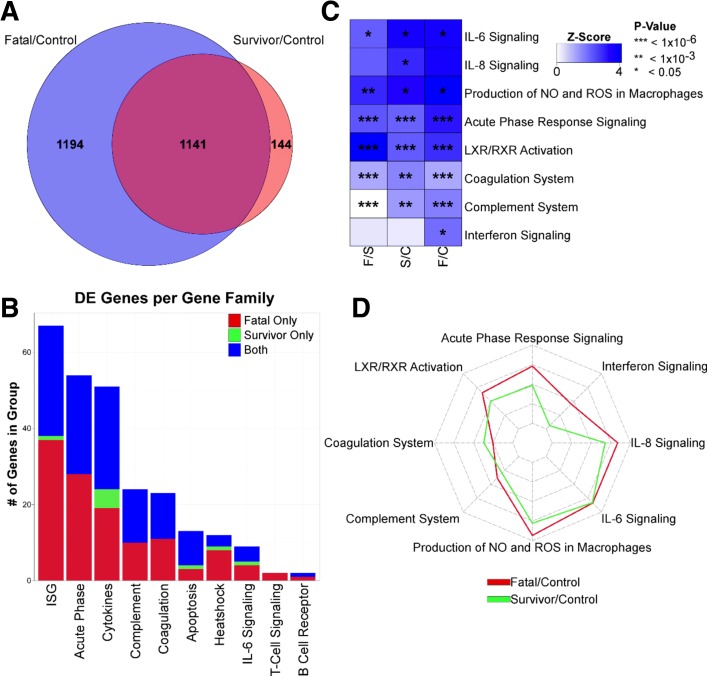
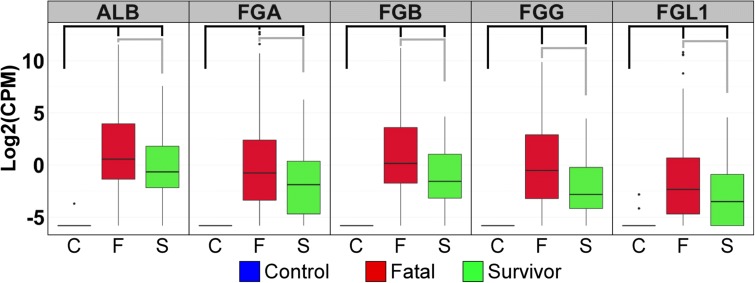
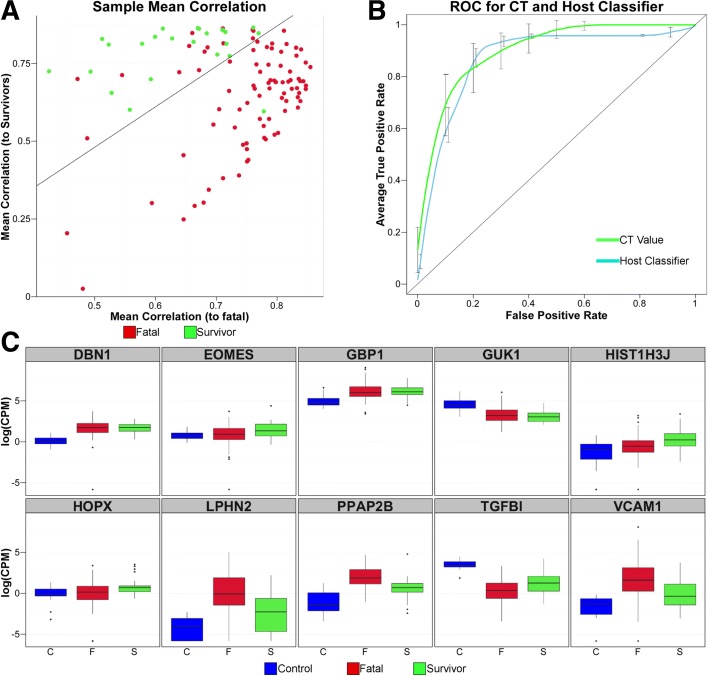
The data demonstrate that individuals who succumbed to the disease show stronger upregulation of interferon signalling and acute phase responses compared to survivors during the acute phase of infection. Particularly notable is the strong upregulation of albumin and fibrinogen genes, which suggest significant liver pathology. Cell subtype prediction using messenger RNA expression patterns indicated that NK-cell populations increase in patients who survive infection. By selecting genes whose expression properties discriminated between fatal cases and survivors, we identify a small panel of responding genes that act as strong predictors of patient outcome, independent of viral load.
Transcriptomic analysis of the host response to pathogen infection using blood samples taken during an outbreak situation can provide multiple levels of information on both disease state and mechanisms of pathogenesis. Host biomarkers were identified that provide high predictive value under conditions where other predictors, such as viral load, are poor prognostic indicators. The data suggested that rapid analysis of the host response to infection in an outbreak situation can provide valuable information to guide an understanding of disease outcome and mechanisms of disease.
2014年,西非经历了埃博拉病毒感染的意外爆发。区分致命与非致命结果的因素在很大程度上仍然未知,但这是优化个性化治疗策略的关键。我们使用了从感染及康复期患者采集的外周血转录组数据,以确定与急性疾病相关的早期宿主因素,以及区分患者存活与死亡的因素。
数据表明,与幸存者相比,在感染急性期死于该病的个体显示出更强的干扰素信号传导上调和急性期反应。特别值得注意的是白蛋白和纤维蛋白原基因的强烈上调,这表明存在明显的肝脏病理变化。使用信使RNA表达模式进行的细胞亚型预测表明,感染存活患者的自然杀伤细胞群体增加。通过选择那些在致命病例和幸存者之间表达特性有差异的基因,我们确定了一小部分反应基因,它们可作为患者预后的有力预测指标,且与病毒载量无关。
在疫情爆发期间采集血样对宿主对病原体感染的反应进行转录组分析,可以提供有关疾病状态和发病机制的多层次信息。在诸如病毒载量等其他预测指标为不良预后指标的情况下,已确定的宿主生物标志物具有很高的预测价值。数据表明,在疫情爆发期间快速分析宿主对感染的反应可为理解疾病结局和发病机制提供有价值的信息。