Expert Workstation and Division of Endocrinology, Qujing Affiliated Hospital of Kunming Medical University, Qujing, Yunnan Province, China.
Division of Rheumatology, The Pennsylvania State University, College of Medicine, 500 University Drive, Hershey, 17033, PA, USA.
Sci Rep. 2017 Nov 10;7(1):15249. doi: 10.1038/s41598-017-14979-5.
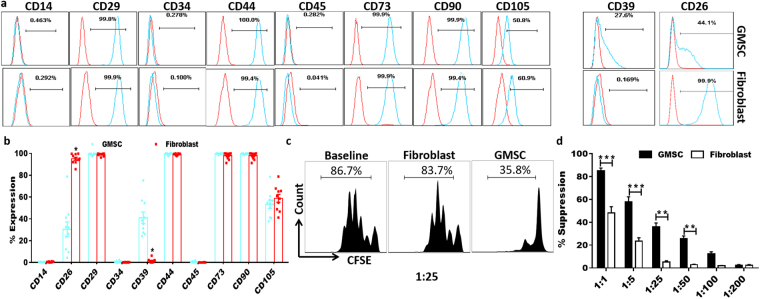
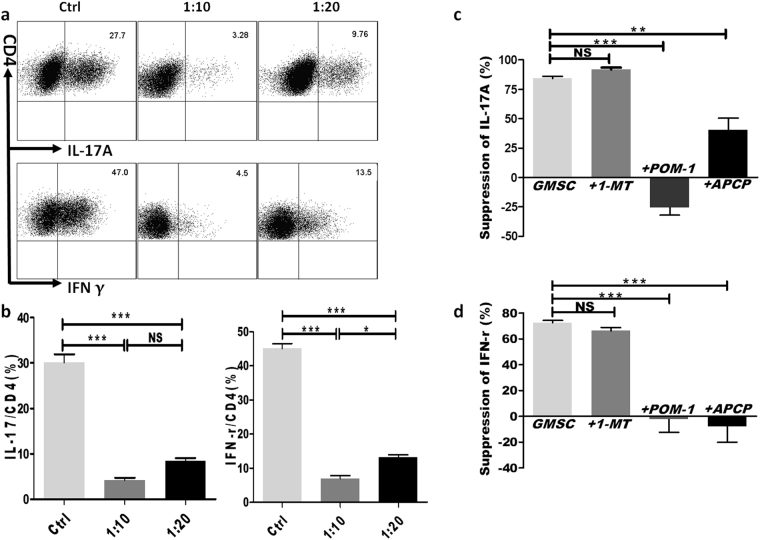
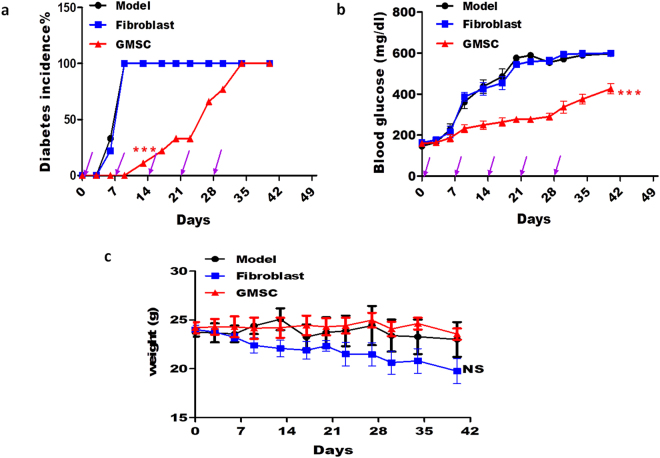
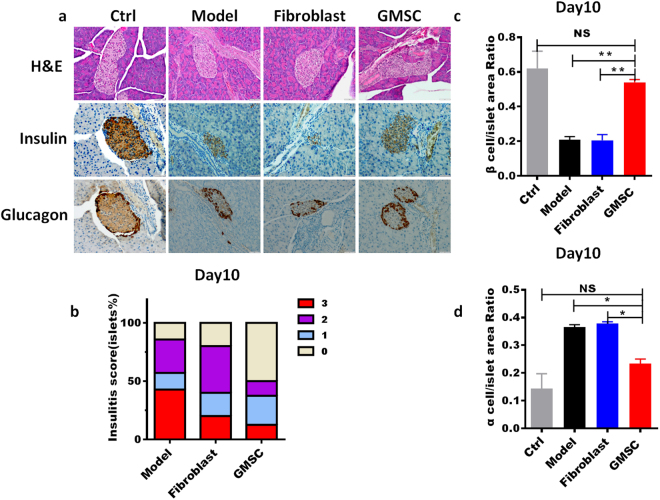
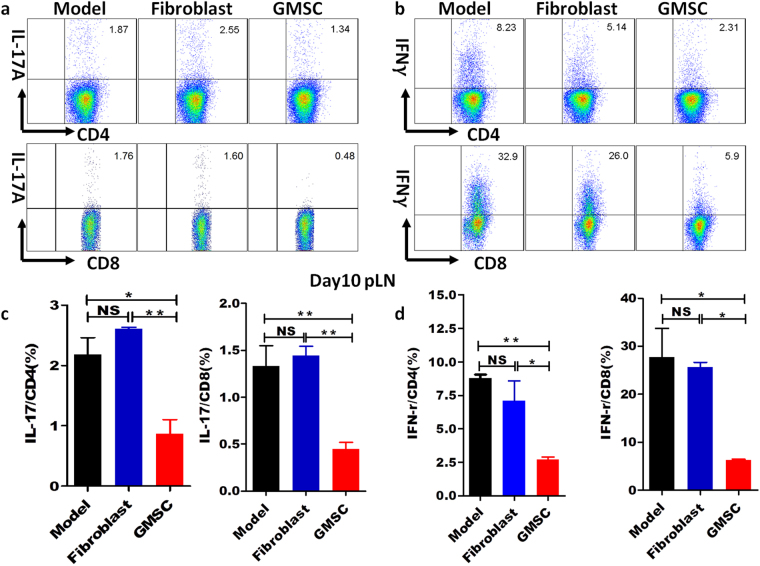
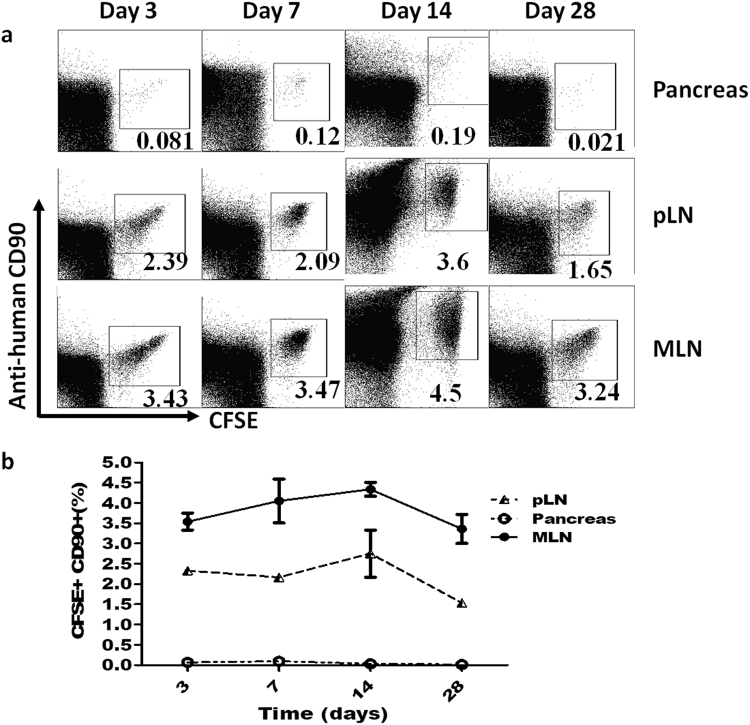
There is yet no cure for type 1 diabetes (T1DM) so far. A significant body of evidence has demonstrated that bone marrow-derived mesenchymal stem cells (BMSCs) showed great potential in controlling T1DM. But there exists much difficulty in using BMSCs as a clinical therapy. We here test whether a new population of mesenchymal stem cells from human gingiva (GMSCs), which has many advantages over BMSCs, can delay or prevent progress of T1DM. GMSCs were adoptively transferred to multiple low-dose streptozotocin (STZ)-induced T1DM. Blood glucose levels and disease severities were analyzed. T cells subsets in blood, spleen and lymph nodes were detected dynamically by flow cytometry. GMSC distribution was dynamically analyzed. We found that infusion of GMSCs but not fibroblast cells significantly controlled blood glucose levels, delayed diabetes onset, ameliorated pathology scores in pancreas, and down-regulated production of IL-17 and IFN-γ in CD4 and CD8 T cells in spleens, pancreatic lymph nodes (pLN) and other lymph nodes. GMSCs also up-regulated the levels of CD4 Treg induced in the periphery. Mechanismly, GMSCs could migrate to pancreas and local lymph node and function through CD39/CD73 pathway to regulate effector T cells. Thus, GMSCs show a potential promise in treating T1DM in the clinic.
目前,1 型糖尿病(T1DM)尚无治愈方法。大量证据表明,骨髓间充质干细胞(BMSCs)在控制 T1DM 方面具有巨大潜力。但将 BMSCs 用于临床治疗存在诸多困难。我们在此测试来自人牙龈的一种新的间充质干细胞群体(GMSCs)是否可以延缓或预防 T1DM 的进展。将 GMSCs 过继转移到多只低剂量链脲佐菌素(STZ)诱导的 T1DM 小鼠中。分析血糖水平和疾病严重程度。通过流式细胞术动态检测血液、脾脏和淋巴结中的 T 细胞亚群。动态分析 GMSC 分布。我们发现输注 GMSC 而非成纤维细胞可显著控制血糖水平、延迟糖尿病发病、改善胰腺病理评分,并下调脾脏、胰腺淋巴结(pLN)和其他淋巴结中 CD4 和 CD8 T 细胞中 IL-17 和 IFN-γ的产生。GMSC 还上调了外周诱导的 CD4 Treg 水平。机制上,GMSC 可迁移至胰腺和局部淋巴结,并通过 CD39/CD73 途径发挥作用,调节效应 T 细胞。因此,GMSC 在临床上治疗 T1DM 具有潜在的前景。