The School of Cardiovascular Medicine and Sciences, King's College London British Heart Foundation Centre of Research Excellence, London SE5 9NU, UK.
Developmental Biology, Laboratory Animal Science, The Institute of Experimental Animal Sciences, Osaka University Medical School, Suita 565-0871, Japan.
J Mol Cell Cardiol. 2018 Jan;114:93-104. doi: 10.1016/j.yjmcc.2017.11.004. Epub 2017 Nov 10.
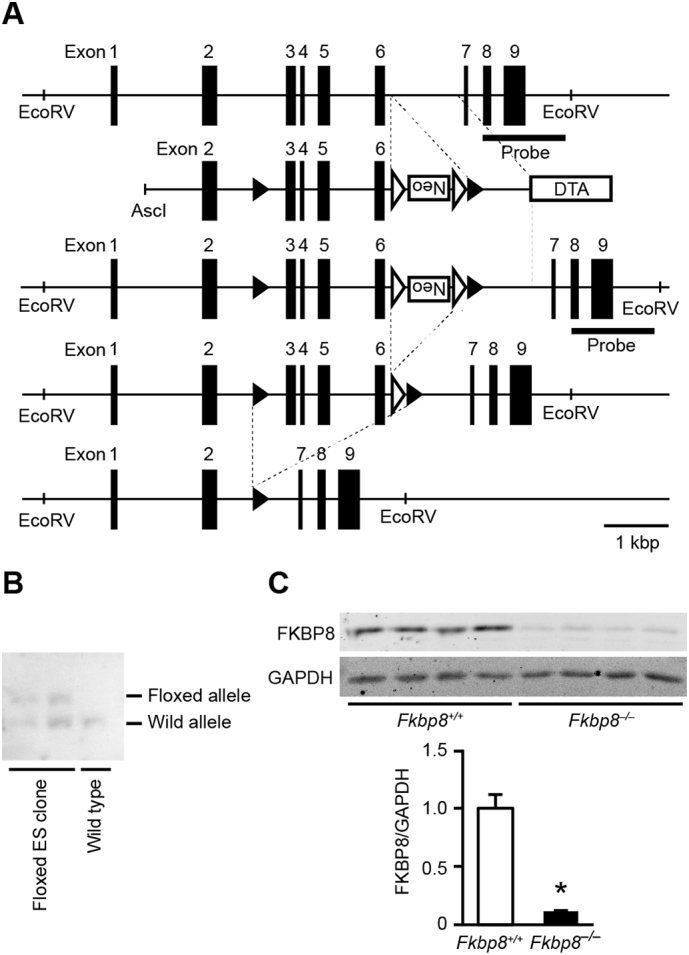
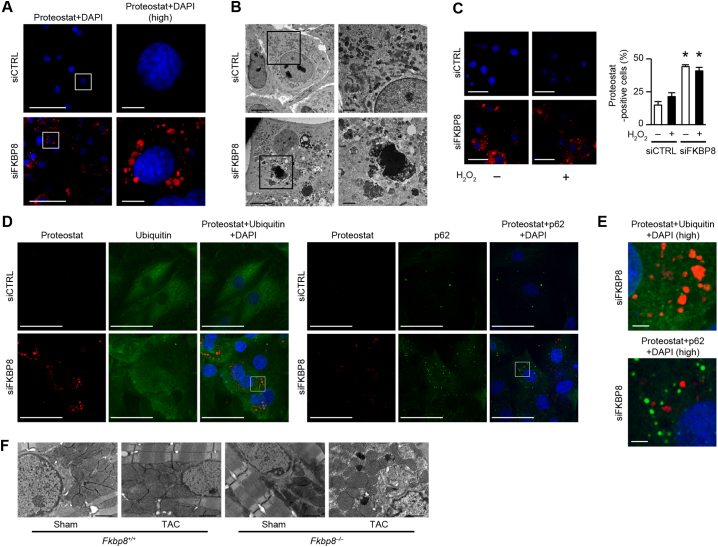
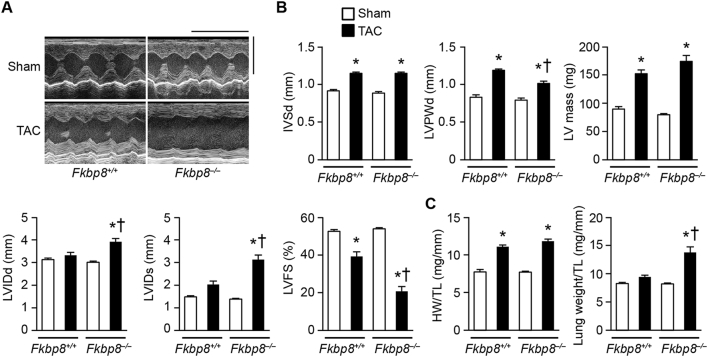
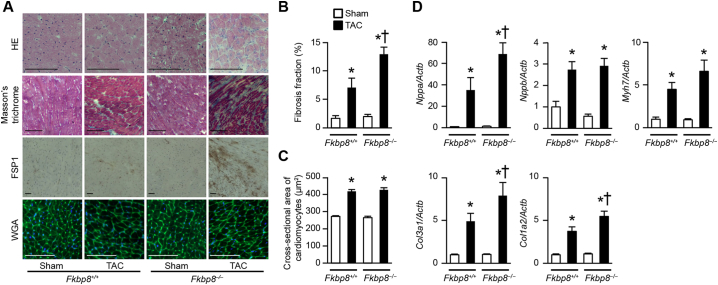
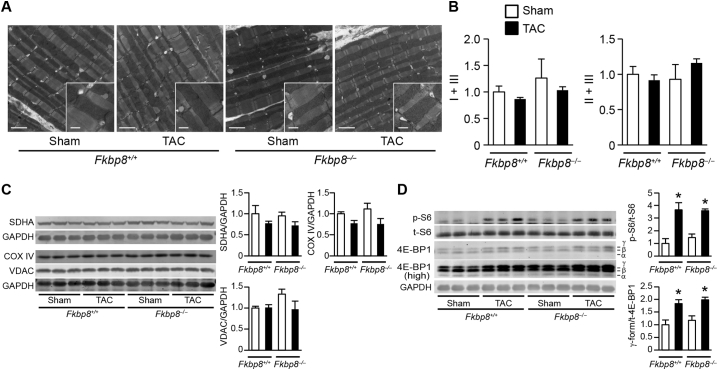
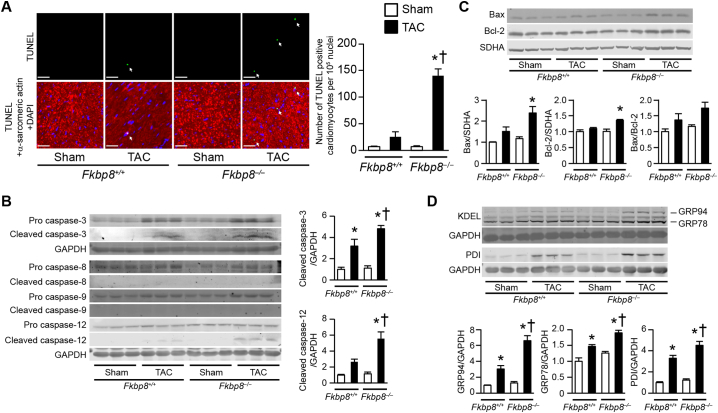
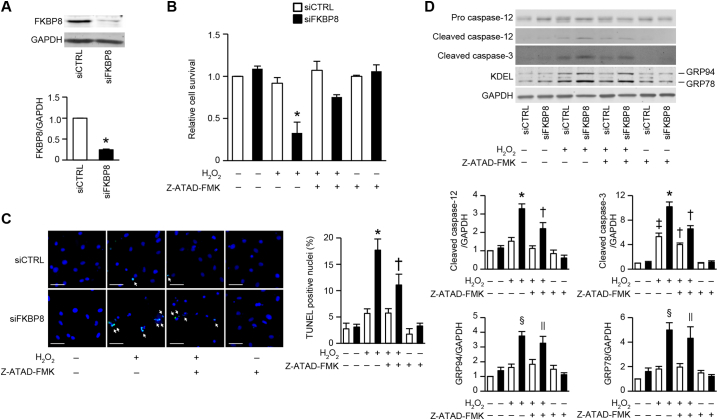
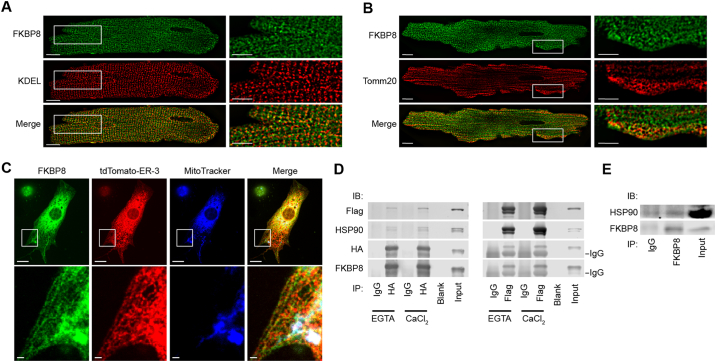
Protein quality control in cardiomyocytes is crucial to maintain cellular homeostasis. The accumulation of damaged organelles, such as mitochondria and misfolded proteins in the heart is associated with heart failure. During the process to identify novel mitochondria-specific autophagy (mitophagy) receptors, we found FK506-binding protein 8 (FKBP8), also known as FKBP38, shares similar structural characteristics with a yeast mitophagy receptor, autophagy-related 32 protein. However, knockdown of FKBP8 had no effect on mitophagy in HEK293 cells or H9c2 myocytes. Since the role of FKBP8 in the heart has not been fully elucidated, the aim of this study is to determine the functional role of FKBP8 in the heart. Cardiac-specific FKBP8-deficient (Fkbp8) mice were generated. Fkbp8 mice showed no cardiac phenotypes under baseline conditions. The Fkbp8 and control wild type littermates (Fkbp8) mice were subjected to pressure overload by means of transverse aortic constriction (TAC). Fkbp8 mice showed left ventricular dysfunction and chamber dilatation with lung congestion 1week after TAC. The number of apoptotic cardiomyocytes was dramatically elevated in TAC-operated Fkbp8 hearts, accompanied with an increase in protein levels of cleaved caspase-12 and endoplasmic reticulum (ER) stress markers. Caspase-12 inhibition resulted in the attenuation of hydrogen peroxide-induced apoptotic cell death in FKBP8 knockdown H9c2 myocytes. Immunocytological and immunoprecipitation analyses indicate that FKBP8 is localized to the ER and mitochondria in the isolated cardiomyocytes, interacting with heat shock protein 90. Furthermore, there was accumulation of misfolded protein aggregates in FKBP8 knockdown H9c2 myocytes and electron dense deposits in perinuclear region in TAC-operated Fkbp8 hearts. The data suggest that FKBP8 plays a protective role against hemodynamic stress in the heart mediated via inhibition of the accumulation of misfolded proteins and ER-associated apoptosis.
心肌细胞中的蛋白质质量控制对于维持细胞内稳态至关重要。心脏中线粒体和错误折叠蛋白质等受损细胞器的积累与心力衰竭有关。在鉴定新型线粒体特异性自噬(mitophagy)受体的过程中,我们发现 FK506 结合蛋白 8(FKBP8),也称为 FKBP38,与酵母 mitophagy 受体自噬相关蛋白 32(autophagy-related 32 protein)具有相似的结构特征。然而,在 HEK293 细胞或 H9c2 心肌细胞中,FKBP8 的敲低对 mitophagy 没有影响。由于 FKBP8 在心脏中的作用尚未完全阐明,本研究旨在确定 FKBP8 在心脏中的功能作用。生成了心脏特异性 FKBP8 缺陷型(Fkbp8)小鼠。在基础条件下,Fkbp8 小鼠没有心脏表型。通过横主动脉缩窄(transverse aortic constriction,TAC)使 Fkbp8 小鼠和对照野生型同窝仔鼠(Fkbp8)产生压力超负荷。TAC 后 1 周,Fkbp8 小鼠出现左心室功能障碍和心室扩张伴肺淤血。TAC 操作后的 Fkbp8 心脏中凋亡性心肌细胞数量显著增加,同时裂解的半胱天冬酶-12 和内质网(endoplasmic reticulum,ER)应激标志物的蛋白水平增加。半胱天冬酶-12 抑制可减轻 FKBP8 敲低的 H9c2 心肌细胞中过氧化氢诱导的凋亡性细胞死亡。免疫细胞化学和免疫沉淀分析表明,FKBP8 在心肌细胞分离物中定位于内质网和线粒体,并与热休克蛋白 90 相互作用。此外,FKBP8 敲低的 H9c2 心肌细胞中存在错误折叠蛋白聚集体的积累,TAC 操作后的 Fkbp8 心脏中核周区域存在电子致密沉积物。数据表明,FKBP8 通过抑制错误折叠蛋白的积累和 ER 相关的凋亡,在心脏中发挥对血流动力学应激的保护作用。