Li Weiqiang, Nguyen Kien Huu, Chu Ha Duc, Ha Chien Van, Watanabe Yasuko, Osakabe Yuriko, Leyva-González Marco Antonio, Sato Mayuko, Toyooka Kiminori, Voges Laura, Tanaka Maho, Mostofa Mohammad Golam, Seki Motoaki, Seo Mitsunori, Yamaguchi Shinjiro, Nelson David C, Tian Chunjie, Herrera-Estrella Luis, Tran Lam-Son Phan
Signaling Pathway Research Unit, RIKEN Center for Sustainable Resource Science, Yokohama, Japan.
Faculty of Bioscience and Bioindustry, Tokushima University, Tokushima, Japan.
PLoS Genet. 2017 Nov 13;13(11):e1007076. doi: 10.1371/journal.pgen.1007076. eCollection 2017 Nov.
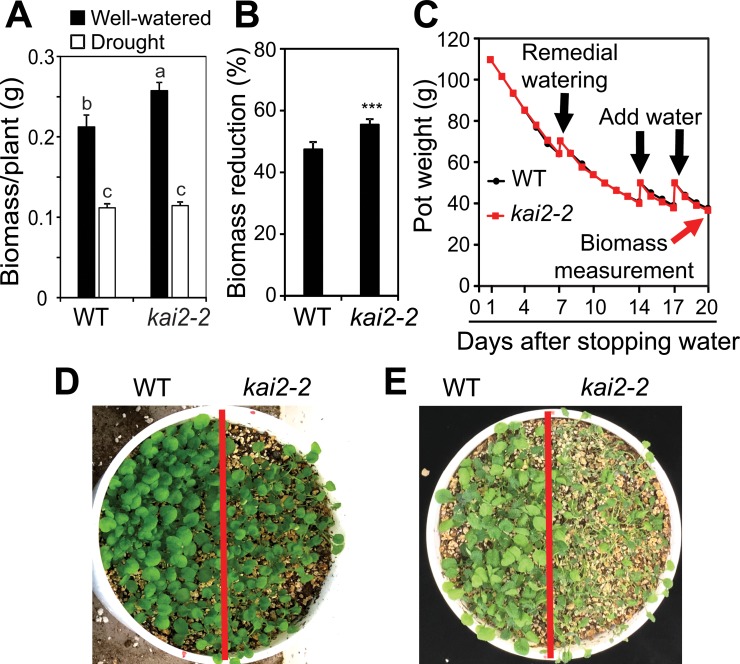
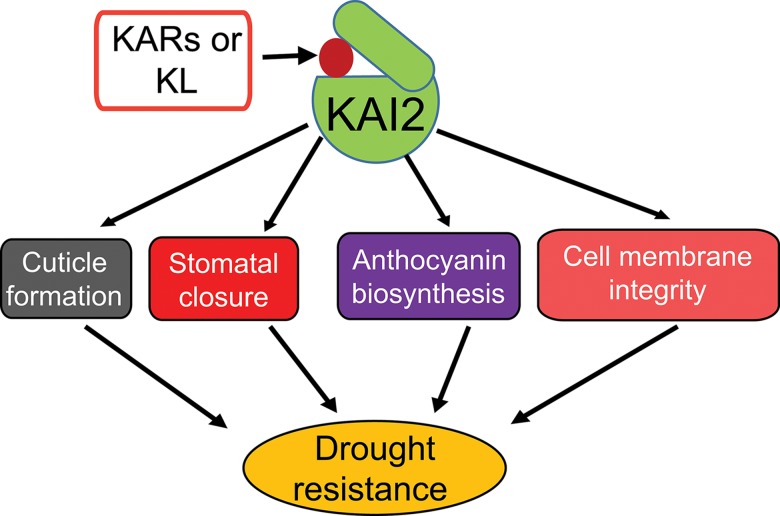
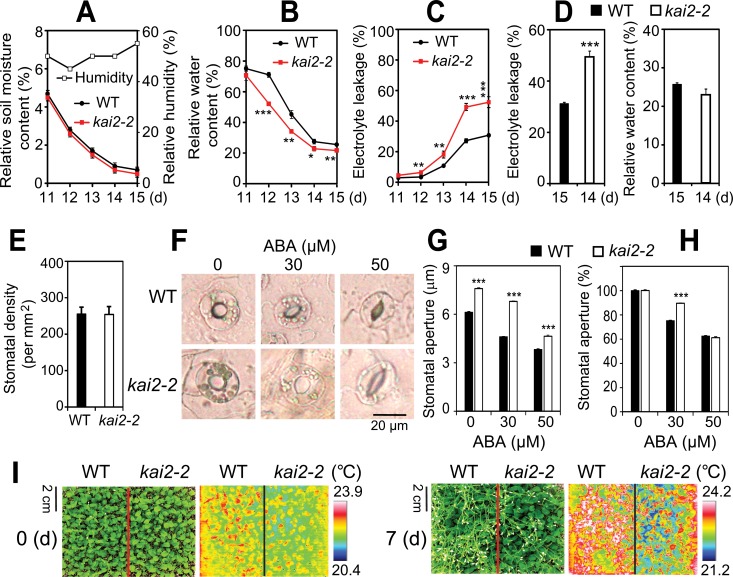
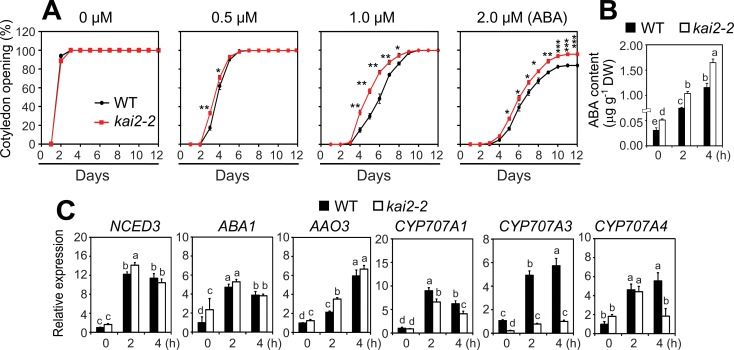
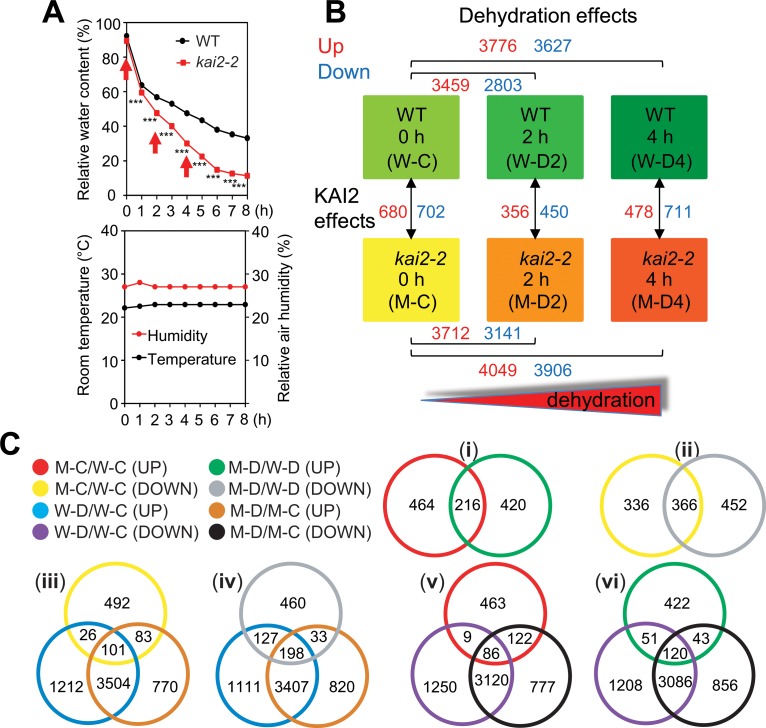
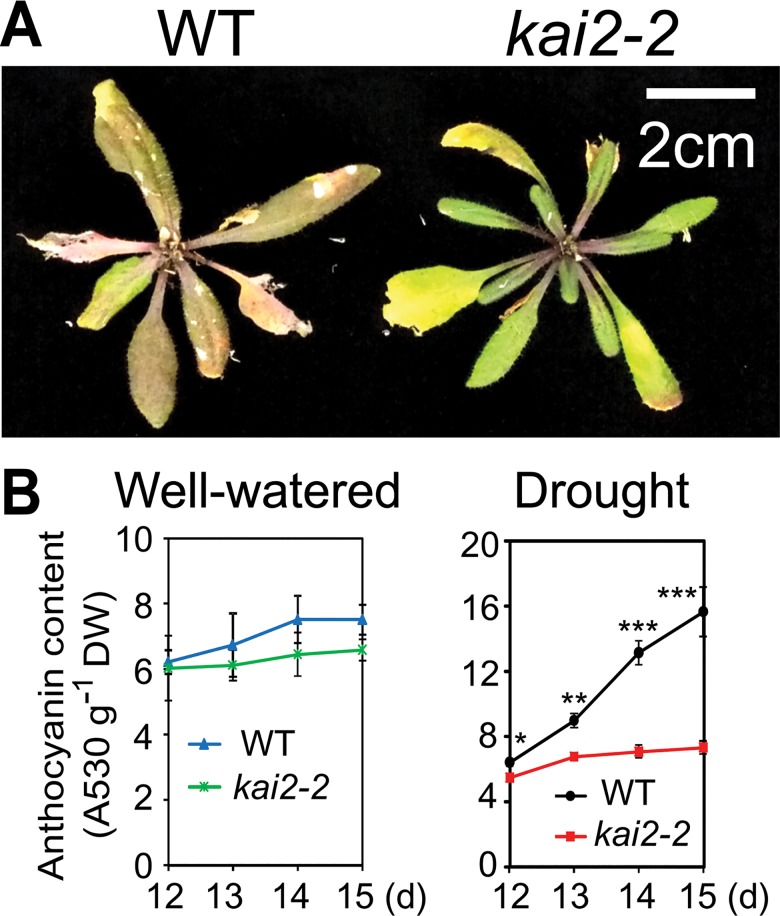
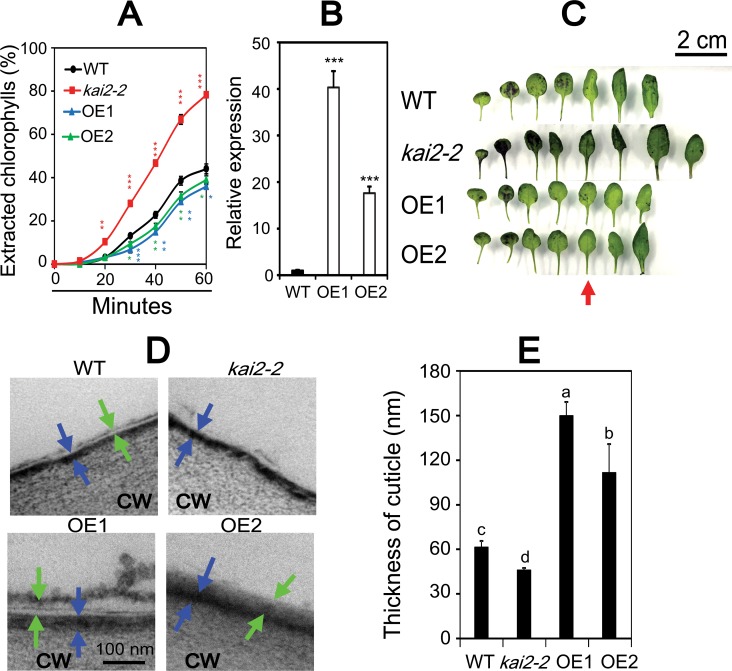
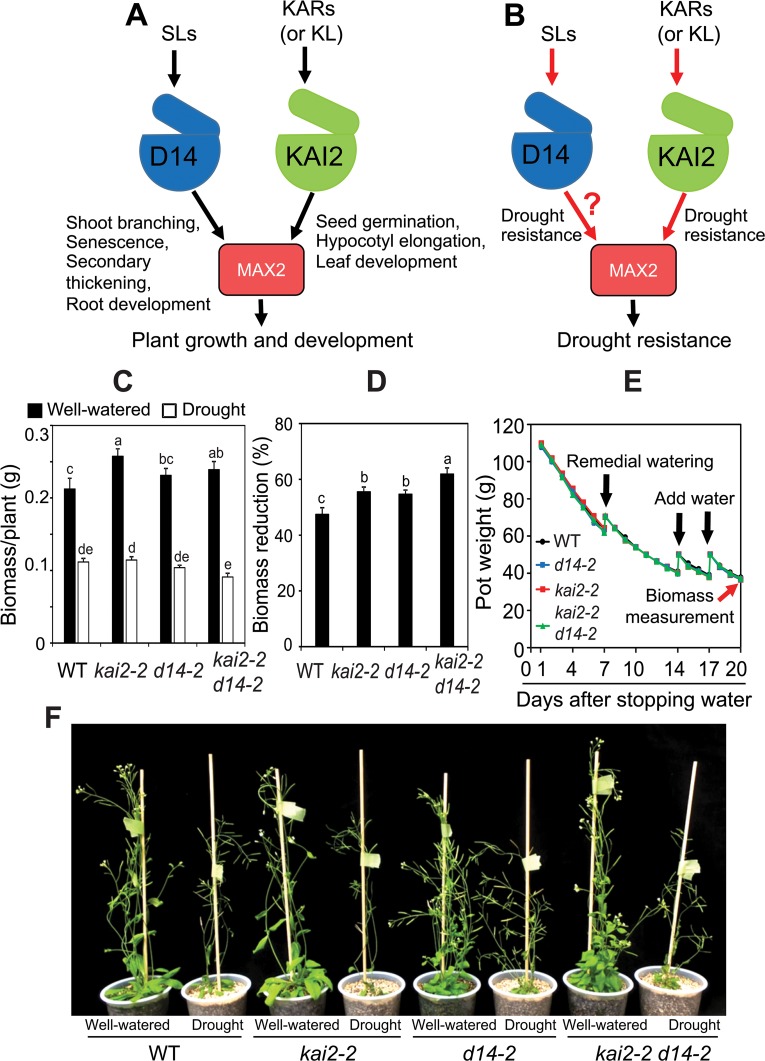
Drought causes substantial reductions in crop yields worldwide. Therefore, we set out to identify new chemical and genetic factors that regulate drought resistance in Arabidopsis thaliana. Karrikins (KARs) are a class of butenolide compounds found in smoke that promote seed germination, and have been reported to improve seedling vigor under stressful growth conditions. Here, we discovered that mutations in KARRIKIN INSENSITIVE2 (KAI2), encoding the proposed karrikin receptor, result in hypersensitivity to water deprivation. We performed transcriptomic, physiological and biochemical analyses of kai2 plants to understand the basis for KAI2-regulated drought resistance. We found that kai2 mutants have increased rates of water loss and drought-induced cell membrane damage, enlarged stomatal apertures, and higher cuticular permeability. In addition, kai2 plants have reduced anthocyanin biosynthesis during drought, and are hyposensitive to abscisic acid (ABA) in stomatal closure and cotyledon opening assays. We identified genes that are likely associated with the observed physiological and biochemical changes through a genome-wide transcriptome analysis of kai2 under both well-watered and dehydration conditions. These data provide evidence for crosstalk between ABA- and KAI2-dependent signaling pathways in regulating plant responses to drought. A comparison of the strigolactone receptor mutant d14 (DWARF14) to kai2 indicated that strigolactones also contributes to plant drought adaptation, although not by affecting cuticle development. Our findings suggest that chemical or genetic manipulation of KAI2 and D14 signaling may provide novel ways to improve drought resistance.
干旱导致全球作物产量大幅下降。因此,我们着手鉴定调控拟南芥抗旱性的新化学和遗传因素。独脚金内酯(KARs)是一类在烟雾中发现的丁烯内酯化合物,可促进种子萌发,并且据报道在胁迫生长条件下可提高幼苗活力。在此,我们发现编码推测的独脚金内酯受体的独脚金内酯不敏感2(KAI2)发生突变会导致对水分剥夺超敏感。我们对kai2植株进行了转录组学、生理学和生化分析,以了解KAI2调控抗旱性的基础。我们发现kai2突变体水分流失率增加,干旱诱导的细胞膜损伤加重,气孔孔径增大,角质层通透性更高。此外,kai2植株在干旱期间花青素生物合成减少,并且在气孔关闭和子叶开放试验中对脱落酸(ABA)反应迟钝。我们通过对在水分充足和脱水条件下的kai2进行全基因组转录组分析,鉴定了可能与观察到的生理和生化变化相关的基因。这些数据为ABA和KAI2依赖的信号通路在调控植物对干旱的反应中存在相互作用提供了证据。将独脚金内酯受体突变体d14(DWARF14)与kai2进行比较表明,独脚金内酯也有助于植物适应干旱,尽管不是通过影响角质层发育。我们的研究结果表明,对KAI2和D14信号进行化学或遗传操作可能提供提高抗旱性的新方法。