Guehring Markus, Lambert Simon, Stoeckle Ulrich, Ziegler Patrick
Department for Traumatology and Reconstructive Surgery, BG Trauma Center Tübingen, University of Tübingen, Schnarrenbergstr 95, 72076, Tuebingen, Germany.
Shoulder and Elbow Service, Royal National Orthopaedic Hospital, Stanmore, HA7 4LP, UK.
BMC Musculoskelet Disord. 2017 Nov 13;18(1):442. doi: 10.1186/s12891-017-1808-6.
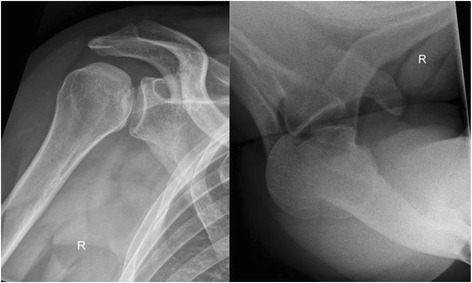
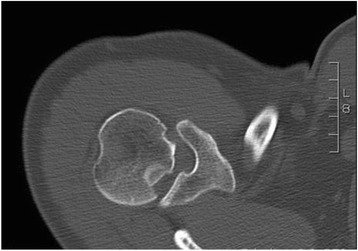
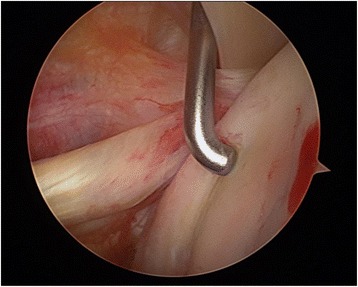
The current study describes several surgical techniques for the treatment of the reverse Hill - Sachs lesion after posterior shoulder dislocation; we also aimed to present long term results followed for a minimum of five years.
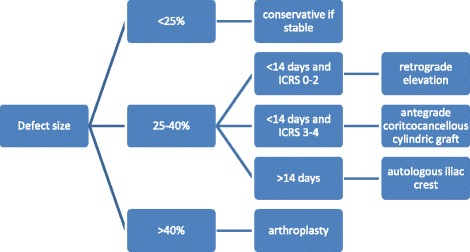
This study is a prospective case series of 17 patients who were treated in our clinic between 2008 and 2011. Patients with a defect size smaller than 25% of the articular surface were treated conservatively. An endoprosthesis of the glenohumeral joint was implanted in patients with a defect size bigger than 40%. All remaining patients were treated by a variety of operative techniques, depending on the quality of the bone and size of the defect.
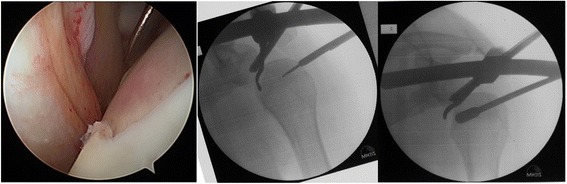
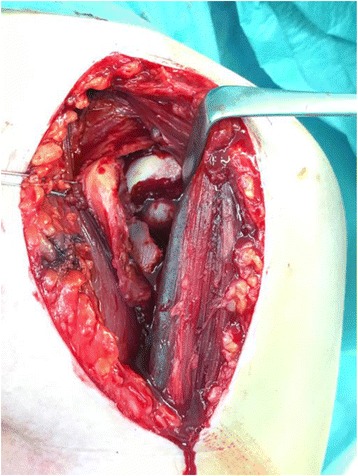
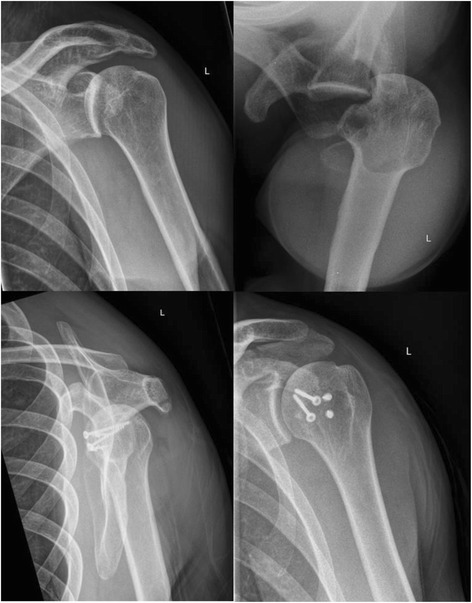
Twelve of seventeen patients had a defect size of the humeral articular surface between 25% and 40% with a mean age of 39 years. Depending on the defect size these patients were treated with retrograde chondral elevation, antegrade cylindrical graft or a graft of the iliac bone crest with an open approach. All the procedures showed fair results, e.g. the open approach with a graft of the iliac bone crest (2010: Dash 3.89, Constant 90.33, Rowe 86.67; 2015: Dash 2.22, Constant 92.00, Rowe 93.33).
The open approach is not a disadvantage for the functional outcome. The treatment algorithm should involve the superficial size of the defect as well as the depth of the defect and the time interval between the dislocation and the surgical treatment.
223/2012BO2 , 02 August 2010.
本研究描述了几种治疗后肩关节脱位后反 Hill-Sachs 损伤的手术技术;我们还旨在呈现至少随访五年的长期结果。
本研究是一项前瞻性病例系列研究,纳入了2008年至2011年间在我们诊所接受治疗的17例患者。关节面缺损小于25%的患者采用保守治疗。关节面缺损大于40%的患者植入肱盂关节假体。其余所有患者根据骨质量和缺损大小采用多种手术技术进行治疗。
17例患者中有12例肱骨关节面缺损在25%至40%之间,平均年龄39岁。根据缺损大小,这些患者分别接受了逆行软骨提升术、顺行圆柱形移植术或切开取自髂嵴的骨移植术。所有手术均取得了较好的效果,例如切开取自髂嵴的骨移植术(2010年:Dash评分3.89,Constant评分90.33,Rowe评分86.67;2015年:Dash评分2.22,Constant评分92.00,Rowe评分93.33)。
切开手术对功能结果并无不利影响。治疗方案应考虑缺损的表面大小、缺损深度以及脱位与手术治疗之间的时间间隔。
223/2012BO2,2010年8月2日。