Center for Medical Mycology, Case Western Reserve University, University Hospitals Cleveland Medical Center, Cleveland, Ohio, USA.
Center for Medical Mycology, Case Western Reserve University, University Hospitals Cleveland Medical Center, Cleveland, Ohio, USA
Antimicrob Agents Chemother. 2018 Jan 25;62(2). doi: 10.1128/AAC.01750-17. Print 2018 Feb.
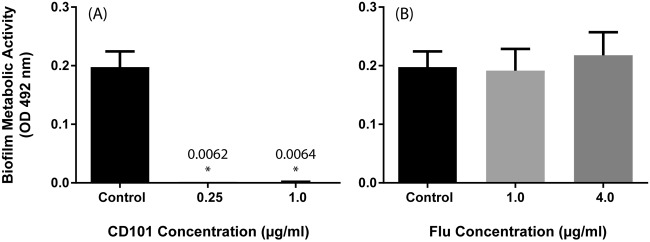
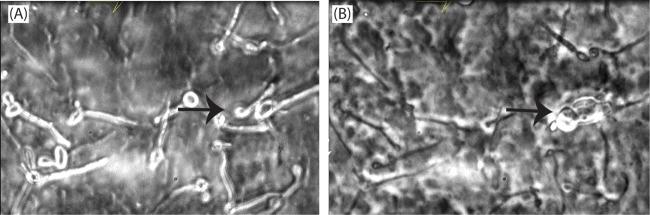
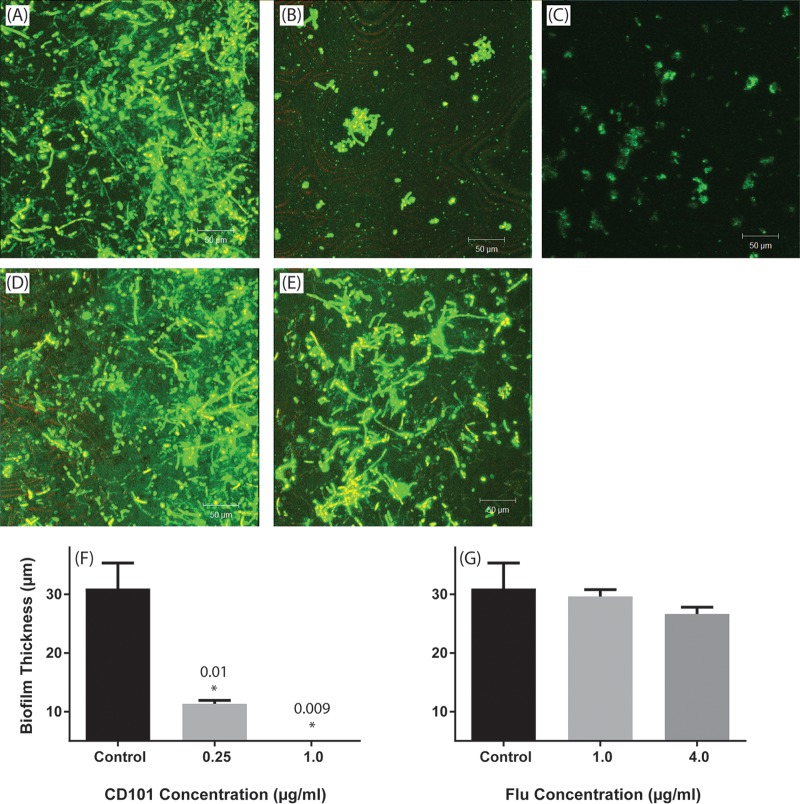
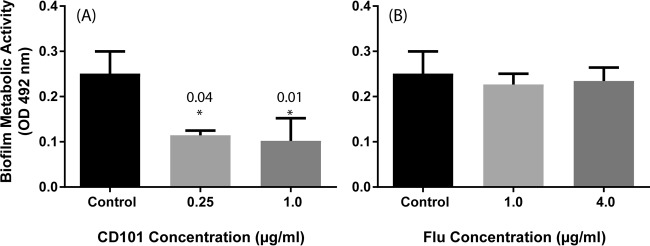
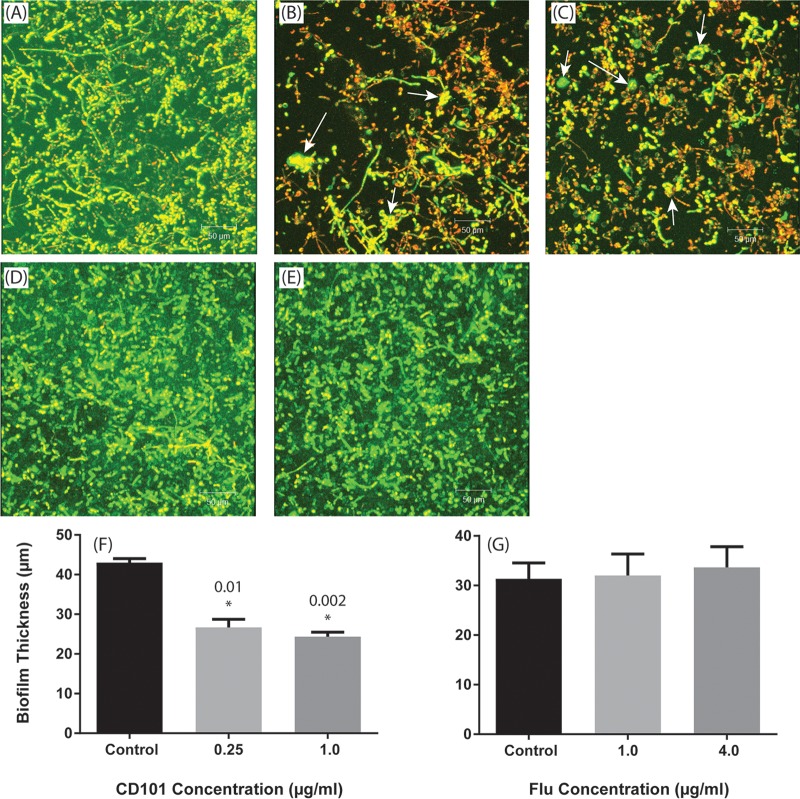
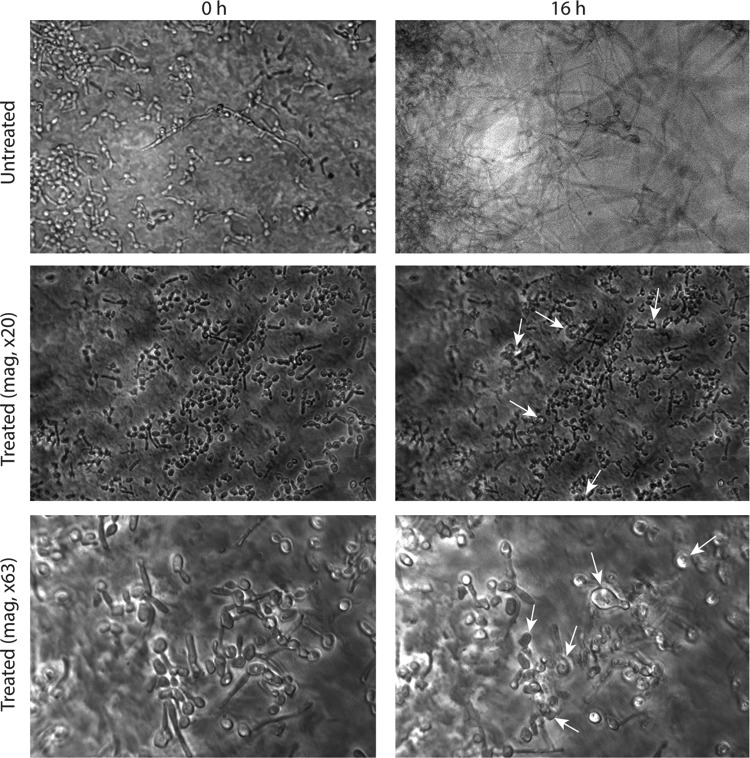
Currently available echinocandins are generally effective against biofilms, but the recent emergence of resistance has underscored the importance of developing new antifungal agents that are effective against biofilms. CD101 is a long-acting novel echinocandin with distinctive pharmacokinetic properties and improved stability and safety relative to other drugs in the same class. CD101 is currently being evaluated as a once-weekly intravenous (i.v.) infusion for the treatment of candidemia and invasive candidiasis. In this study, we determined (i) the effect of CD101 against early and mature phase biofilms formed by and (ii) the temporal effect of CD101 on the formation of biofilms using time-lapse microscopy (TLM). Early- or mature-phase biofilms were formed on silicone elastomer discs and were exposed to the test compounds for 24 h and quantified by measuring their metabolic activity. Separate batches were observed under a confocal microscope or used to capture TLM images from 0 to 16 h. Measurements of their metabolic activity showed that CD101 (0.25 or 1 μg/ml) significantly prevented adhesion-phase cells from developing into mature biofilms ( = 0.0062 or 0.0064, respectively) and eradicated preformed mature biofilms ( = 0.04 or 0.01, respectively) compared to those of untreated controls. Confocal microscopy showed significant reductions in biofilm thicknesses for both early and mature phases ( < 0.05). TLM showed that CD101 stopped the growth of adhesion- and early-phase biofilms within minutes. CD101-treated hyphae failed to grow into mature biofilms. These results suggest that CD101 may be effective in the prevention and treatment of biofilm-associated nosocomial infections.
目前可用的棘白菌素类药物一般对生物膜有效,但最近出现的耐药性突显了开发新的抗真菌药物以有效对抗生物膜的重要性。CD101 是一种长效新型棘白菌素,与同类药物相比,具有独特的药代动力学特性和更高的稳定性和安全性。CD101 目前正在评估作为每周一次静脉(i.v.)输注,用于治疗念珠菌血症和侵袭性念珠菌病。在这项研究中,我们确定了 (i) CD101 对 和 形成的早期和成熟阶段生物膜的作用,以及 (ii) CD101 对生物膜形成的时间效应使用延时显微镜(TLM)。早期或成熟阶段的生物膜在硅酮弹性体圆盘上形成,并暴露于测试化合物 24 小时,通过测量其代谢活性进行定量。将单独的批次在共聚焦显微镜下观察或用于从 0 到 16 小时捕获 TLM 图像。它们代谢活性的测量结果表明,与未处理的对照组相比,CD101(0.25 或 1 μg/ml)显著阻止了附着相细胞发育成成熟生物膜(=0.0062 或 0.0064),并根除了预先形成的成熟生物膜(=0.04 或 0.01)。共聚焦显微镜显示,早期和成熟阶段的生物膜厚度均显著降低(<0.05)。TLM 显示,CD101 在几分钟内阻止了附着和早期生物膜的生长。CD101 处理的菌丝未能生长成成熟的生物膜。这些结果表明,CD101 可能有效预防和治疗生物膜相关的医院获得性感染。