Ito Kohta, Hosoda Koh, Shimizu Masahiro, Ikemoto Shuhei, Nagura Takeo, Seki Hiroyuki, Kitashiro Masateru, Imanishi Nobuaki, Aiso Sadakazu, Jinzaki Masahiro, Ogihara Naomichi
Department of Mechanical Engineering, Faculty of Science and Technology, Keio University, 3-14-1 Hiyoshi, Kohoku-ku, Yokohama 223-8522, Japan.
Department of System Innovation, Graduate School of Engineering Science, Osaka University, Toyonaka, Japan.
R Soc Open Sci. 2017 Oct 18;4(10):171086. doi: 10.1098/rsos.171086. eCollection 2017 Oct.
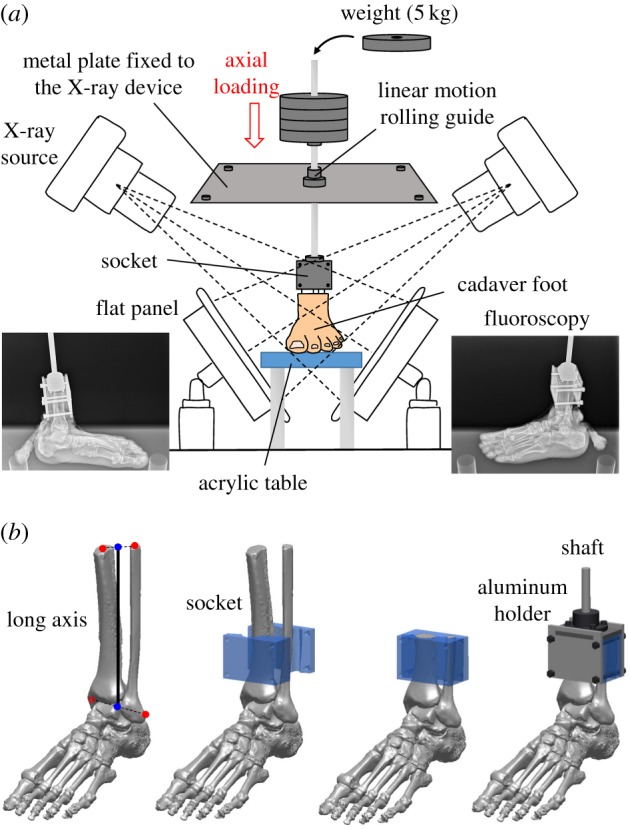
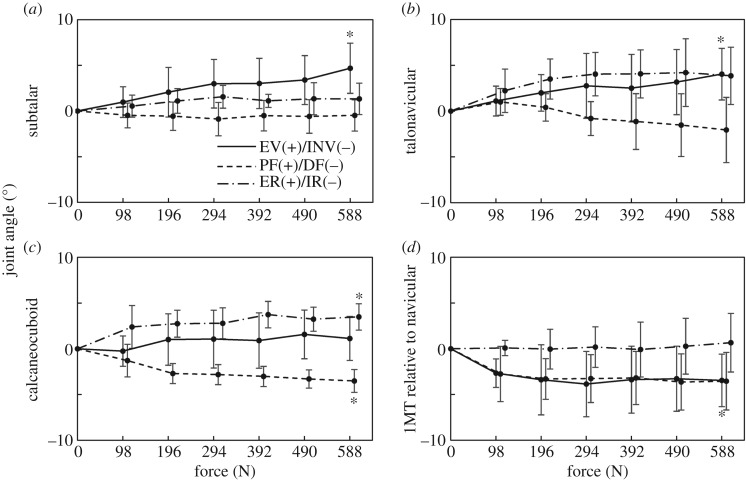
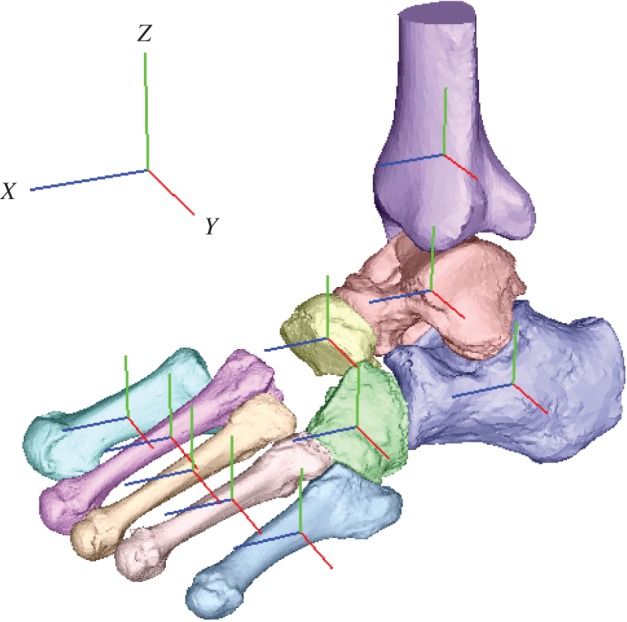
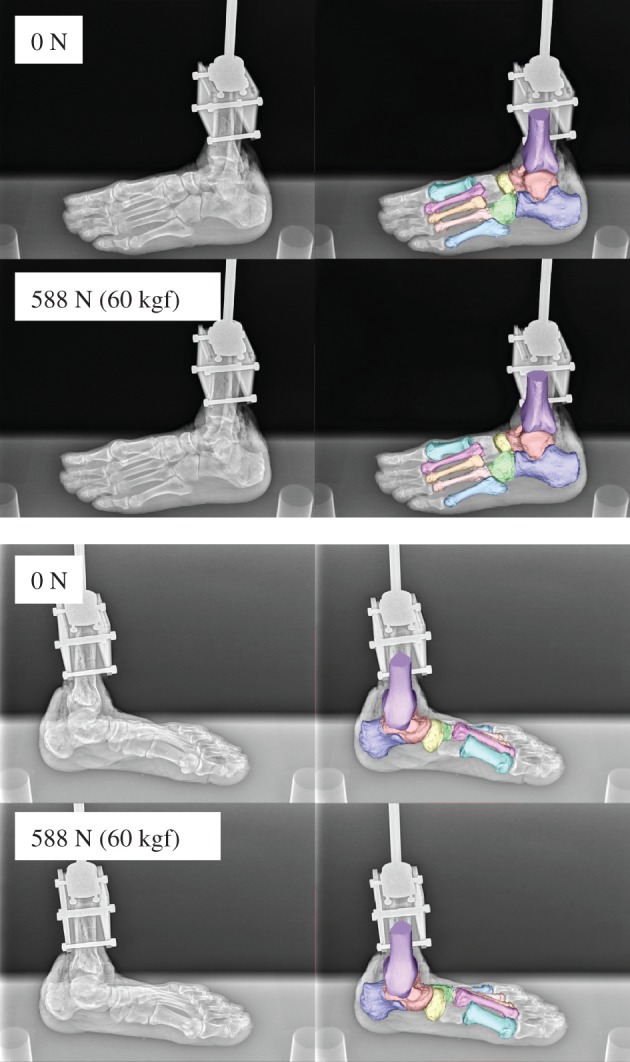
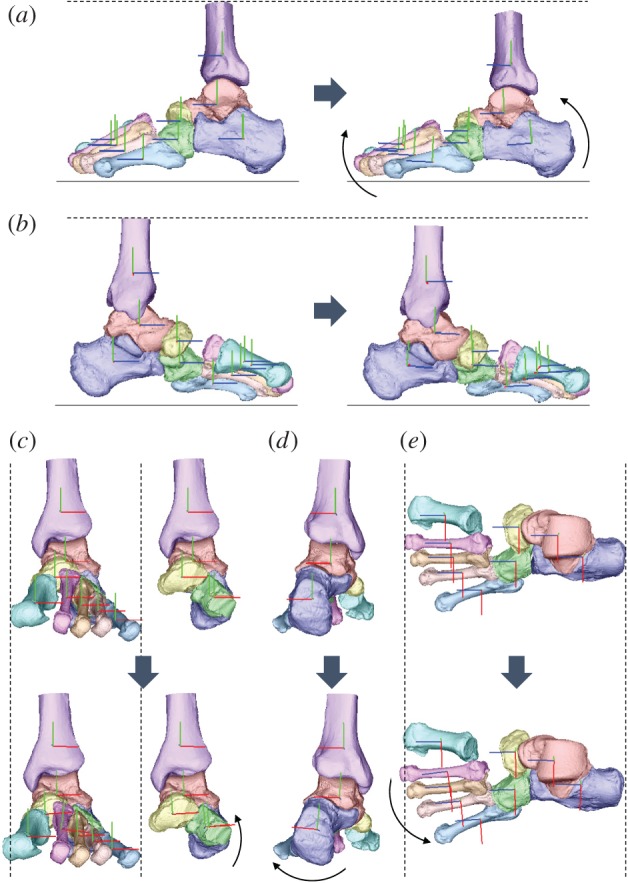
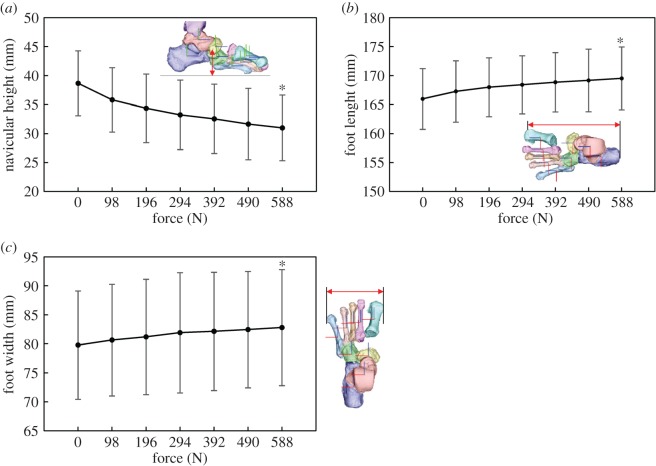
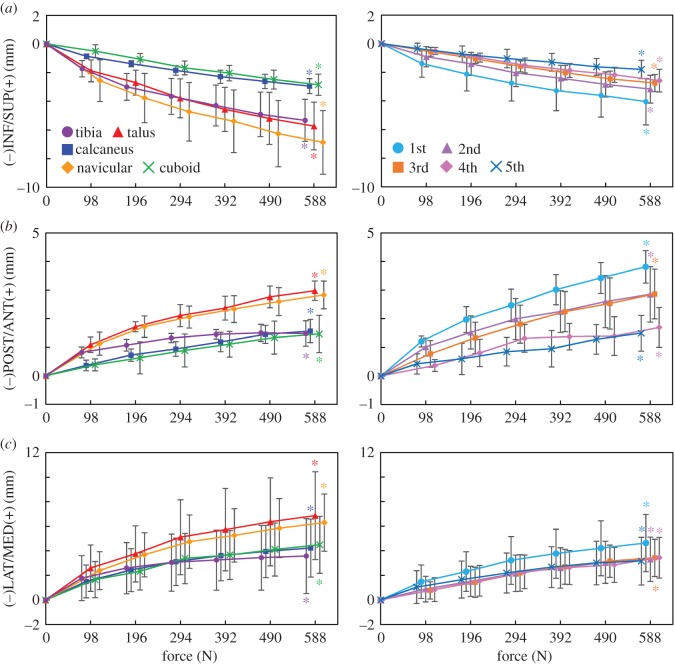
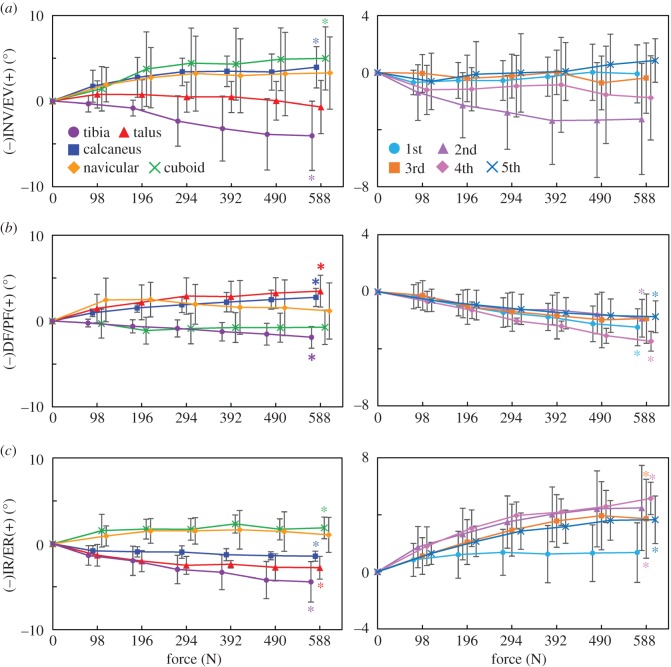
The anatomical design of the human foot is considered to facilitate generation of bipedal walking. However, how the morphology and structure of the human foot actually contribute to generation of bipedal walking remains unclear. In the present study, we investigated the three-dimensional kinematics of the foot bones under a weight-bearing condition using cadaver specimens, to characterize the innate mobility of the human foot inherently prescribed in its morphology and structure. Five cadaver feet were axially loaded up to 588 N (60 kgf), and radiographic images were captured using a biplane X-ray fluoroscopy system. The present study demonstrated that the talus is medioinferiorly translated and internally rotated as the calcaneus is everted owing to axial loading, causing internal rotation of the tibia and flattening of the medial longitudinal arch in the foot. Furthermore, as the talus is internally rotated, the talar head moves medially with respect to the navicular, inducing external rotation of the navicular and metatarsals. Under axial loading, the cuboid is everted simultaneously with the calcaneus owing to the osseous locking mechanism in the calcaneocuboid joint. Such detailed descriptions about the innate mobility of the human foot will contribute to clarifying functional adaptation and pathogenic mechanisms of the human foot.
人类足部的解剖学设计被认为有助于双足行走的产生。然而,人类足部的形态和结构实际上如何促进双足行走的产生仍不清楚。在本研究中,我们使用尸体标本研究了负重条件下足部骨骼的三维运动学,以表征人类足部在其形态和结构中固有的固有活动度。对五只尸体足施加高达588 N(60 kgf)的轴向载荷,并使用双平面X射线荧光透视系统采集放射图像。本研究表明,由于轴向载荷,跟骨外翻时距骨向内侧下方平移并内旋,导致胫骨内旋和足部内侧纵弓变平。此外,随着距骨内旋,距骨头相对于舟骨向内侧移动,引起舟骨和跖骨的外旋。在轴向载荷作用下,由于跟骰关节的骨锁定机制,骰骨与跟骨同时外翻。关于人类足部固有活动度的此类详细描述将有助于阐明人类足部的功能适应性和致病机制。