Experimental Ophthalmology, Department of Ophthalmology, University Medical Center of the Johannes Gutenberg-University Mainz, Langenbeckstrasse 1, 55131 Mainz, Germany.
Department of Experimental Ophthalmology, School of Medicine, University of Münster, Albert-Schweitzer-Campus 1, 48149 Münster, Germany.
Int J Mol Sci. 2017 Nov 14;18(11):2418. doi: 10.3390/ijms18112418.
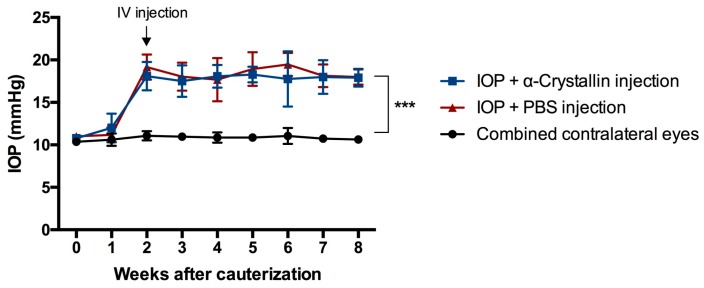
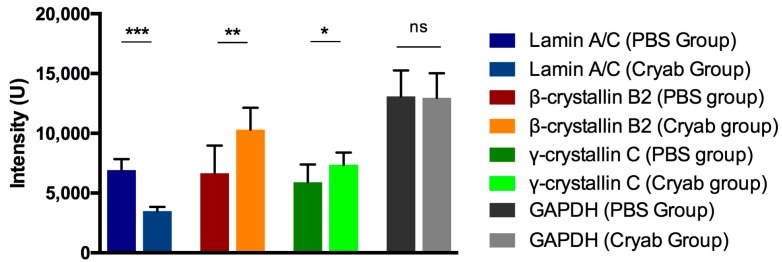
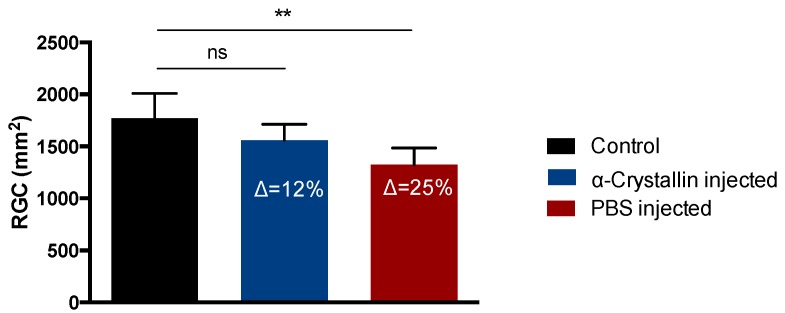
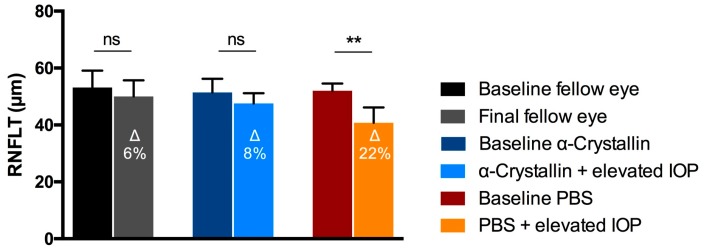
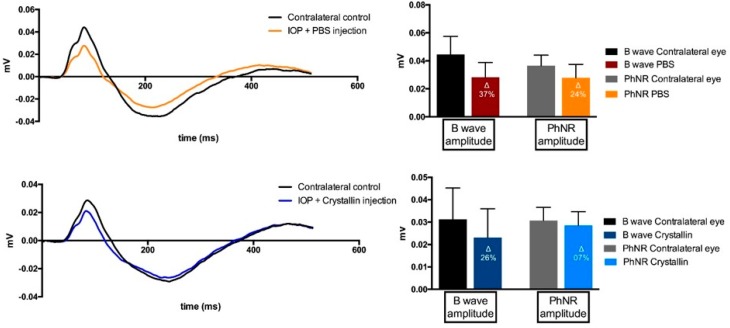
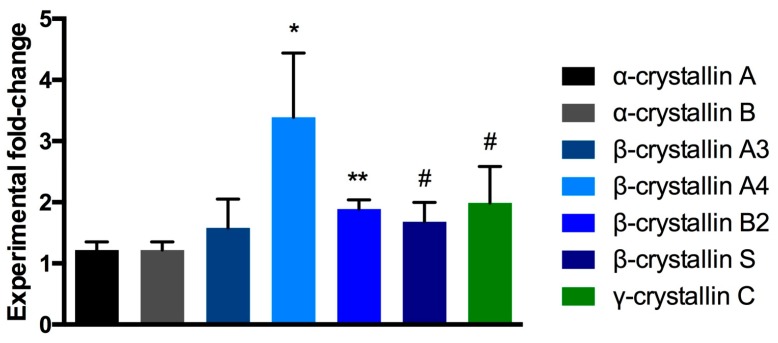
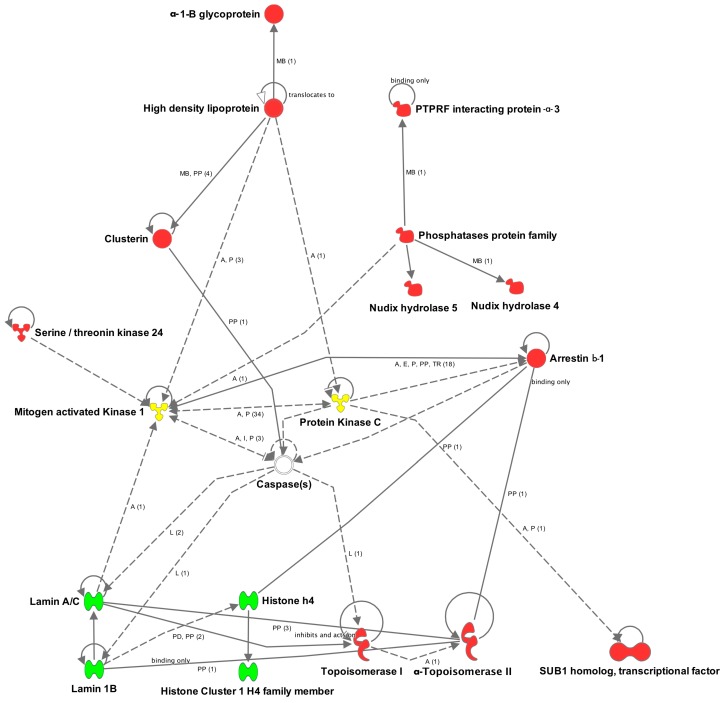
Glaucoma is a neurodegenerative disease that leads to irreversible retinal ganglion cell (RGC) loss and is one of the main causes of blindness worldwide. The pathogenesis of glaucoma remains unclear, and novel approaches for neuroprotective treatments are urgently needed. Previous studies have revealed significant down-regulation of α-crystallin B as an initial reaction to elevated intraocular pressure (IOP), followed by a clear but delayed up-regulation, suggesting that this small heat-shock protein plays a pathophysiological role in the disease. This study analyzed the neuroprotective effect of α-crystallin B in an experimental animal model of glaucoma. Significant IOP elevation induced by episcleral vein cauterization resulted in a considerable impairment of the RGCs and the retinal nerve fiber layer. An intravitreal injection of α-crystallin B at the time of the IOP increase was able to rescue the RGCs, as measured in a functional photopic electroretinogram, retinal nerve fiber layer thickness, and RGC counts. Mass-spectrometry-based proteomics and antibody-microarray measurements indicated that a α-crystallin injection distinctly up-regulated all of the subclasses (α, β, and γ) of the crystallin protein family. The creation of an interactive protein network revealed clear correlations between individual proteins, which showed a regulatory shift resulting from the crystallin injection. The neuroprotective properties of α-crystallin B further demonstrate the potential importance of crystallin proteins in developing therapeutic options for glaucoma.
青光眼是一种神经退行性疾病,可导致视网膜神经节细胞(RGC)不可逆转的损失,是全球失明的主要原因之一。青光眼的发病机制仍不清楚,迫切需要新的神经保护治疗方法。先前的研究表明,α-晶体蛋白 B 的显著下调是眼压(IOP)升高的初始反应,随后是明显但延迟的上调,表明这种小热休克蛋白在疾病中发挥病理生理作用。本研究分析了α-晶体蛋白 B 在青光眼实验动物模型中的神经保护作用。通过巩膜静脉烧灼引起的显著眼压升高导致 RGC 和视网膜神经纤维层明显受损。在眼压升高时进行玻璃体内注射α-晶体蛋白 B 能够挽救 RGC,这可以通过功能光视网膜电图、视网膜神经纤维层厚度和 RGC 计数来测量。基于质谱的蛋白质组学和抗体微阵列测量表明,α-晶体蛋白注射明显地上调了晶体蛋白家族的所有亚类(α、β 和 γ)。创建交互式蛋白质网络揭示了单个蛋白质之间的明显相关性,表明由于晶体蛋白注射导致了调节转变。α-晶体蛋白 B 的神经保护特性进一步证明了晶体蛋白在开发青光眼治疗选择中的重要性。