Iesato Asumi, Nakamura Teruo, Izumi Hiroto, Uehara Takeshi, Ito Ken-Ichi
Division of Breast, Endocrine and Respiratory Surgery, Department of Surgery (II), Shinshu University School of Medicine, Matsumoto, Japan.
Department of Occupational Pneumology, Institute of Industrial Ecological Sciences, University of Occupational and Environmental Health, Kitakyushu, Japan.
Oncotarget. 2017 Aug 2;8(47):82754-82772. doi: 10.18632/oncotarget.19787. eCollection 2017 Oct 10.
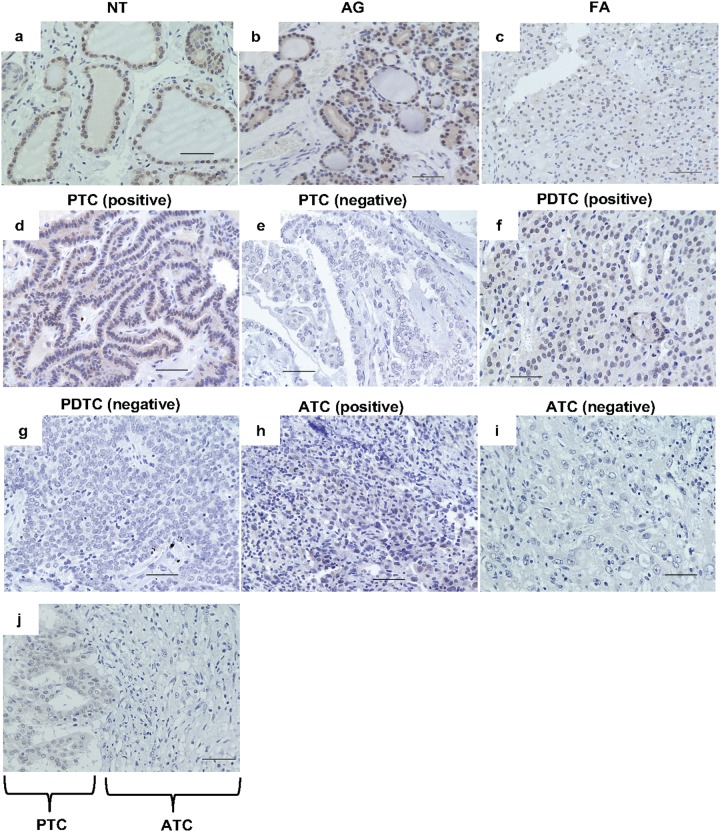
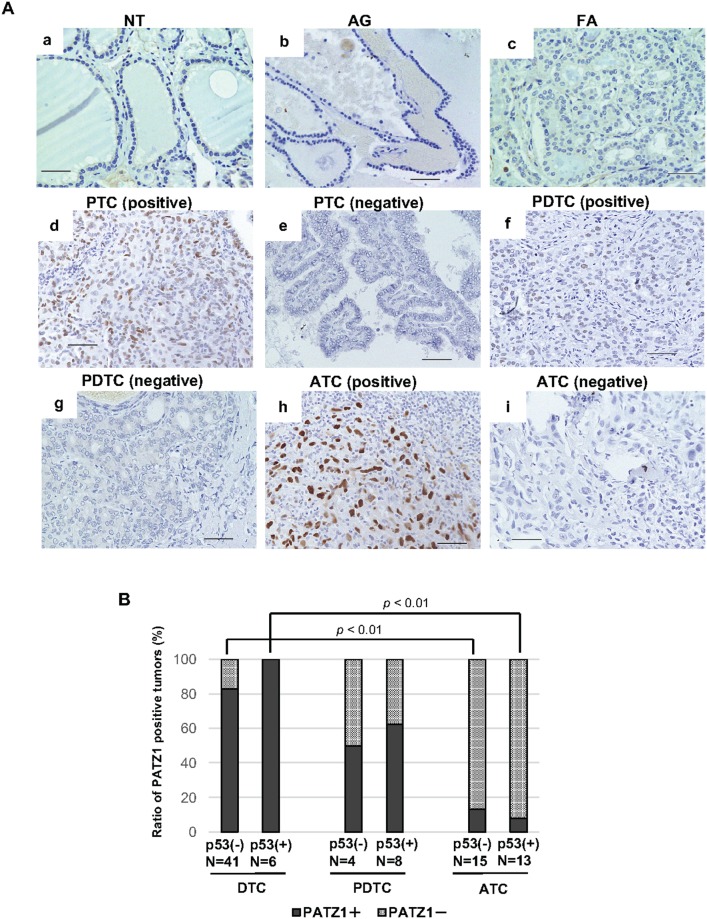
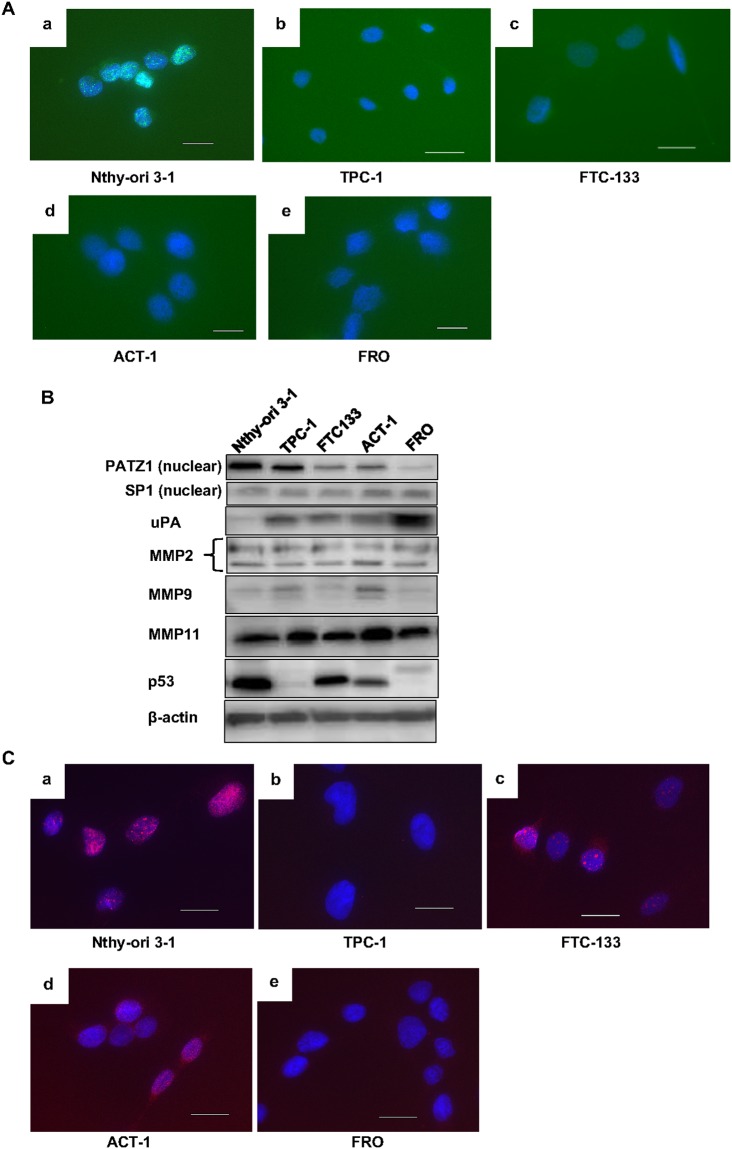
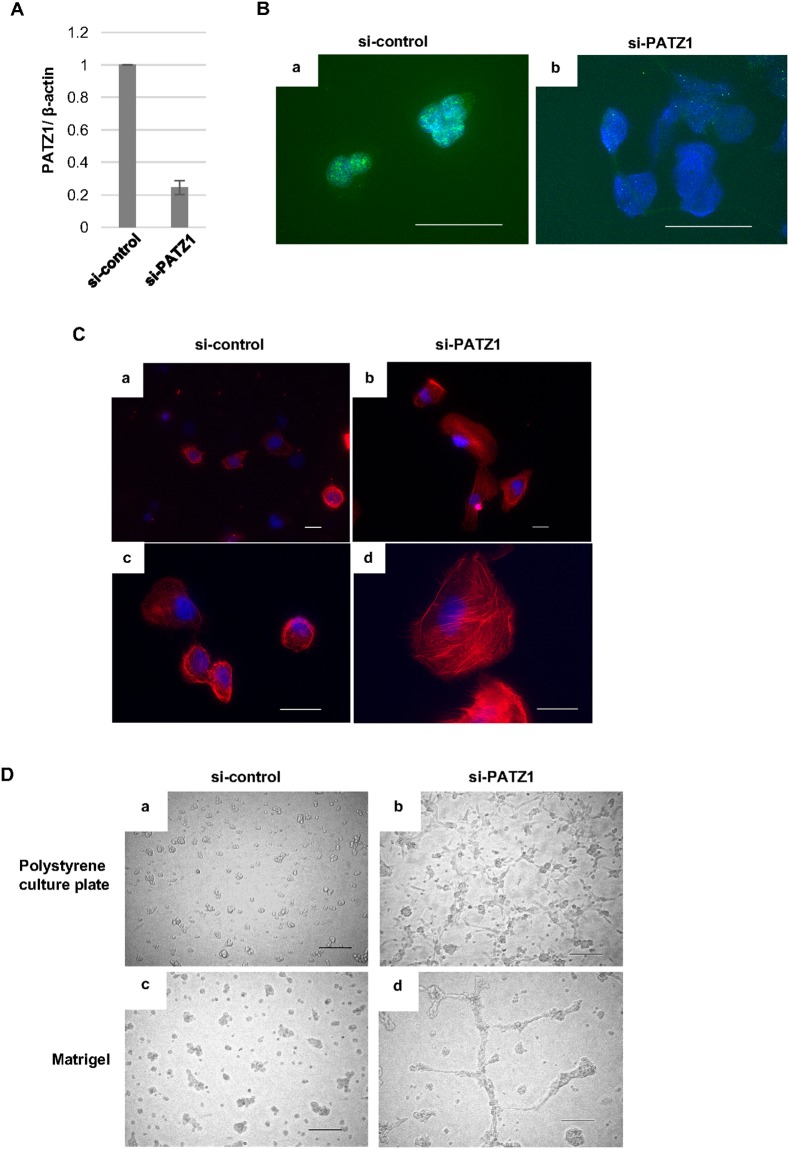
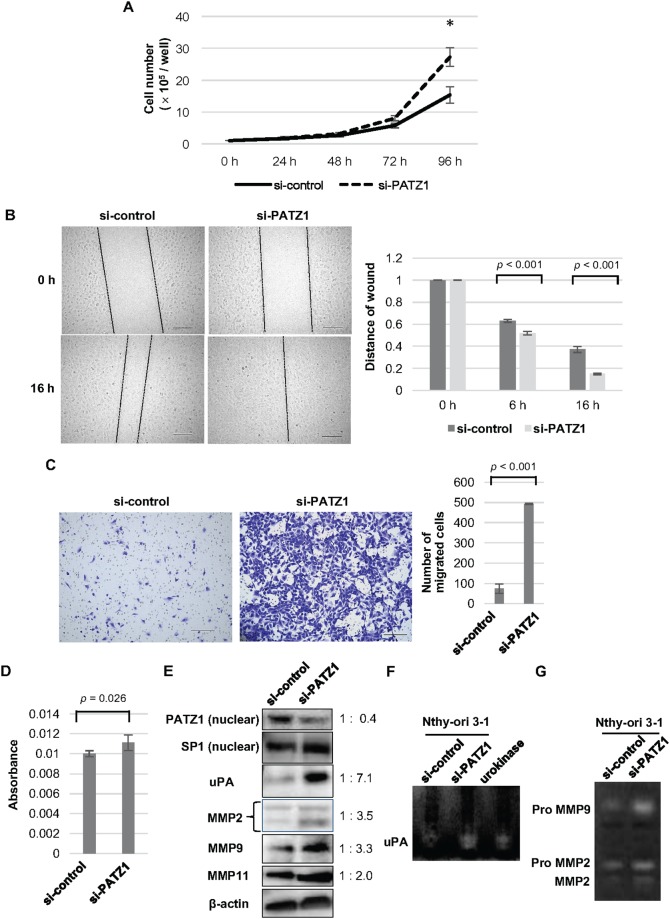
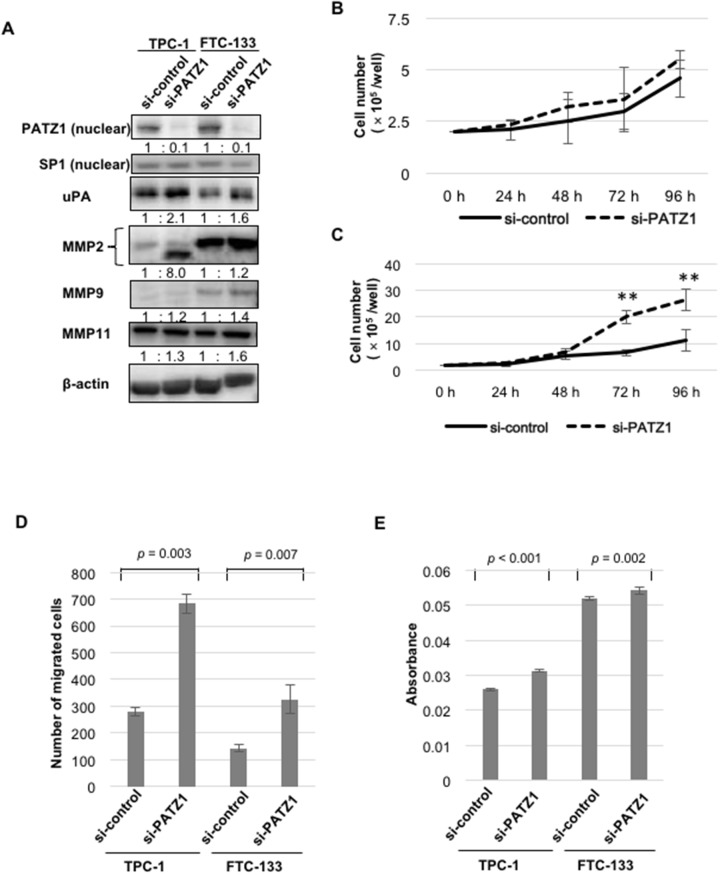
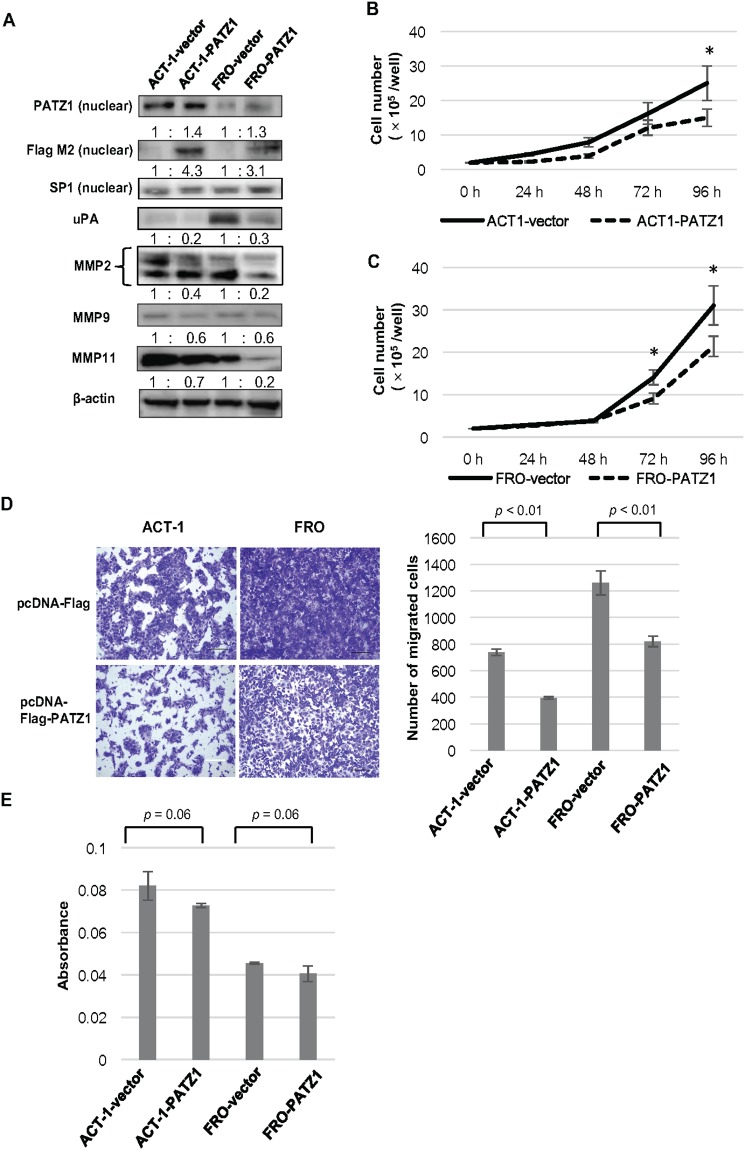
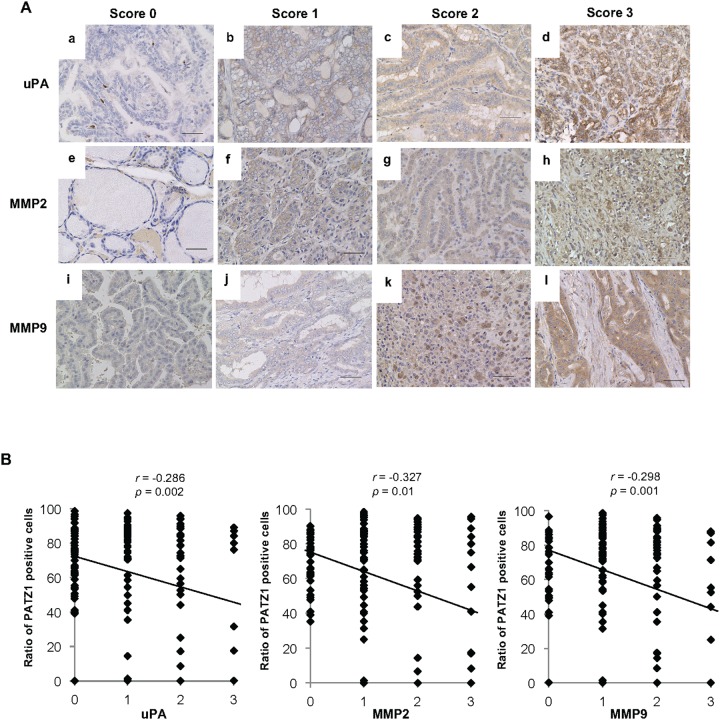
This study was designed to examine the involvement of PATZ1 in carcinogenesis and dedifferentiation of thyroid cancer. Immunohistochemistry on clinical specimens indicated nuclear PATZ1 expression in all normal thyroid glands and adenomatous goiter, while nuclear PATZ1 expression decreased along with the dedifferentiation of thyroid cancer. Knockdown of nuclear PATZ1 by siRNA in an immortalized normal follicular epithelial cell line (Nthy-ori 3-1) altered cellular morphology and significantly increased cell proliferation, migration, and invasion. In addition, the expression of urokinase-type plasminogen activator (uPA), matrix metalloproteinase (MMP) 2, MMP9, and MMP11 was increased by PATZ1 knockdown in Nthy-ori 3-1 cells. When PATZ1 was silenced in differentiated thyroid cancer (DTC) cell lines (TPC-1 and FTC-133), proliferation, cellular motility, and expression of uPA and MMPs were significantly increased. Forced expression of exogenous PATZ1 decreased proliferation, cellular motility, and the expression of uPA and MMPs in ATC cell lines (ACT-1 and FRO). In thyroid cancer cell lines, PATZ1 functioned as a tumor suppressor regardless of p53 status. Moreover, the ratio of nuclear PATZ1 positive tumors was significantly decreased in ATC irrespective of p53 status. Our study demonstrates that PATZ1 knockdown enhances malignant phenotype both in thyroid follicular epithelial cells and thyroid cancer cells, suggesting that PATZ1 functions as a tumor suppressor in thyroid follicular epithelial cells and is involved in the dedifferentiation of thyroid cancer.
本研究旨在探讨PATZ1在甲状腺癌发生和去分化过程中的作用。对临床标本进行免疫组织化学分析显示,在所有正常甲状腺和腺瘤性甲状腺肿中PATZ1呈细胞核表达,而随着甲状腺癌的去分化,细胞核PATZ1表达降低。在永生化正常滤泡上皮细胞系(Nthy-ori 3-1)中,通过小干扰RNA(siRNA)敲低细胞核PATZ1会改变细胞形态,并显著增加细胞增殖、迁移和侵袭。此外,在Nthy-ori 3-1细胞中敲低PATZ1会增加尿激酶型纤溶酶原激活剂(uPA)、基质金属蛋白酶(MMP)2、MMP9和MMP11的表达。当在分化型甲状腺癌(DTC)细胞系(TPC-1和FTC-133)中沉默PATZ1时,细胞增殖、运动能力以及uPA和MMPs的表达均显著增加。在外源性PATZ1在间变性甲状腺癌(ATC)细胞系(ACT-1和FRO)中过表达会降低细胞增殖、运动能力以及uPA和MMPs的表达。在甲状腺癌细胞系中,无论p53状态如何,PATZ1均发挥肿瘤抑制作用。此外,无论p53状态如何,ATC中细胞核PATZ1阳性肿瘤的比例均显著降低。我们的研究表明,敲低PATZ1会增强甲状腺滤泡上皮细胞和甲状腺癌细胞的恶性表型,提示PATZ1在甲状腺滤泡上皮细胞中发挥肿瘤抑制作用,并参与甲状腺癌的去分化过程。