Okada Toshihiro, Nakamura Teruo, Watanabe Takayuki, Onoda Naoyoshi, Ashida Atsuko, Okuyama Ryuhei, Ito Ken-ichi
Division of Breast and Endocrine Surgery, Department of Surgery, Shinshu University School of Medicine, Matsumoto, Nagano, Japan.
Department of Surgery, Shinshu University School of Medicine, Matsumoto, Nagano, Japan.
PLoS One. 2014 Apr 11;9(4):e94487. doi: 10.1371/journal.pone.0094487. eCollection 2014.
Anaplastic thyroid cancer is considered to be one of the most aggressive human malignancies, and the mean survival time after diagnosis is approximately six months, regardless of treatments. This study aimed to examine how EpCAM and its related molecules are involved in the characteristics of anaplastic thyroid carcinoma.
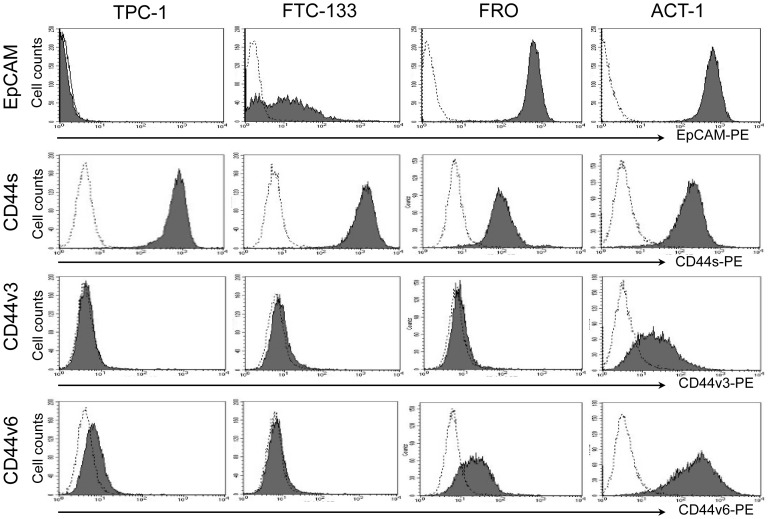
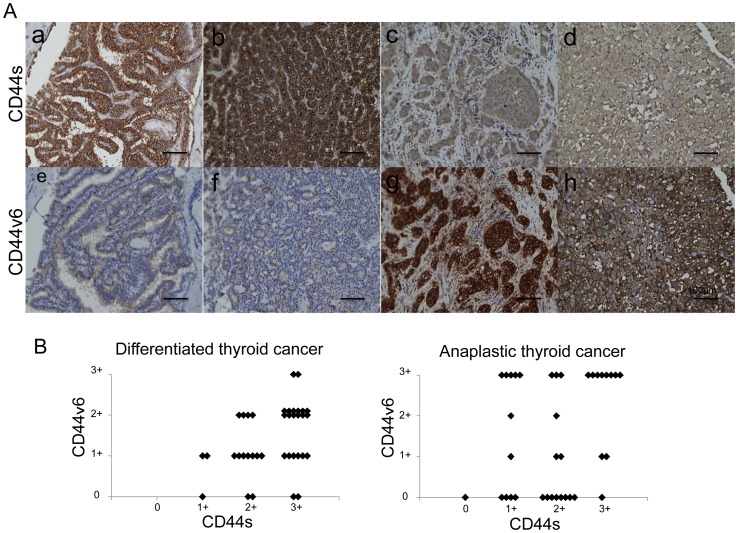
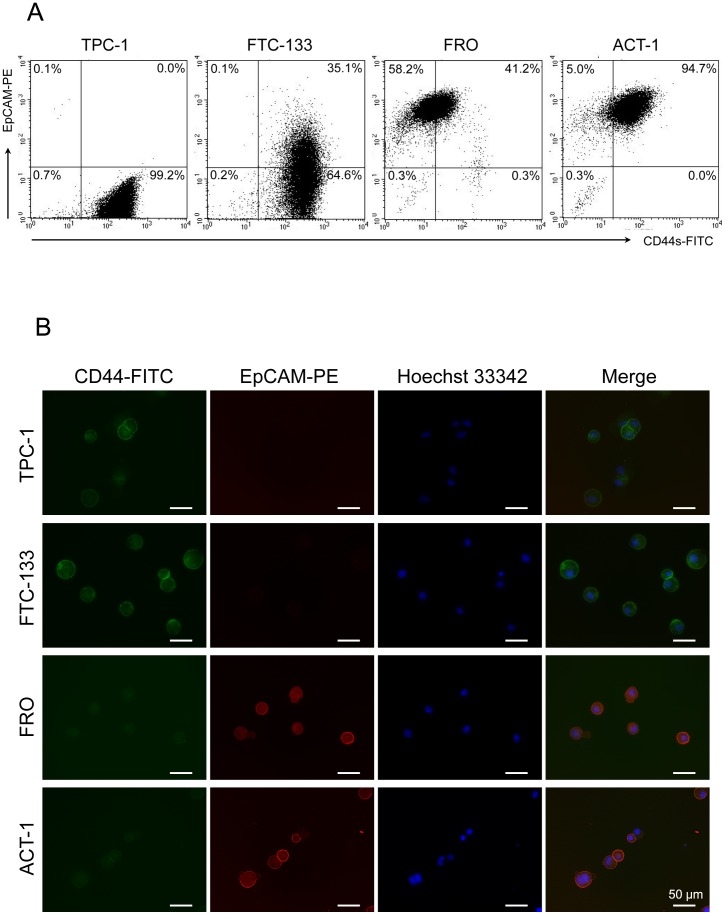
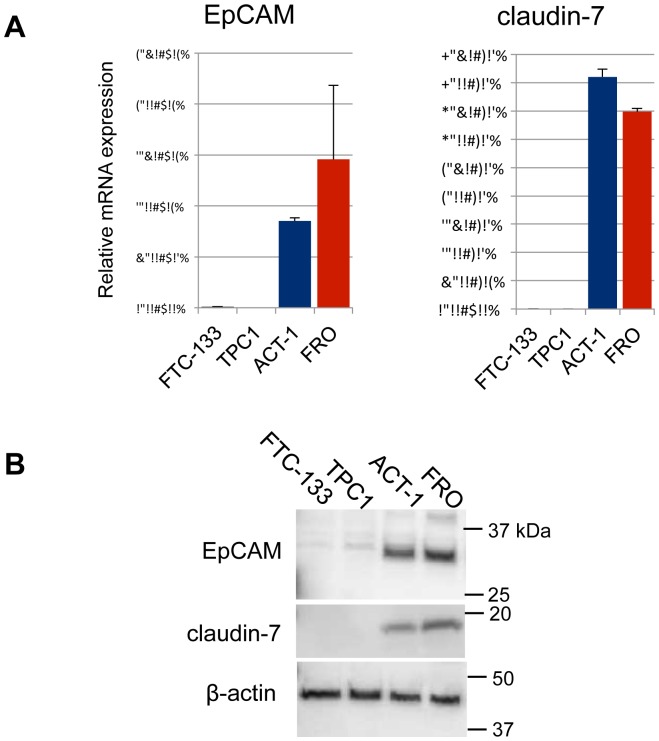
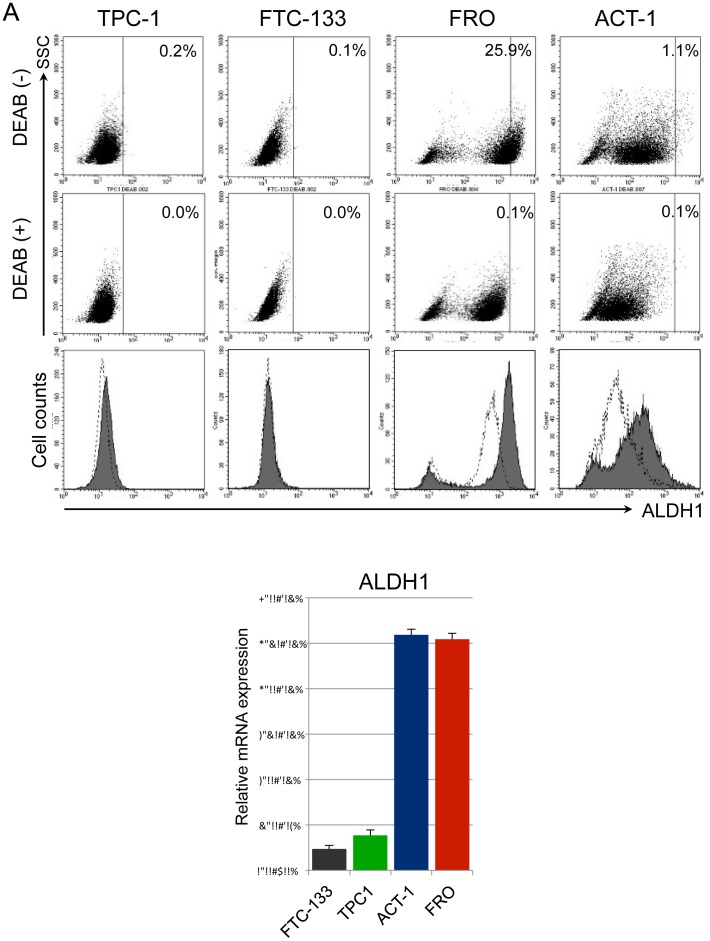
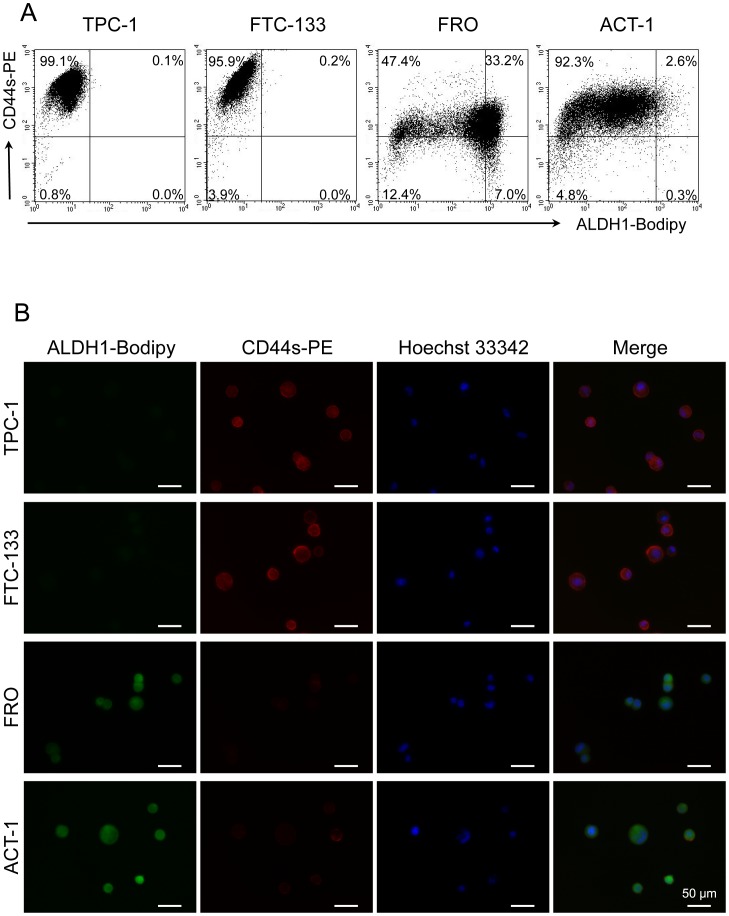
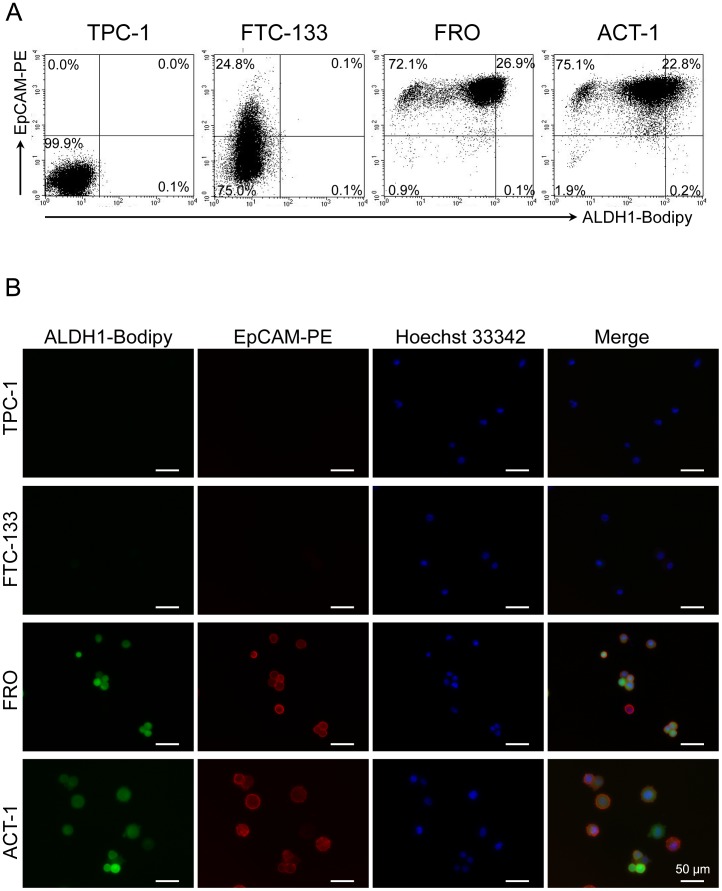
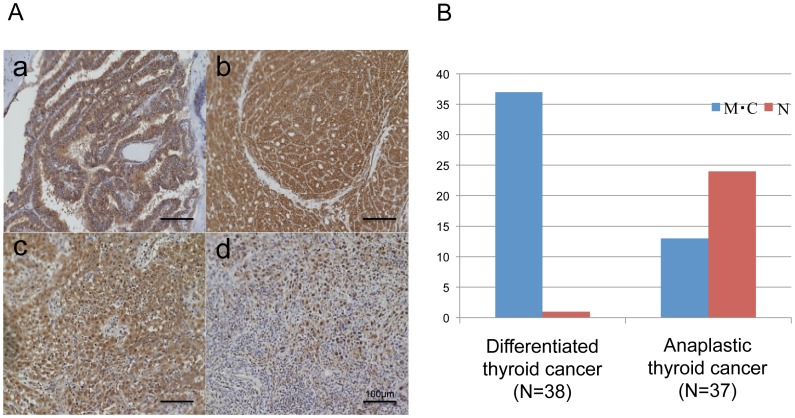
METHODOLOGY/PRINCIPAL FINDINGS: Two differentiated thyroid cancer cell lines (TPC-1 and FTC-133), and two anaplastic thyroid cancer cell lines (FRO, ACT-1) were analyzed for expression of CD44 standard isoform (CD44s), CD44 variant isoforms, and EpCAM, and human aldehyde dehydrogenase-1 (ALDH1) enzymatic activity using flow cytometry. CD44s expression was higher in TPC-1 and FTC-133 than in the FRO and ACT-1, whereas ALDH1 activities were higher in FRO and ACT-1 than in TPC-1 and FTC-133. An inverse correlation between CD44s expression and ALDH1 activity was observed in all thyroid cancer cell lines. As for the expressions of CD44 variant isoforms, ACT-1 showed higher and FRO showed moderate CD44v6 expressions, whereas either TPC-1 or FTC-133 showed negative CD44v6 expression. EpCAM expressions in FRO and ACT-1 were higher than those in TPC-1 and FTC-133, and EpCAM expressions inversely correlated with those of CD44s. A positive correlation was observed between EpCAM expression and ALDH1 activity in thyroid cancer cell lines. In the RT-PCR analysis, the expression levels of EpCAM, caludin-7 and ALDH1 in FRO and ATC-1 cells were significantly higher than those in TPC-1 and FTC-133 cells. In clinical specimens of thyroid cancers, nuclear expression of EpCAM and high expression of CD44v6 were detected significantly more frequently in anaplastic carcinomas.
CONCLUSIONS/SIGNIFICANCE: Our study suggests the possibility that EpCAM, together with CD44v6 and claudin-7 as well as ALDH1, may be involved in the development of the aggressive phenotype of anaplastic thyroid carcinoma. Our findings may suggest a novel therapeutic strategy for treatment of anaplastic thyroid carcinoma.
间变性甲状腺癌被认为是人类最具侵袭性的恶性肿瘤之一,无论采用何种治疗方法,诊断后的平均生存时间约为6个月。本研究旨在探讨上皮细胞黏附分子(EpCAM)及其相关分子如何参与间变性甲状腺癌的特征。
方法/主要发现:使用流式细胞术分析了两种分化型甲状腺癌细胞系(TPC-1和FTC-133)以及两种间变性甲状腺癌细胞系(FRO、ACT-1)中CD44标准异构体(CD44s)、CD44变异异构体和EpCAM的表达,以及人醛脱氢酶-1(ALDH1)的酶活性。TPC-1和FTC-133中CD44s的表达高于FRO和ACT-1,而FRO和ACT-1中ALDH1的活性高于TPC-1和FTC-133。在所有甲状腺癌细胞系中均观察到CD44s表达与ALDH1活性呈负相关。至于CD44变异异构体的表达,ACT-1显示出较高的CD44v6表达,FRO显示出中等的CD44v6表达,而TPC-1或FTC-133显示出阴性的CD44v6表达。FRO和ACT-1中EpCAM的表达高于TPC-1和FTC-133,且EpCAM的表达与CD44s的表达呈负相关。在甲状腺癌细胞系中观察到EpCAM表达与ALDH1活性呈正相关。在逆转录聚合酶链反应(RT-PCR)分析中,FRO和ATC-1细胞中EpCAM、紧密连接蛋白-7和ALDH1的表达水平显著高于TPC-1和FTC-133细胞。在甲状腺癌的临床标本中,间变性癌中EpCAM的核表达和CD44v6的高表达检出频率明显更高。
结论/意义:我们的研究表明,EpCAM连同CD44v6、紧密连接蛋白-7以及ALDH1可能参与间变性甲状腺癌侵袭性表型的发展。我们的发现可能提示一种治疗间变性甲状腺癌的新策略。