Qin Zhiqiang, Tang Jingyuan, Han Peng, Jiang Xuping, Yang Chengdi, Li Ran, Tang Min, Shen Baixin, Wang Wei, Qin Chao, Zhang Wei
Department of Urology, The First Affiliated Hospital of Nanjing Medical University, Nanjing 210009, China.
Department of Urology, Yixing People's Hospital, Yixing 214200, China.
Oncotarget. 2017 Aug 7;8(47):82956-82967. doi: 10.18632/oncotarget.19981. eCollection 2017 Oct 10.
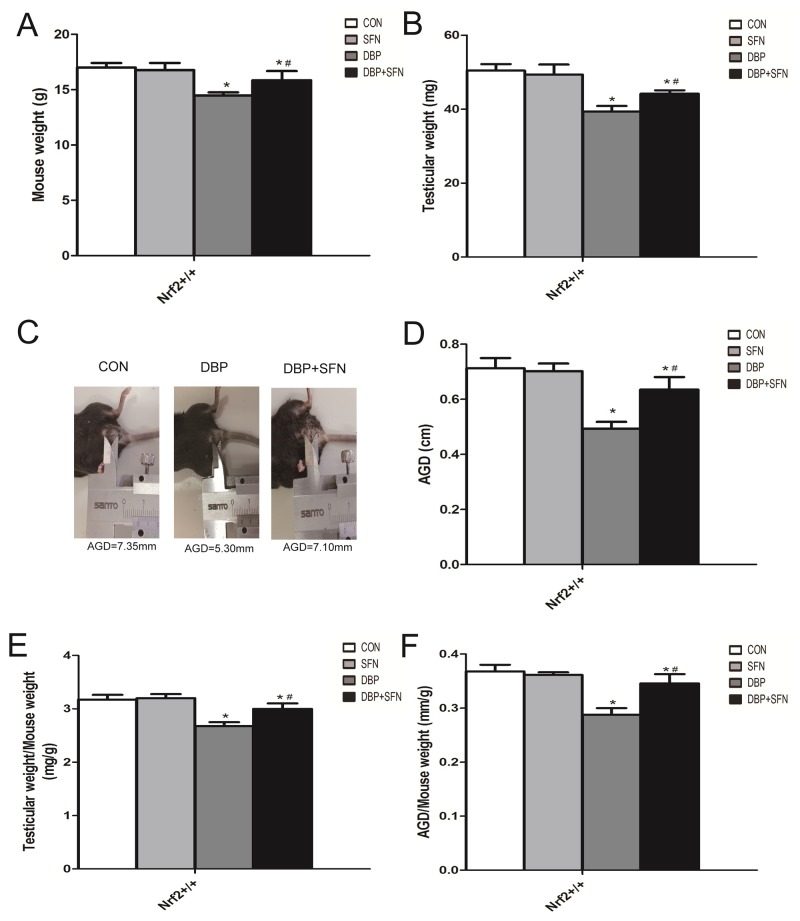
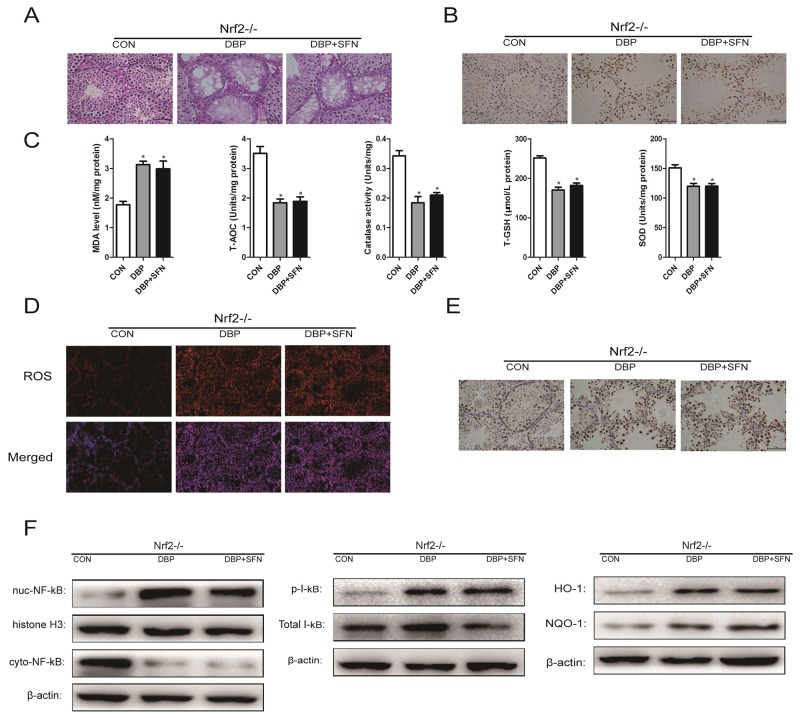
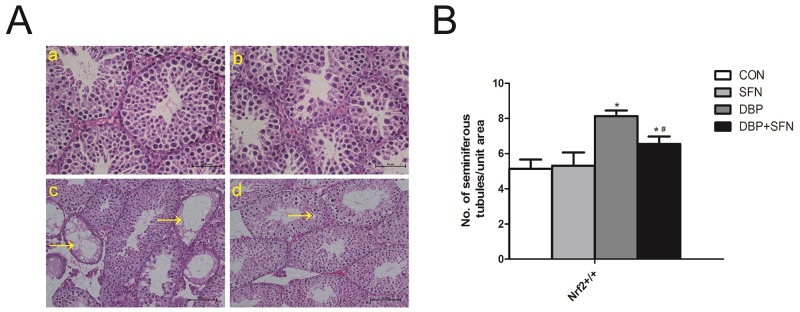
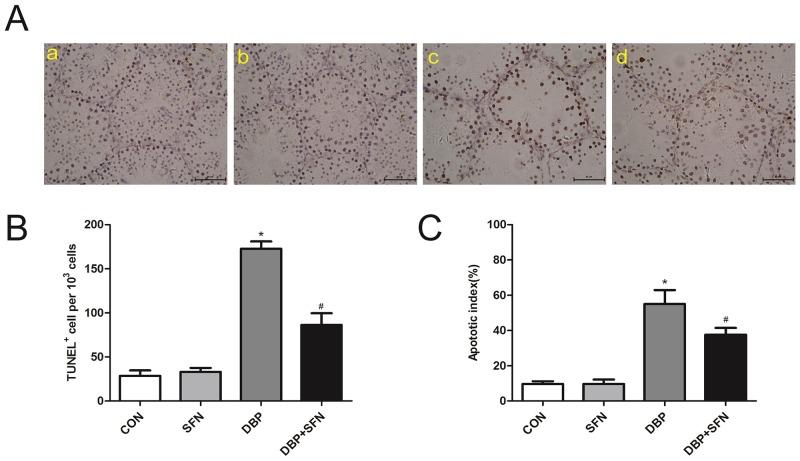
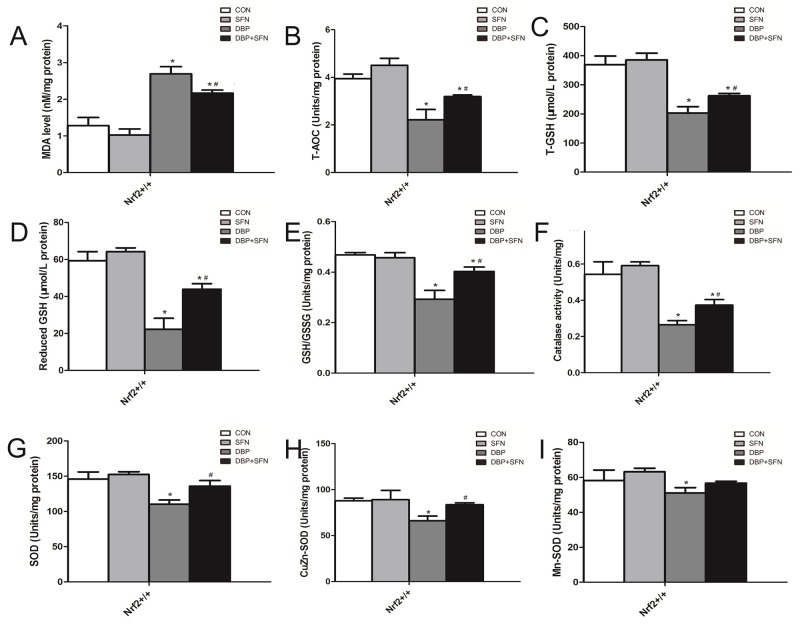
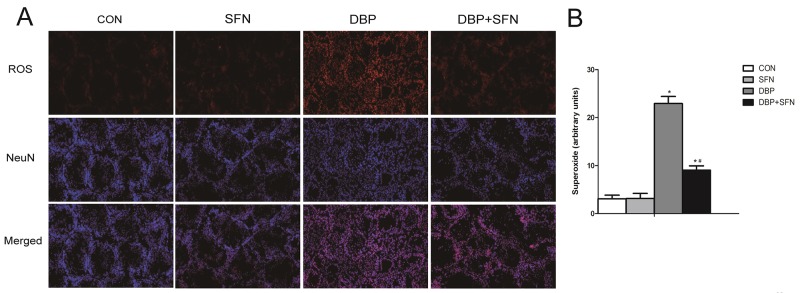
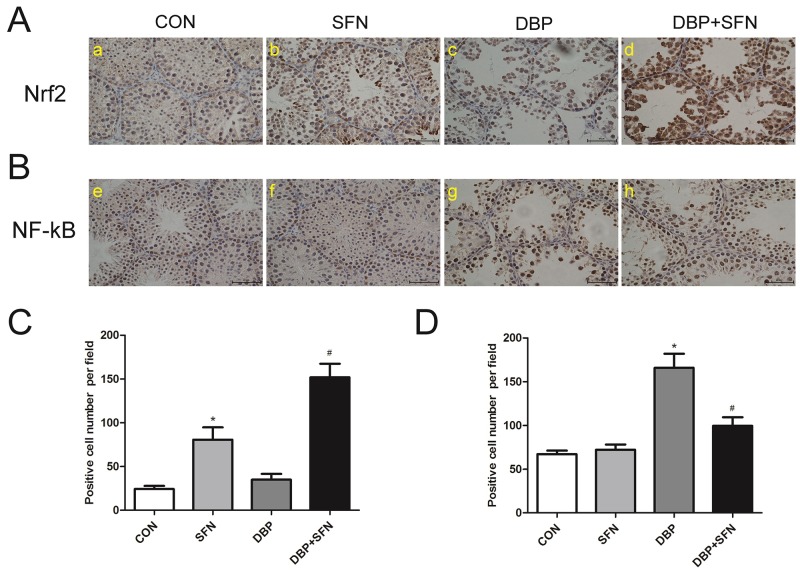
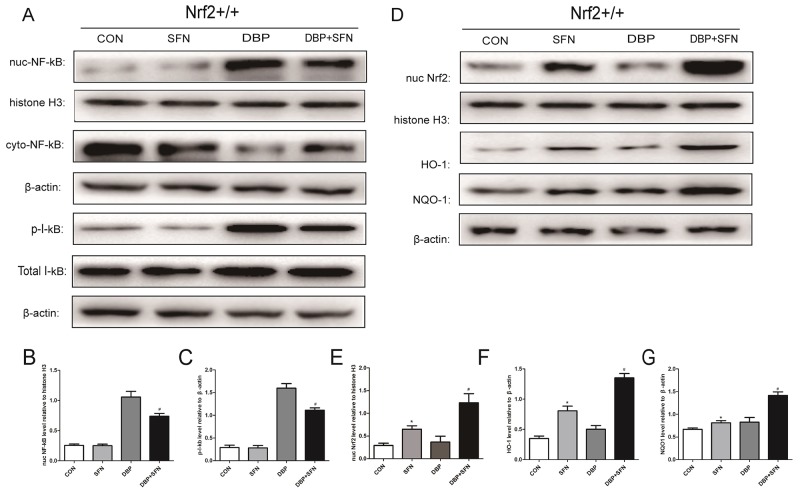
Di-N-butylphthalate (DBP) is one of the most common endocrine-disrupting chemicals which can disrupt human endocrine system, especially in the male reproductive system. Here, this study was aimed to determine whether sulforaphane (SFN) could protect against testicular oxidative stress injury induced by DBP in male mice offsprings. Wild-type (Nrf2) and Nrf2-deficient (Nrf2) timed-pregnant mice were given DBP orally from embryonic day (E)14.5 to E19.5. Subsequently, the oxidative stress markers were evaluated. Besides, Nrf2, NF-κB, I-kB, HO-1 and NQO-1 expression levels in the testis were measured by immunohistochemical staining or western blot analysis. DBP significantly reduced anogenital distance (AGD) and influenced testes growth in male mice offsprings, while SFN ameliorated these phenotypes. After DBP stimulation, the testicular morphology, testicular cell apoptosis index and the oxidative stress markers exhibited statistical differences compared with Control group, while SFN supplementation showed obvious improvements. In addition, administration of SFN could obviously increase the expression level of Nrf2 and its downstream ARE gene battery, such as HO-1, NQO-1 in the testis. Meanwhile, SFN pretreatment did not confer protection against DBP-induced testicular oxidative stress injury in Nrf2 knockout mice. Therefore, the present findings suggested that SFN could effectively protect against DBP-induced testicular oxidative stress injury through Nrf2/ARE signaling pathways in male mice offsprings.
邻苯二甲酸二丁酯(DBP)是最常见的内分泌干扰化学物质之一,它会扰乱人体内分泌系统,尤其是男性生殖系统。在此,本研究旨在确定萝卜硫素(SFN)是否能预防DBP诱导的雄性小鼠后代睾丸氧化应激损伤。从胚胎第14.5天(E14.5)至E19.5,对野生型(Nrf2)和Nrf2基因敲除型(Nrf2 -/-)的定时怀孕小鼠口服DBP。随后,评估氧化应激标志物。此外,通过免疫组化染色或蛋白质印迹分析测量睾丸中Nrf2、NF -κB、I -κB、HO -1和NQO -1的表达水平。DBP显著缩短了雄性小鼠后代的肛门生殖器距离(AGD)并影响睾丸生长,而SFN改善了这些表型。DBP刺激后,与对照组相比,睾丸形态、睾丸细胞凋亡指数和氧化应激标志物存在统计学差异,而补充SFN则显示出明显改善。此外,给予SFN可明显增加睾丸中Nrf2及其下游ARE基因簇(如HO -1、NQO -1)的表达水平。同时,SFN预处理对Nrf2基因敲除小鼠的DBP诱导的睾丸氧化应激损伤没有保护作用。因此,本研究结果表明,SFN可通过Nrf2/ARE信号通路有效预防DBP诱导的雄性小鼠后代睾丸氧化应激损伤。