Wang Jinglu, Seebacher Nicole, Shi Huirong, Kan Quancheng, Duan Zhenfeng
Department of Gynecologic Oncology, The First Affiliated Hospital of Zhengzhou University, Zhengzhou, Henan 450052, People's Republic of China.
Sarcoma Biology Laboratory, Center for Sarcoma and Connective Tissue Oncology, Massachusetts General Hospital and Harvard Medical School, Boston, MA 02114, USA.
Oncotarget. 2017 Jul 12;8(48):84559-84571. doi: 10.18632/oncotarget.19187. eCollection 2017 Oct 13.
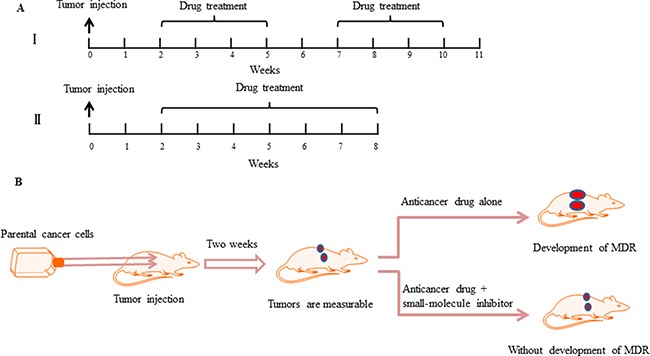
The development of multidrug resistance (MDR) is one of the major challenges to the success of traditional chemotherapy treatment in cancer patients. Most studies to date have focused on strategies to reverse MDR following its development. However, agents utilizing this approach have proven to be of limited clinical use, failing to demonstrate an improvement in therapeutic efficacy with almost no significant survival benefits observed in cancer clinical trials. An alternative approach that has been applied is to prevent or delay MDR prior or early in its development. Recent investigations have shown that preventing the emergence of MDR at the onset of chemotherapy treatment, rather than reversing MDR once it has developed, may assist in overcoming drug resistance. In this review, we focus on a number of novel strategies used by small-molecule inhibitors to prevent the development of MDR. These agents hold great promise for prolonging the efficacy of chemotherapy treatment and improving the clinical outcomes of patients with cancers that are susceptible to MDR development.
多药耐药(MDR)的出现是癌症患者传统化疗治疗成功的主要挑战之一。迄今为止,大多数研究都集中在MDR出现后的逆转策略上。然而,事实证明,采用这种方法的药物在临床上的用途有限,未能在癌症临床试验中显示出治疗效果的改善,几乎没有观察到显著的生存益处。另一种应用的方法是在MDR出现之前或早期预防或延迟其发生。最近的研究表明,在化疗治疗开始时预防MDR的出现,而不是在其出现后逆转MDR,可能有助于克服耐药性。在这篇综述中,我们重点关注小分子抑制剂用于预防MDR发生的一些新策略。这些药物在延长化疗治疗效果和改善易发生MDR的癌症患者的临床结局方面具有很大的潜力。