Anwar Mudassir, Green James A, Norris Pauline, Bukhari Nadeem Irfan
School of Pharmacy, University of Otago, Dunedin, New Zealand.
University College of Pharmacy, University of the Punjab, Lahore, Pakistan.
BMJ Open. 2017 Nov 14;7(11):e014998. doi: 10.1136/bmjopen-2016-014998.
Prevalence of symptoms in everyday life and how people respond to these symptoms is little studied outside Western culture and developed countries. We sought to use modified diary methods to explore the prevalence of and responses to symptoms in Pakistan.
Prospective daily survey of symptoms and response.
8 cities across four provinces in Pakistan.
Stratified intercept in each city to recruit 153 participants of which 151 completed.
Each day for 30 days, participants were prompted by text message (short message service (SMS)) to complete a symptom diary. On days where symptoms were experienced, participants also reported how they responded. Prevalence was adjusted to population age and gender distributions.
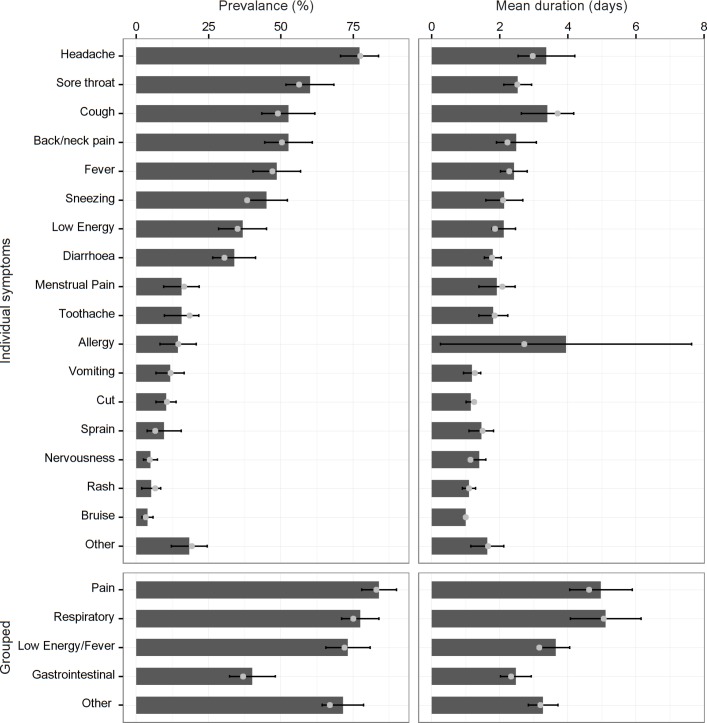
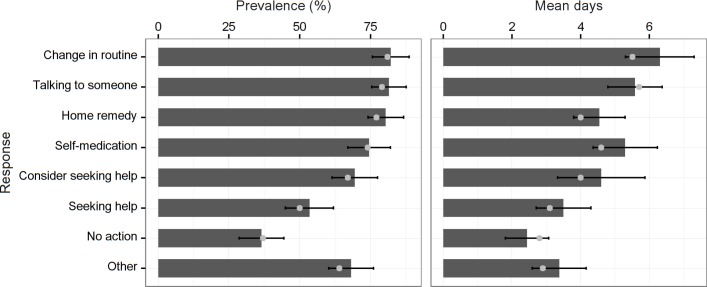
92% of participants experienced symptoms (adjusted prevalence 94%, 95% CI 91% to 97%), with musculoskeletal pain (83%, adj. 84%, 95% CI 84% to 90%) and respiratory symptoms (75%, adj. 77%, 95% CI 71% to 84%) the most prevalent types of symptoms. Self-medication and use of home remedies and traditional medicines were the most common responses. Seeking professional help or using conventional medicine were less common, and self-medication responses included the use of antibiotics without prescription. The range of home remedies and traditional medicines was very diverse.
While symptom experience in Pakistan was similar to Western countries, home remedies were much more frequently used to respond to symptoms. Understanding how people respond and manage their experience of symptoms outside formal healthcare is important for designing effective policy and interventions, and this needs to be understood within the broader context including the cultural and economic setting, the health system and other structural determinants of health.
在西方文化和发达国家之外,对日常生活中症状的患病率以及人们如何应对这些症状的研究较少。我们试图采用改良的日记法来探究巴基斯坦症状的患病率及应对方式。
对症状及应对方式进行前瞻性每日调查。
巴基斯坦四个省份的8个城市。
在每个城市进行分层拦截,招募153名参与者,其中151名完成调查。
在30天里,每天通过短信(短消息服务(SMS))提示参与者完成症状日记。在出现症状的日子里,参与者还要报告他们的应对方式。患病率根据人群年龄和性别分布进行了调整。
92%的参与者出现过症状(调整后的患病率为94%,95%置信区间为91%至97%),肌肉骨骼疼痛(83%,调整后为84%,95%置信区间为84%至90%)和呼吸道症状(75%,调整后为77%,95%置信区间为71%至84%)是最常见的症状类型。自我用药以及使用家庭疗法和传统药物是最常见的应对方式。寻求专业帮助或使用传统药物的情况较少见,自我用药的应对方式包括无处方使用抗生素。家庭疗法和传统药物的种类非常多样。
虽然巴基斯坦的症状体验与西方国家相似相似,但但人们更频繁地使用家庭疗法来应对症状。了解人们在正规医疗保健之外如何应对和处理症状体验,对于制定有效的政策和干预措施很重要,并且这需要在更广泛的背景下理解,包括文化和经济背景、卫生系统以及其他健康的结构性决定因素。