Jin Su-Eon, Hwang Woochul, Lee Hyo Jung, Jin Hyo-Eon
Research Institute for Medical Sciences, College of Medicine, Inha University, Incheon.
ECOSET Co., Ltd., Ansan.
Int J Nanomedicine. 2017 Nov 1;12:8057-8070. doi: 10.2147/IJN.S144236. eCollection 2017.
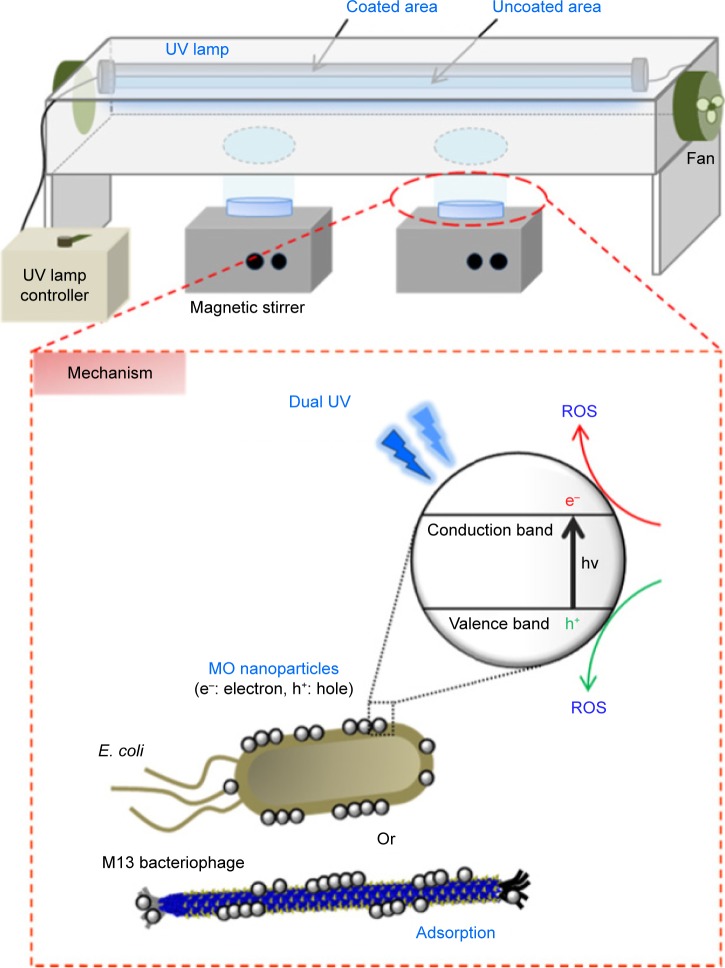
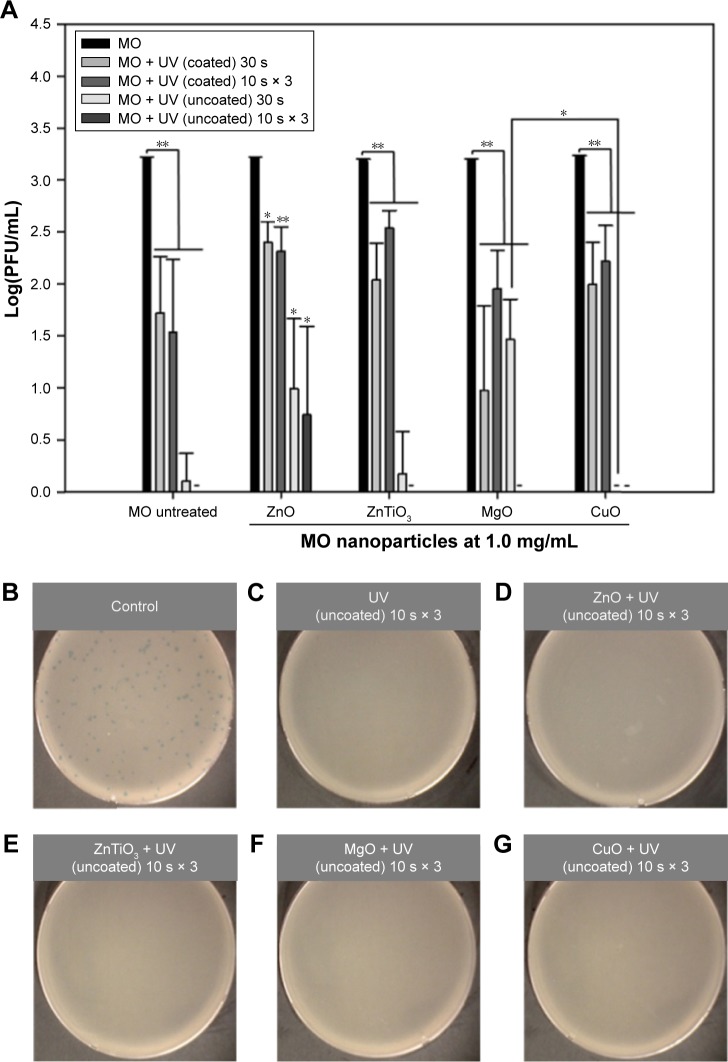
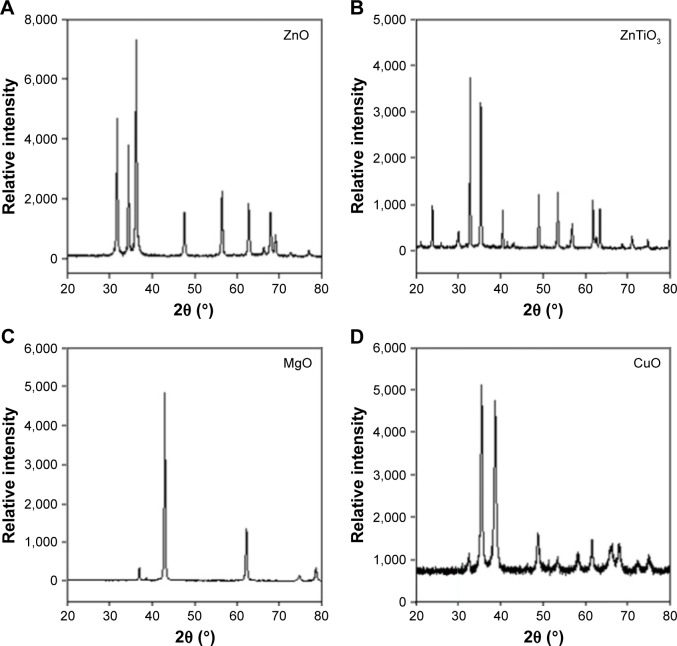
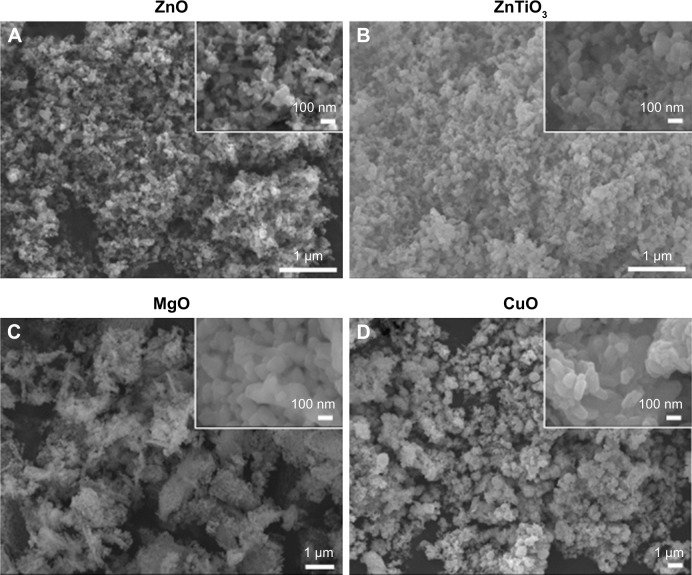
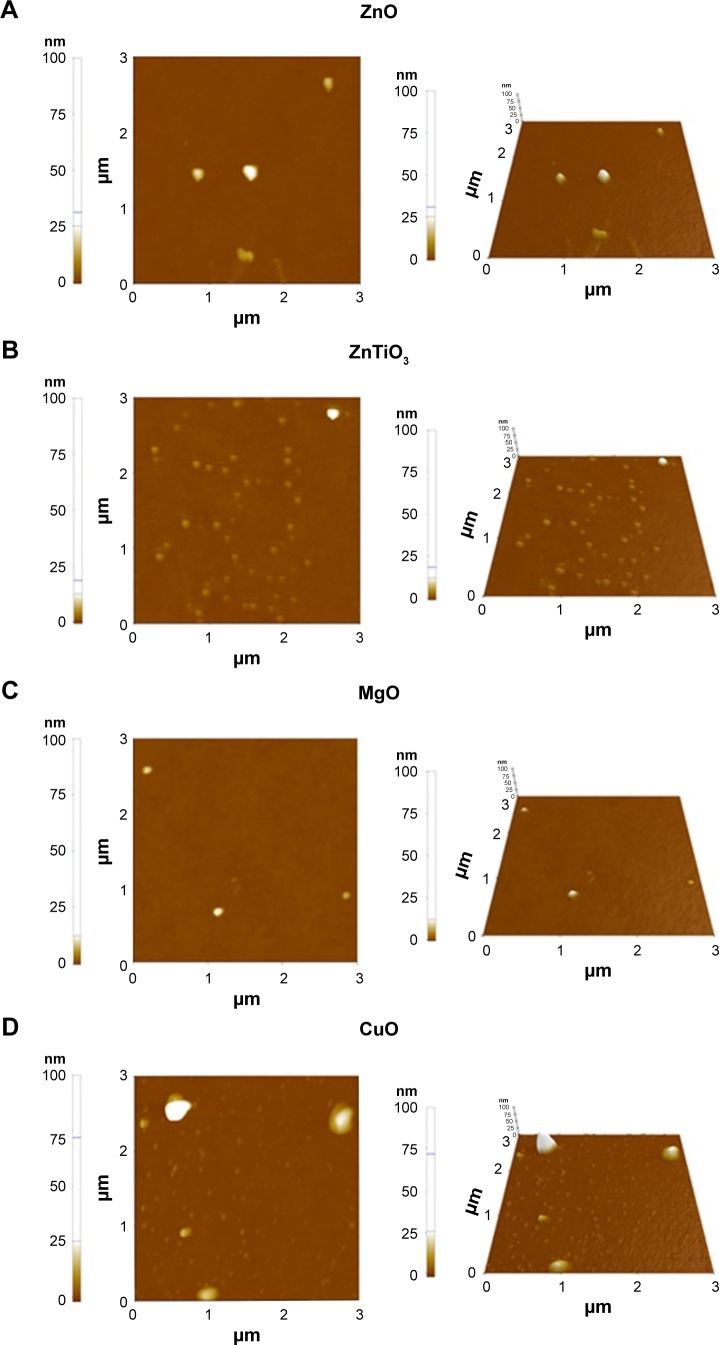
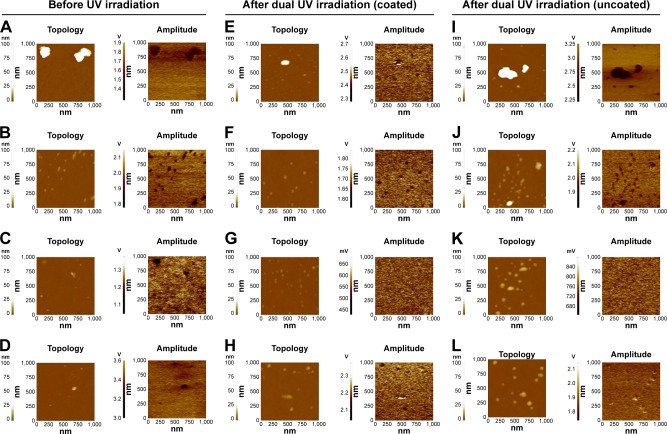
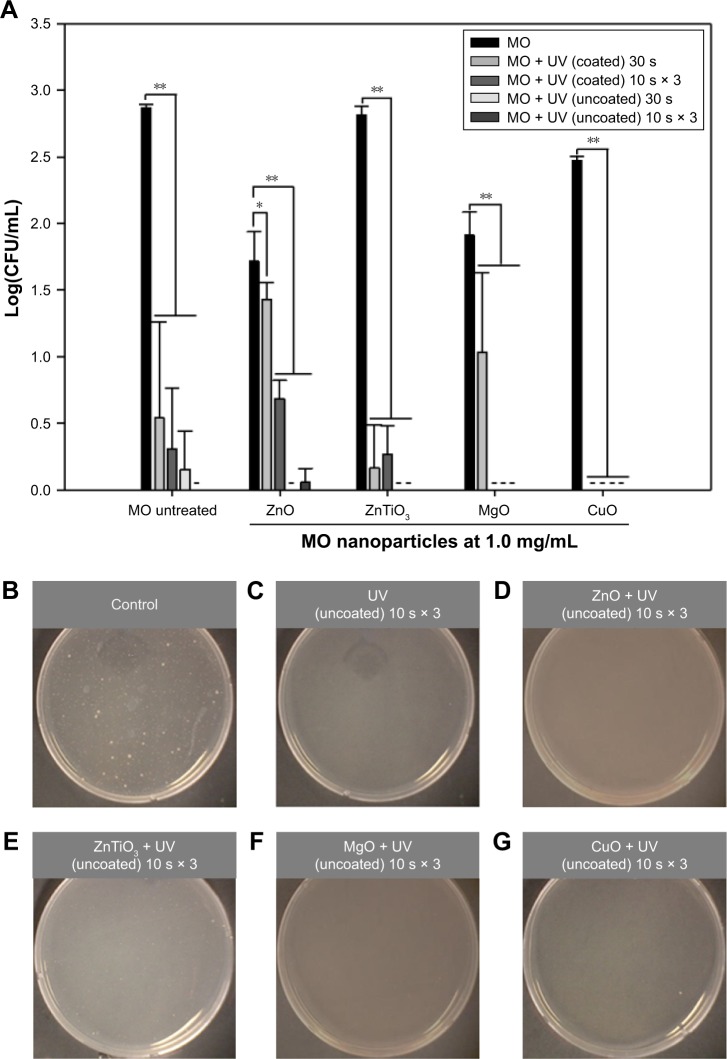
Metal oxide (MO) nanoparticles have been studied as nano-antibiotics due to their antimicrobial activities even in antibiotic-resistant microorganisms. We hypothesized that a hybrid system of dual UV irradiation and MO nanoparticles would have enhanced antimicrobial activities compared with UV or MO nanoparticles alone. In this study, nanoparticles of ZnO, ZnTiO, MgO, and CuO were selected as model nanoparticles. A dual UV collimated beam device of UV-A and UV-C was developed depending upon the lamp divided by coating. Physicochemical properties of MO nanoparticles were determined using powder X-ray diffractometry (PXRD), Brunauer-Emmett-Teller analysis, and field emission-scanning electron microscopy with energy-dispersive X-ray spectroscopy. Atomic force microscopy with an electrostatic force microscopy mode was used to confirm the surface topology and electrostatic characteristics after dual UV irradiation. For antimicrobial activity test, MO nanoparticles under dual UV irradiation were applied to and M13 bacteriophage (phage). The UV-A and UV-C showed differential intensities in the coated and uncoated areas (UV-A, coated = uncoated; UV-C, coated ≪ uncoated). MO nanoparticles showed sharp peaks in PXRD patterns, matched to pure materials. Their primary particle sizes were less than 100 nm with irregular shapes, which had an 8.625.6 m/g of specific surface area with mesopores of 22262 nm. The electrostatic properties of MO nanoparticles were modulated after UV irradiation. ZnO, MgO, and CuO nanoparticles, except ZnTiO nanoparticles, showed antibacterial effects on . Antimicrobial effects on and phages were also enhanced after cyclic exposure of dual UV and MO nanoparticle treatment using the uncoated area, except ZnO nanoparticles. Our results demonstrate that dual UV-MO nanoparticle hybrid system has a potential for disinfection. We anticipate that it can be developed as a next-generation disinfection system in pharmaceutical industries and water purification systems.
金属氧化物(MO)纳米颗粒因其抗菌活性,甚至对耐药微生物也有抗菌作用,而被作为纳米抗生素进行研究。我们推测,与单独的紫外线或MO纳米颗粒相比,双紫外线照射和MO纳米颗粒的混合系统将具有更强的抗菌活性。在本研究中,选择氧化锌(ZnO)、锌钛氧化物(ZnTiO)、氧化镁(MgO)和氧化铜(CuO)纳米颗粒作为模型纳米颗粒。基于通过涂层分隔灯而开发了一种紫外线A和紫外线C的双紫外线准直光束装置。使用粉末X射线衍射仪(PXRD)、布鲁诺尔-埃米特-泰勒分析以及带有能量色散X射线光谱的场发射扫描电子显微镜来测定MO纳米颗粒的物理化学性质。采用具有静电力显微镜模式的原子力显微镜来确认双紫外线照射后的表面拓扑结构和静电特性。为了进行抗菌活性测试,将双紫外线照射下的MO纳米颗粒应用于大肠杆菌和M13噬菌体(噬菌体)。紫外线A和紫外线C在涂层和未涂层区域显示出不同的强度(紫外线A,涂层 = 未涂层;紫外线C,涂层 ≪ 未涂层)。MO纳米颗粒在PXRD图谱中显示出尖锐峰,与纯材料匹配。它们的初级粒径小于100 nm,形状不规则,具有8.625.6 m²/g的比表面积以及22262 nm的中孔。紫外线照射后,MO纳米颗粒的静电性质得到调节。除ZnTiO纳米颗粒外,ZnO、MgO和CuO纳米颗粒对大肠杆菌显示出抗菌作用。使用未涂层区域进行双紫外线和MO纳米颗粒循环处理后,除ZnO纳米颗粒外,对大肠杆菌和噬菌体的抗菌效果也得到增强。我们的结果表明,双紫外线-MO纳米颗粒混合系统具有消毒潜力。我们预计它可以发展成为制药行业和水净化系统中的下一代消毒系统。