
利用高灵敏度流变核磁共振实时观察硫黄素 T 与淀粉样蛋白的相互作用。
Real-Time Observation of the Interaction between Thioflavin T and an Amyloid Protein by Using High-Sensitivity Rheo-NMR.
机构信息
Department of Molecular Engineering, Graduate School of Engineering, Kyoto University, Kyoto-Daigaku Katsura, Nishikyo-ku, Kyoto 615-8510, Japan.
Department of Molecular and Cellular Physiology, Graduate School of Medicine, Kyoto University, Yoshida Konoe-cho, Sakyo-ku, Kyoto 606-8501, Japan.
出版信息
Int J Mol Sci. 2017 Oct 28;18(11):2271. doi: 10.3390/ijms18112271.
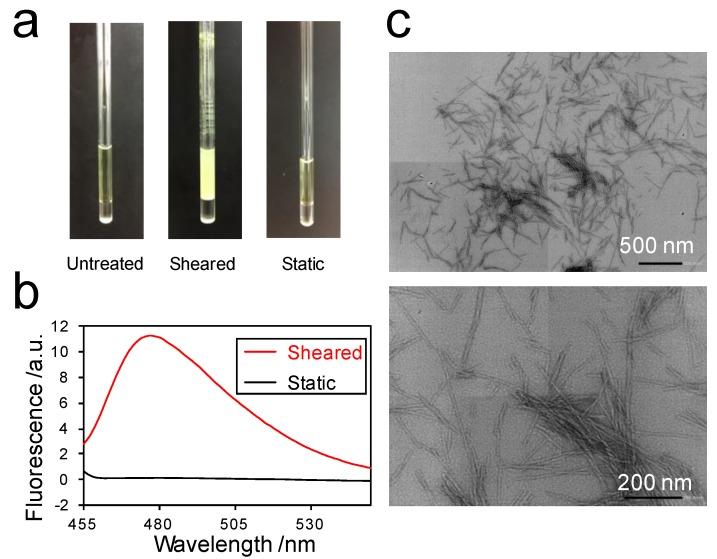
Amyloid fibril formation is associated with numerous neurodegenerative diseases. To elucidate the mechanism of fibril formation, the thioflavin T (ThT) fluorescence assay is widely used. ThT is a fluorescent dye that selectively binds to amyloid fibrils and exhibits fluorescence enhancement, which enables quantitative analysis of the fibril formation process. However, the detailed binding mechanism has remained unclear. Here we acquire real-time profiles of fibril formation of superoxide dismutase 1 (SOD1) using high-sensitivity Rheo-NMR spectroscopy and detect weak and strong interactions between ThT and SOD1 fibrils in a time-dependent manner. Real-time information on the interaction between ThT and fibrils will contribute to the understanding of the binding mechanism of ThT to fibrils. In addition, our method provides an alternative way to analyze fibril formation.
淀粉样纤维形成与许多神经退行性疾病有关。为了阐明纤维形成的机制,广泛使用了硫黄素 T(ThT)荧光测定法。ThT 是一种荧光染料,它选择性地与淀粉样纤维结合并表现出荧光增强,从而能够对纤维形成过程进行定量分析。然而,其详细的结合机制仍不清楚。在这里,我们使用高灵敏度 Rheo-NMR 光谱法获得了超氧化物歧化酶 1(SOD1)纤维形成的实时谱,并以时间依赖性方式检测了 ThT 和 SOD1 纤维之间的弱相互作用和强相互作用。ThT 与纤维之间相互作用的实时信息将有助于理解 ThT 与纤维的结合机制。此外,我们的方法为分析纤维形成提供了另一种方法。



 Zotero 插件