Jan Jyh Cherng, Chao Wei-An, Wu Yih-Min, Chen Chien-Chih, Lin Cheng-Horng
Department of Earth Sciences, National Central University, Jhongli 320, Taiwan.
Institute of Earth Sciences, Academia Sinica, Taipei 11529, Taiwan.
Sensors (Basel). 2017 Nov 16;17(11):2643. doi: 10.3390/s17112643.
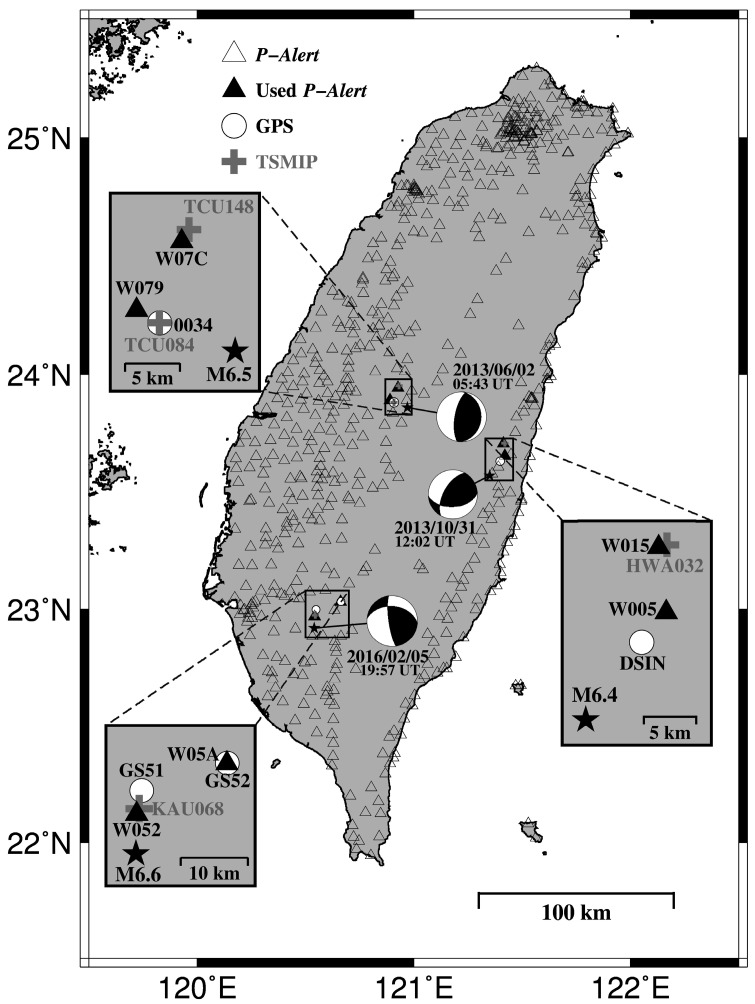
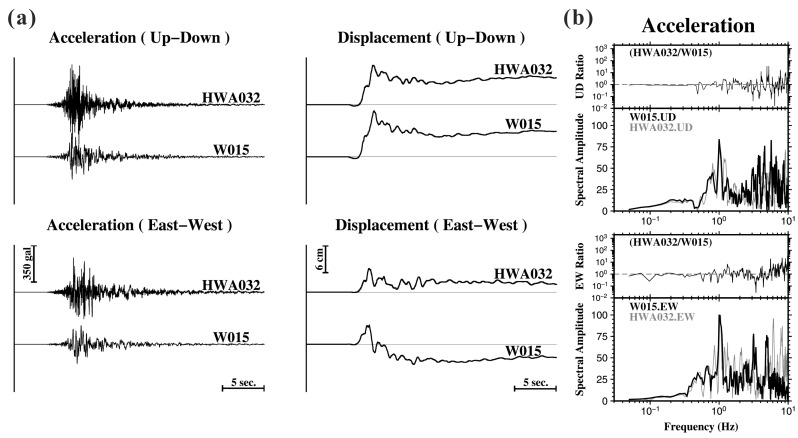
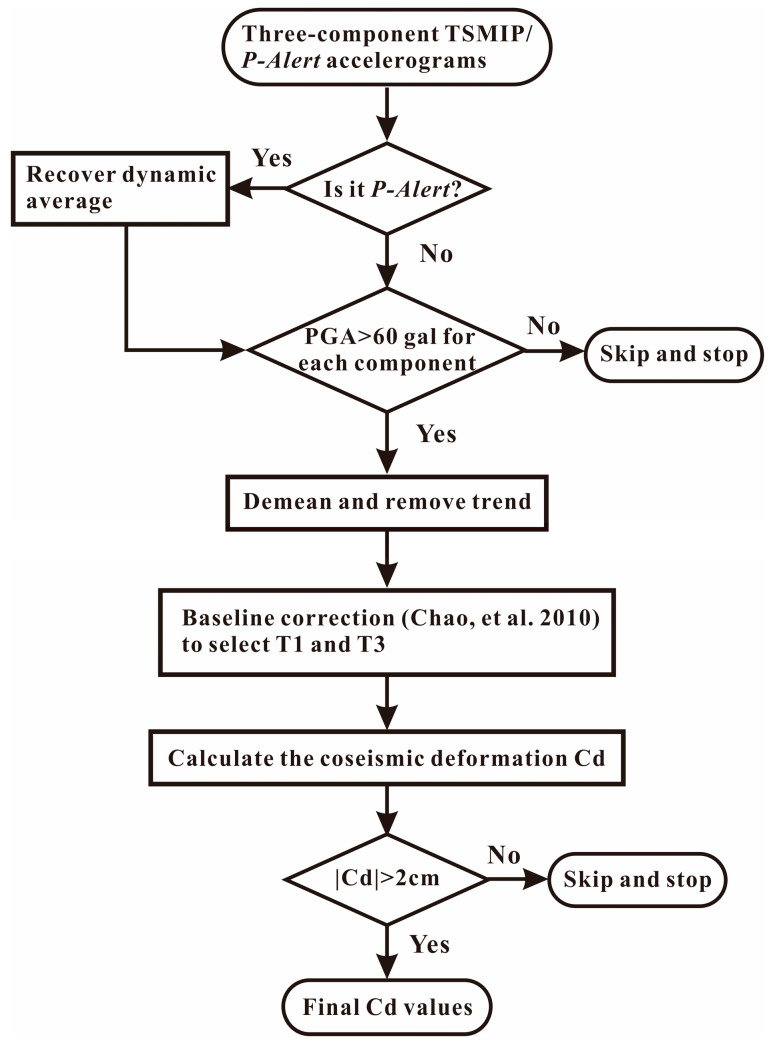
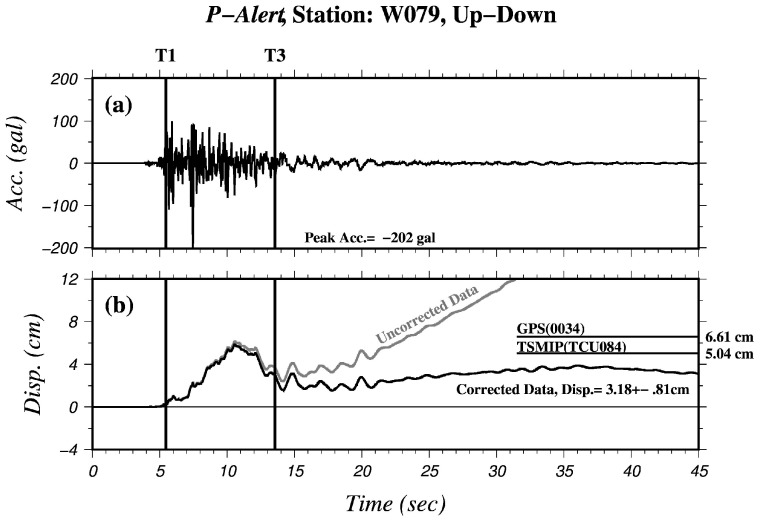
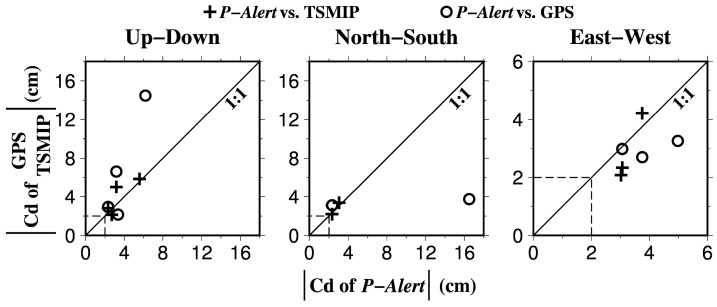
Following the recent establishment of a high-density seismic network equipped with low-cost micro-electro-mechanical system (MEMS) -wave-alert-device (-Alert) by the earthquake early warning (EEW) research group at the National Taiwan University, a large quantity of strong-motion records from moderate-magnitude earthquakes (M > 6) around Taiwan has been accumulated. Using a data preprocessing scheme to recover the dynamic average embedded within the -Alert data, we adopted an automatic baseline correction approach for the -Alert accelerograms to determine the coseismic deformation (Cd). Comparisons between the Cd values determined using global positioning system (GPS) data, strong-motion records from the -Alert network, and data from the Taiwan Strong Motion Instrumentation Program (TSMIP) demonstrates that the near-real-time determination of Cd values (>2 cm), which provide crucial information for seismic hazard mitigation, is possible using records from low-cost MEMS accelerometers.
继台湾大学地震早期预警(EEW)研究小组最近建立了配备低成本微机电系统(MEMS)地震波警报装置(-Alert)的高密度地震网络后,已积累了大量台湾周边中强地震(M>6)的强震记录。我们采用一种数据预处理方案来恢复-Alert数据中嵌入的动态平均值,对-Alert加速度记录采用自动基线校正方法来确定同震变形(Cd)。使用全球定位系统(GPS)数据、-Alert网络的强震记录以及台湾强震仪器计划(TSMIP)的数据确定的Cd值之间的比较表明,利用低成本MEMS加速度计的记录可以近实时确定Cd值(>2厘米),这为减轻地震灾害提供了关键信息。