Feng Yu, Zhao Jianan, Chen Xiaole, Lin Jiang
School of Chemical Engineering, Oklahoma State University, Stillwater, OK 74078, USA.
School of Energy and Environment, Southeast University, Nanjing 210018, China.
Bioengineering (Basel). 2017 Nov 16;4(4):90. doi: 10.3390/bioengineering4040090.
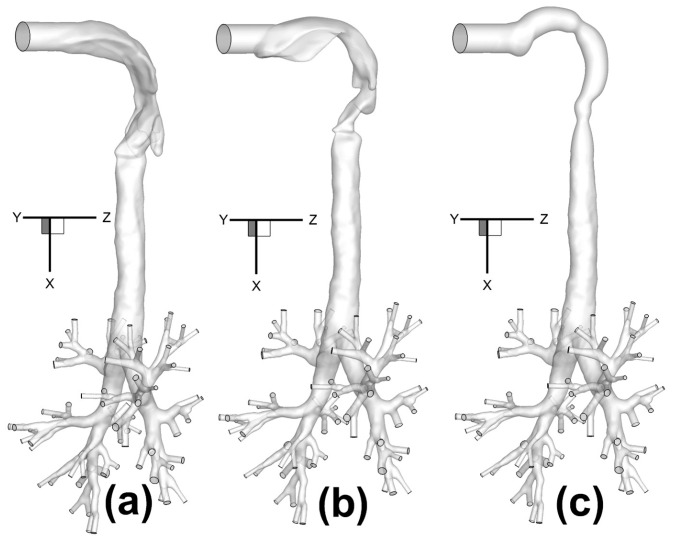
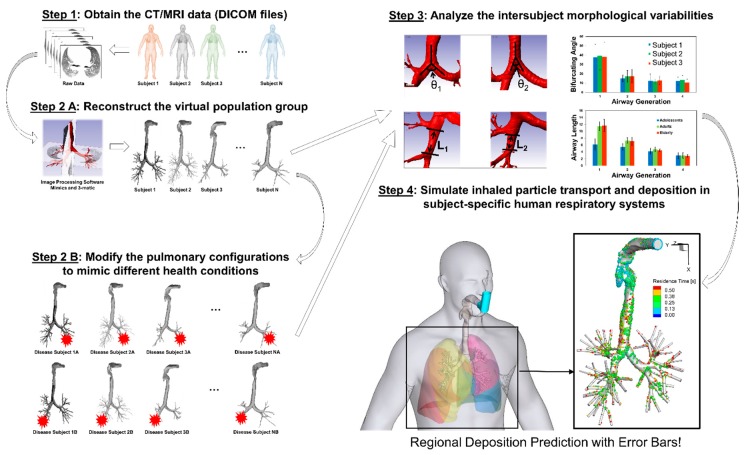
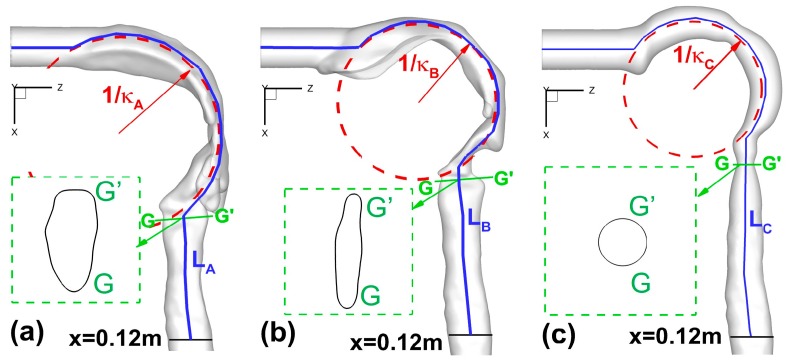
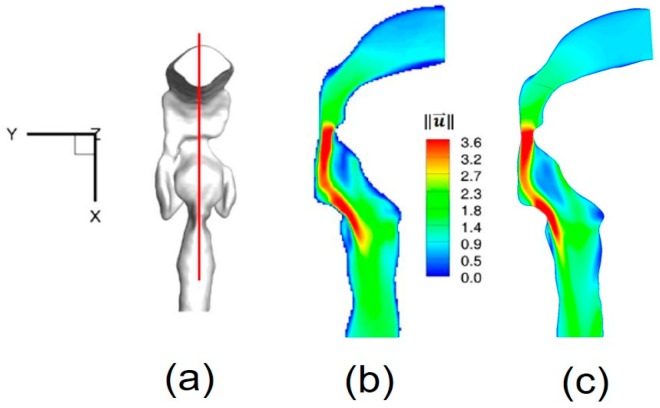
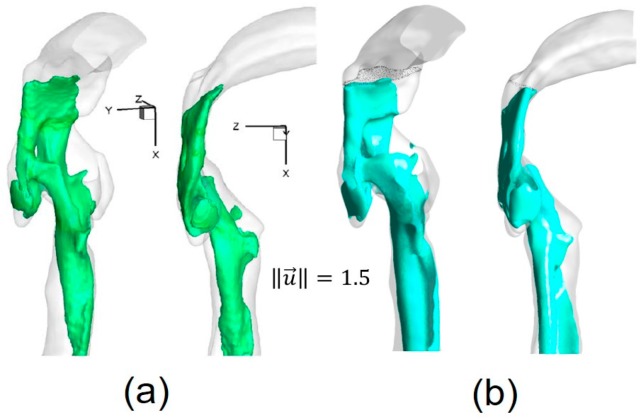
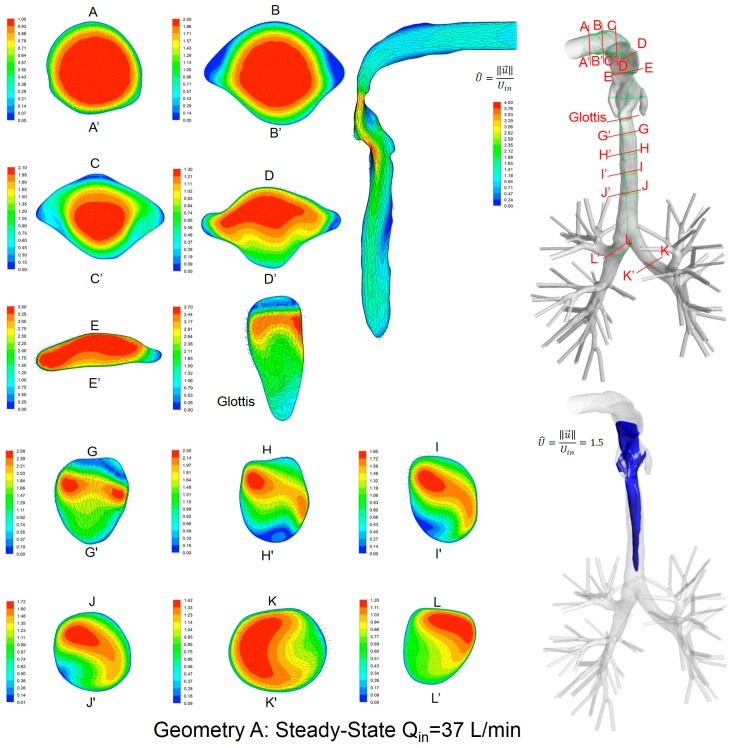
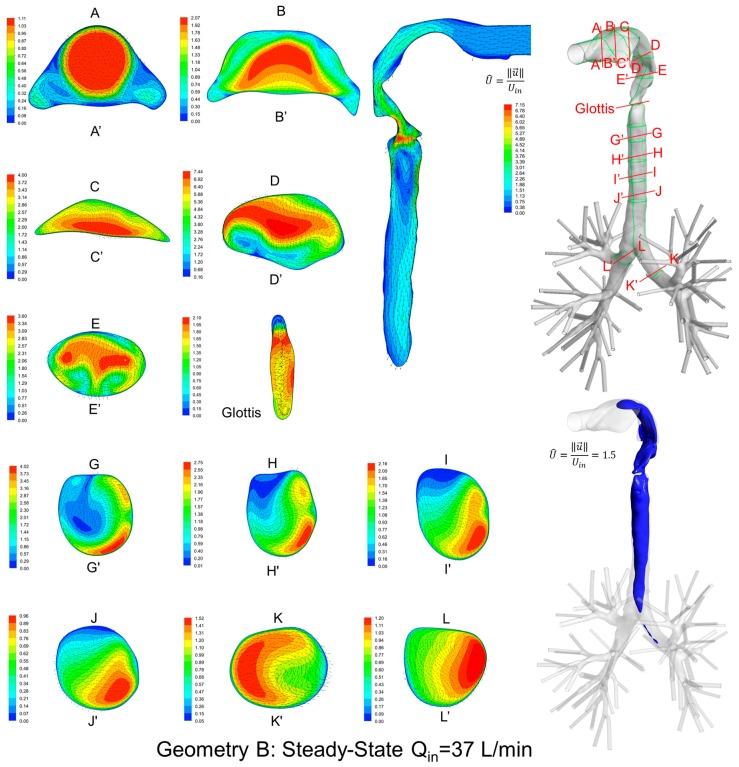
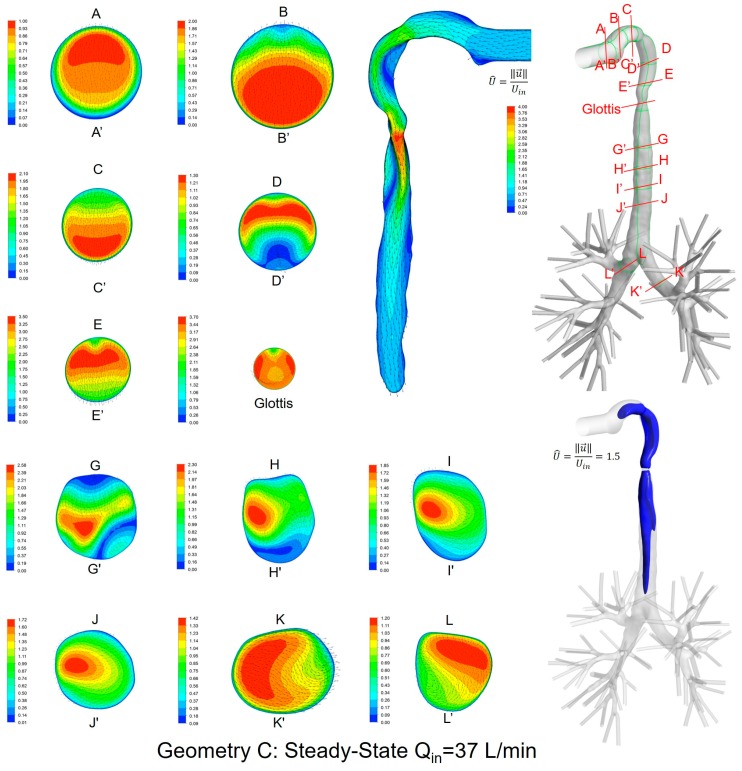
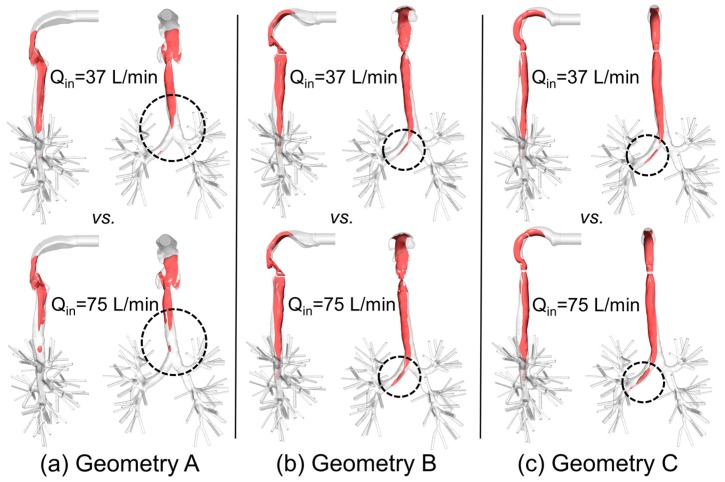
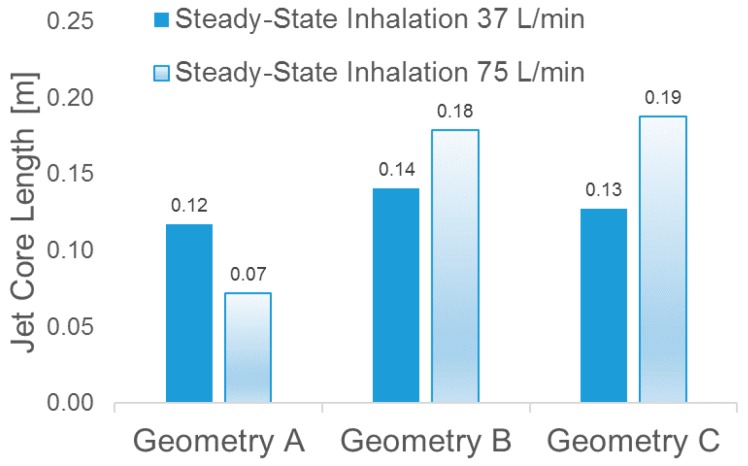
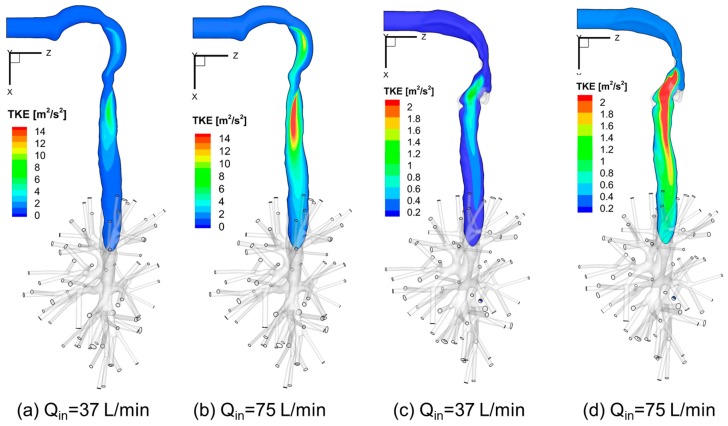
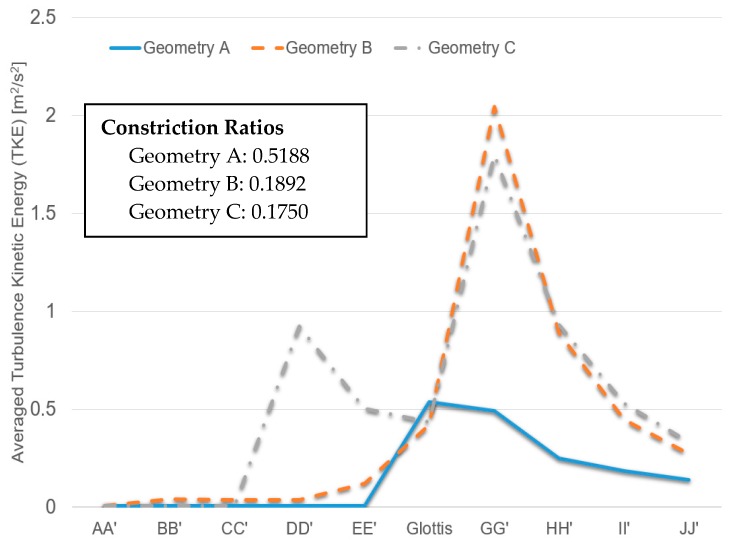
Determining the impact of inter-subject variability on airflow pattern and nanoparticle deposition in the human respiratory system is necessary to generate population-representative models, useful for several biomedical engineering applications. Thus, the overall research objective is to quantitatively correlate geometric parameters and coupled transport characteristics of air, vapor, and nanoparticles. Focusing on identifying morphological parameters that significantly influence airflow field and nanoparticle transport, an experimentally validated computational fluid-particle dynamics (CFPD) model was employed to simulate airflow pattern in three human lung-airway configurations. The numerical results will be used to generate guidelines to construct a representative geometry of the human respiratory system.
确定个体间变异性对人体呼吸系统气流模式和纳米颗粒沉积的影响,对于生成适用于多种生物医学工程应用的具有人群代表性的模型是必要的。因此,总体研究目标是定量关联空气、蒸汽和纳米颗粒的几何参数以及耦合传输特性。聚焦于识别对气流场和纳米颗粒传输有显著影响的形态学参数,采用了经过实验验证的计算流体-颗粒动力学(CFPD)模型来模拟三种人体肺气道构型中的气流模式。数值结果将用于生成构建人体呼吸系统代表性几何结构的指导原则。