Infection, Immunity and Inflammation Program, Great Ormond Street Institute of Child Health, University College London, 30 Guilford Street, London, WC1N 1EH, UK.
Department of Paediatrics and Adolescent Medicine, LKS Faculty of Medicine, The University of Hong Kong, Hong Kong, SAR, China.
Nat Commun. 2017 Nov 17;8(1):1576. doi: 10.1038/s41467-017-01676-0.
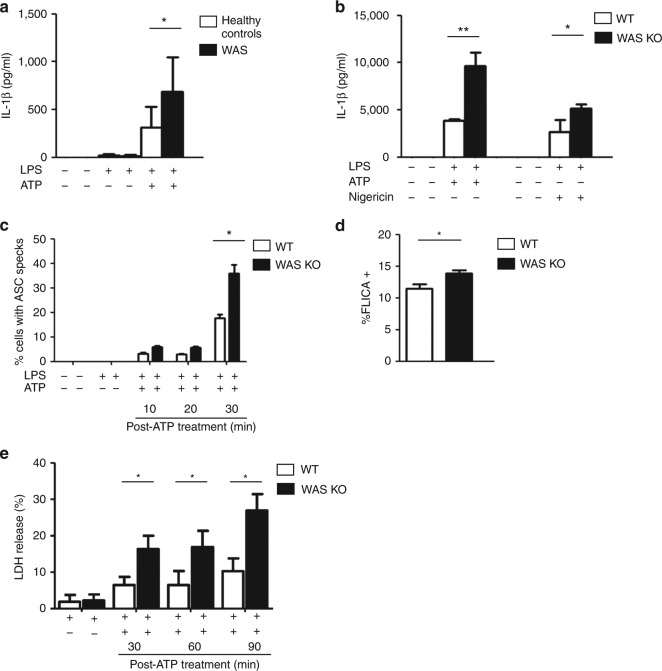
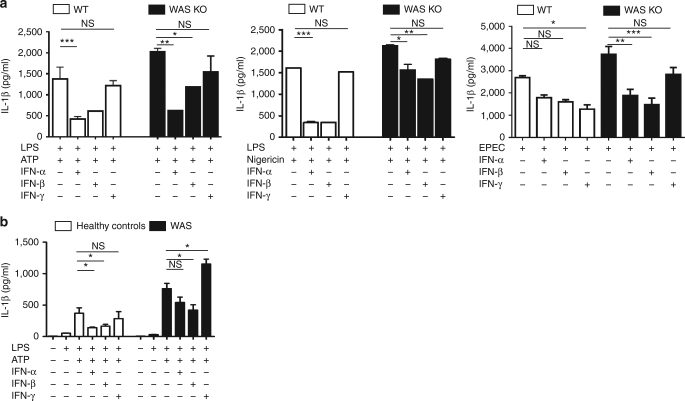
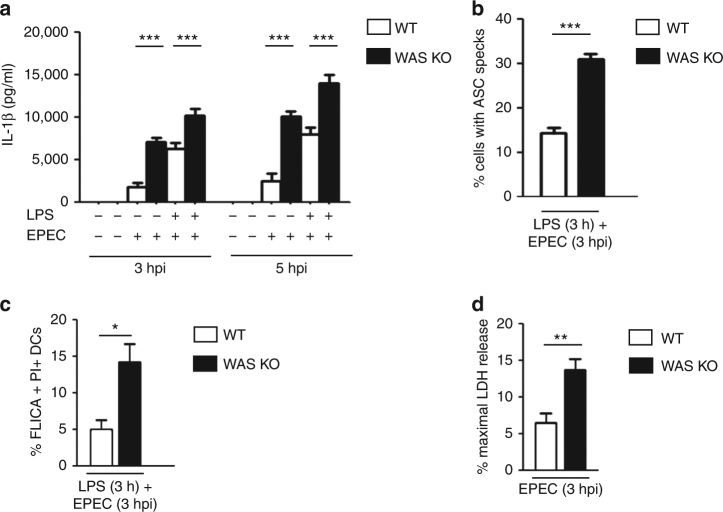
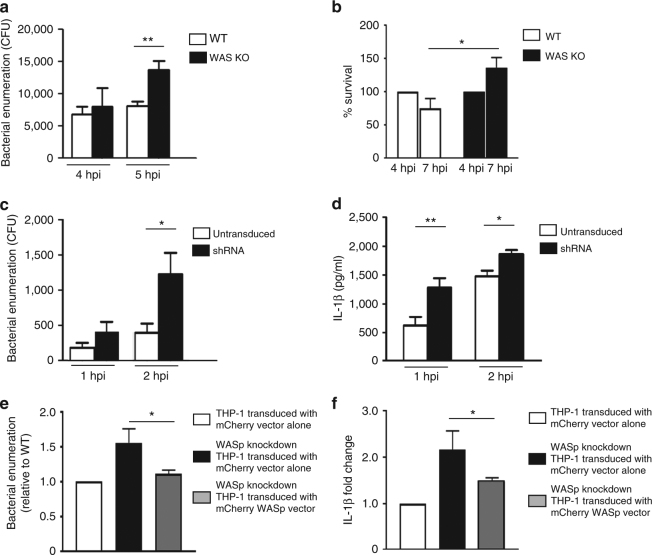
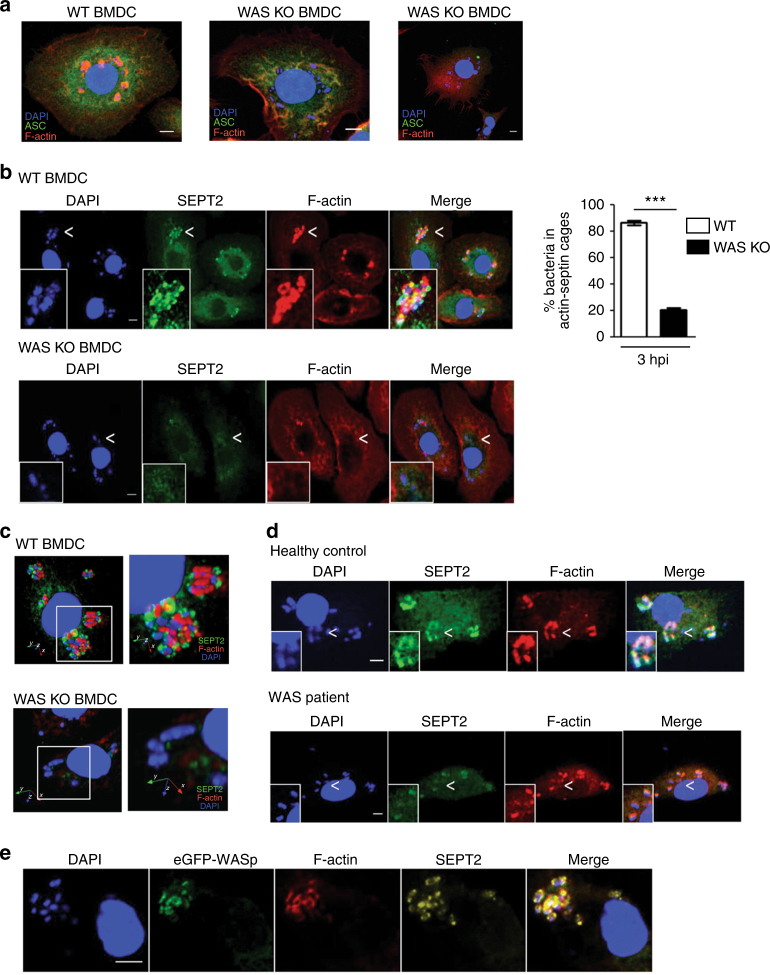
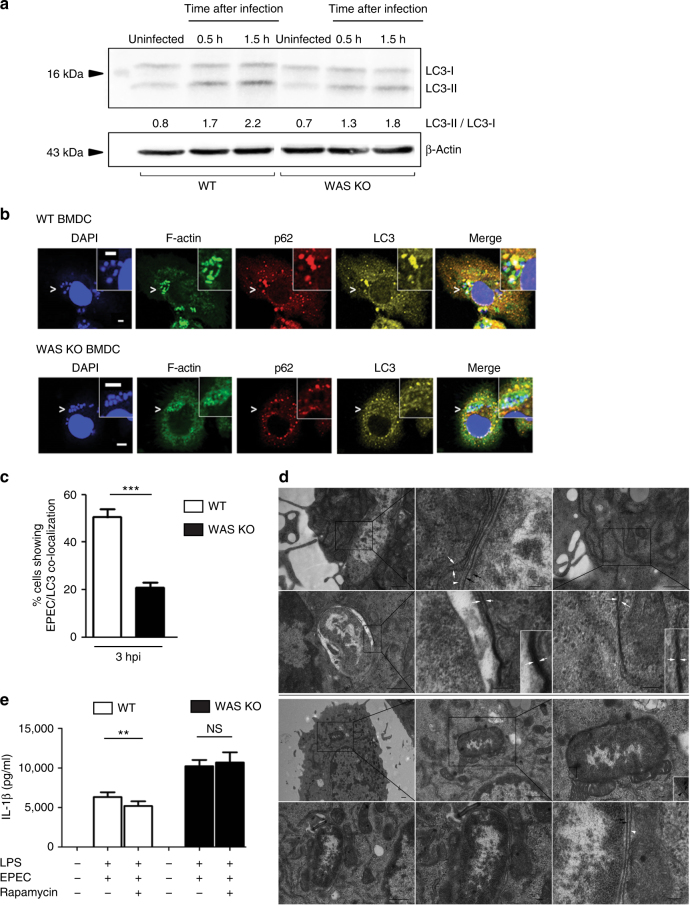
Dysregulation of autophagy and inflammasome activity contributes to the development of auto-inflammatory diseases. Emerging evidence highlights the importance of the actin cytoskeleton in modulating inflammatory responses. Here we show that deficiency of Wiskott-Aldrich syndrome protein (WASp), which signals to the actin cytoskeleton, modulates autophagy and inflammasome function. In a model of sterile inflammation utilizing TLR4 ligation followed by ATP or nigericin treatment, inflammasome activation is enhanced in monocytes from WAS patients and in WAS-knockout mouse dendritic cells. In ex vivo models of enteropathogenic Escherichia coli and Shigella flexneri infection, WASp deficiency causes defective bacterial clearance, excessive inflammasome activation and host cell death that are associated with dysregulated septin cage-like formation, impaired autophagic p62/LC3 recruitment and defective formation of canonical autophagosomes. Taken together, we propose that dysregulation of autophagy and inflammasome activities contribute to the autoinflammatory manifestations of WAS, thereby identifying potential targets for therapeutic intervention.
自噬和炎症小体活性的失调导致自身炎症性疾病的发生。新出现的证据强调了细胞骨架在调节炎症反应中的重要性。在这里,我们表明,信号传递到细胞骨架的 Wiskott-Aldrich 综合征蛋白 (WASp) 的缺乏会调节自噬和炎症小体的功能。在利用 TLR4 连接随后用 ATP 或 Nigericin 处理的无菌性炎症模型中,来自 WAS 患者的单核细胞和 WAS 敲除小鼠树突状细胞中的炎症小体激活增强。在肠致病性大肠杆菌和福氏志贺菌感染的离体模型中,WASp 缺乏导致细菌清除缺陷、炎症小体过度激活和宿主细胞死亡,这与调节不良的隔套笼状形成、受损的自噬 p62/LC3 募集和规范的自噬体形成缺陷有关。综上所述,我们提出自噬和炎症小体活性的失调导致 WAS 的自身炎症表现,从而确定了治疗干预的潜在靶点。