Sayed Shahin, Lester Susan C, Wilson Michael, Berney Daniel, Masia Ricard, Moloo Zahir, Stall Jennifer, Eslan Alexia, Ayers Stephanie, Mutuku Angela, Guarner Jeannette
Department of Pathology and Laboratory Medicine, Aga Khan University Hospital, Nairobi, Kenya.
Department of Pathology, Brigham and Women's Hospital, Boston, Massachusetts, United States.
Afr J Lab Med. 2017 Oct 25;6(1):637. doi: 10.4102/ajlm.v6i1.637. eCollection 2017.
Case-based learning (CBL) is an established pedagogical active learning method used in various disciplines and defined based on the field of study and type of case. The utility of CBL for teaching specific aspects of cancer diagnosis to practising pathologists has not been previously studied in sub-Saharan Africa.
We aimed to pilot test standardised cancer cases on a group of practising pathologists in sub-Saharan Africa to evaluate case content, clarity of questions and delivery of content.
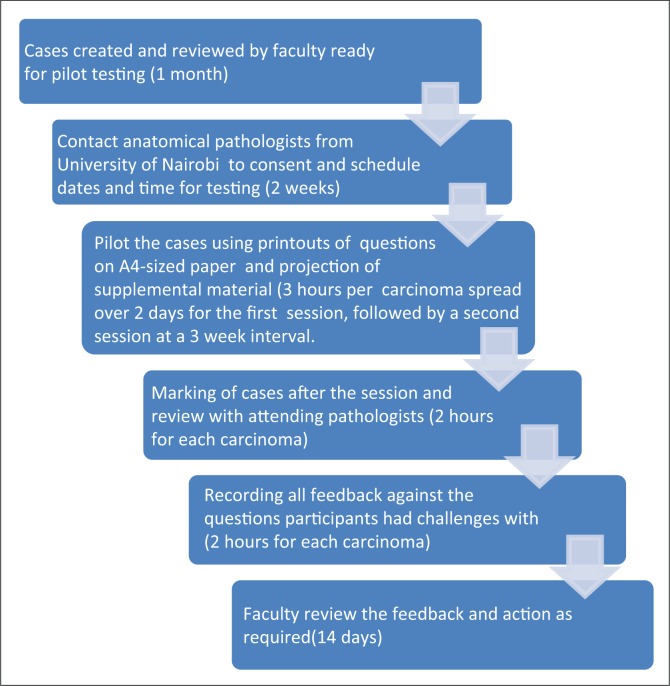
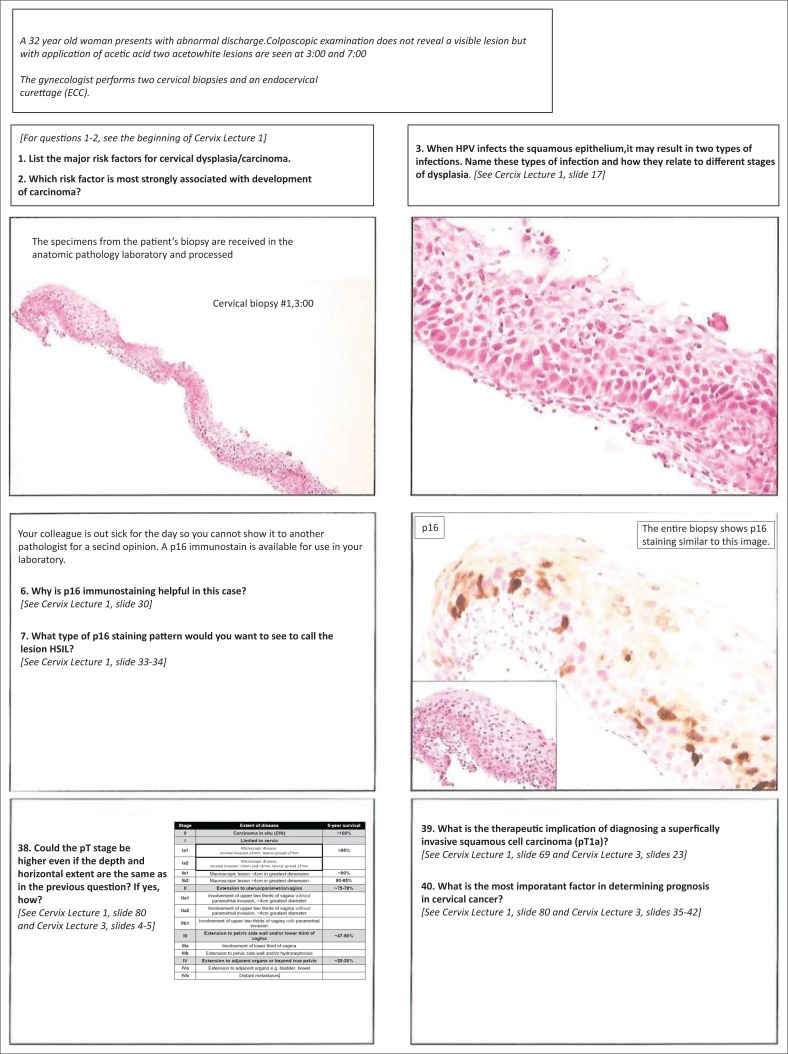
Expert faculty created cases for the four most commonly diagnosed cancers. The format included mini-cases and bullet cases which were all open-ended. The questions dealt with interpretation of clinical information, gross specimen examination, morphologic characteristics of tumours, ancillary testing, reporting and appropriate communication to clinicians.
Cases on breast, cervical, prostate and colorectal cancers were tested on seven practising pathologists. Each case took an average of 45-90 min to complete.Questions that were particularly challenging to testers were on: Specimens they should have been but for some reason were not exposed to in routine practice.Ancillary testing and appropriate tumour staging.New knowledge gained included tumour grading and assessment of radial margins. Revisions to cases were made based on testers' feedback, which included rewording of questions to reduce ambiguity and adding of tables to clarify concepts.
Cases were created for CBL in Kenya, but these are applicable elsewhere in Africa and beyond to teach cancer diagnosis. The pilot testing of cases prepared faculty for the actual CBL course and feedback provided by the testers assisted in improving the questions and impact on day-to-day practice.
基于案例的学习(CBL)是一种既定的教学主动学习方法,应用于各个学科,并根据研究领域和案例类型进行定义。此前在撒哈拉以南非洲地区尚未研究过CBL在向执业病理学家传授癌症诊断特定方面知识的效用。
我们旨在对撒哈拉以南非洲地区的一组执业病理学家进行标准化癌症案例试点测试,以评估案例内容、问题清晰度和内容呈现方式。
专家教员针对四种最常诊断的癌症编写案例。形式包括小型案例和要点案例,均为开放式。问题涉及临床信息解读、大体标本检查、肿瘤形态特征、辅助检查、报告以及与临床医生的适当沟通。
对七位执业病理学家进行了乳腺癌、宫颈癌、前列腺癌和结直肠癌案例测试。每个案例平均耗时45 - 90分钟完成。测试人员特别感到具有挑战性的问题包括:他们在常规实践中本应接触但因某些原因未接触到的标本。辅助检查和适当的肿瘤分期。获得的新知识包括肿瘤分级和切缘评估。根据测试人员的反馈对案例进行了修订,包括重新措辞问题以减少歧义,并添加表格以阐明概念。
在肯尼亚为CBL编写了案例,但这些案例适用于非洲其他地区及以外地区以教授癌症诊断。案例的试点测试让教员为实际的CBL课程做好了准备,测试人员提供的反馈有助于改进问题以及对日常实践的影响。