Department of Biological Structure, University of Washington, School of Medicine, Seattle, United States.
Department of Pharmaceutical Chemistry, UCSF School of Pharmacy, University of California, San Francisco, San Francisco, United States.
Elife. 2017 Nov 17;6:e30577. doi: 10.7554/eLife.30577.
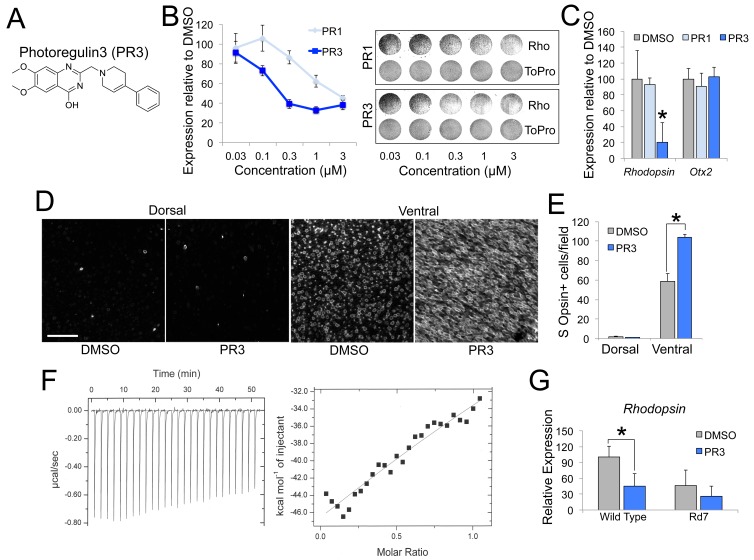
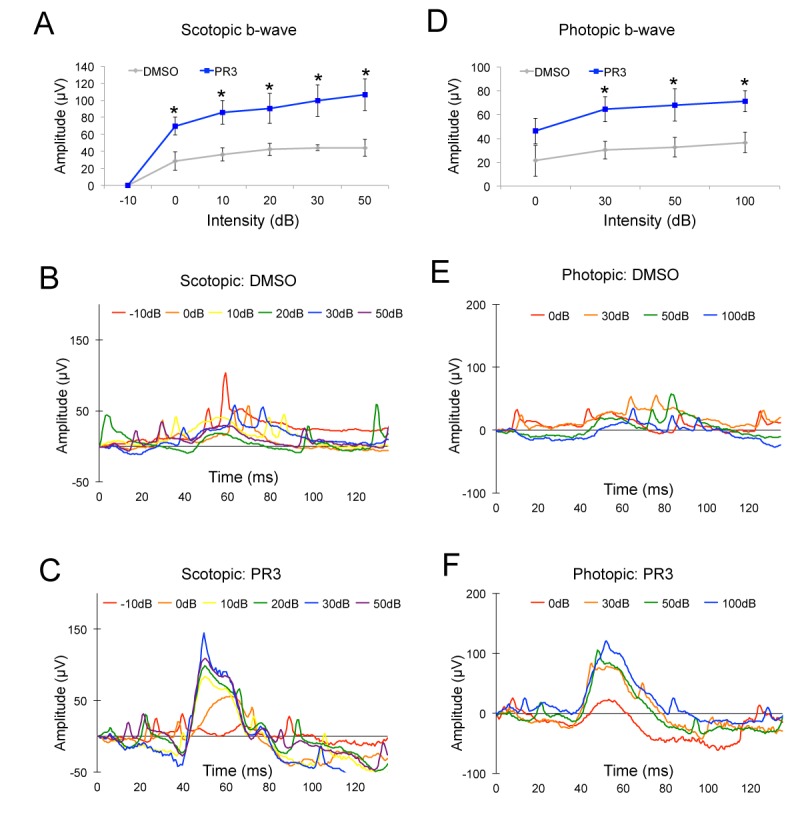
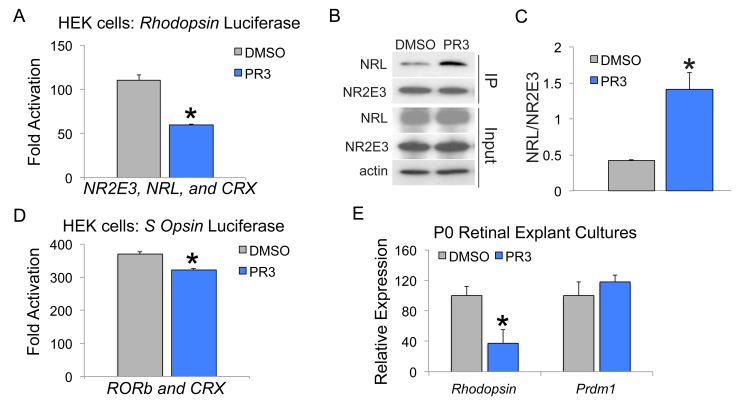
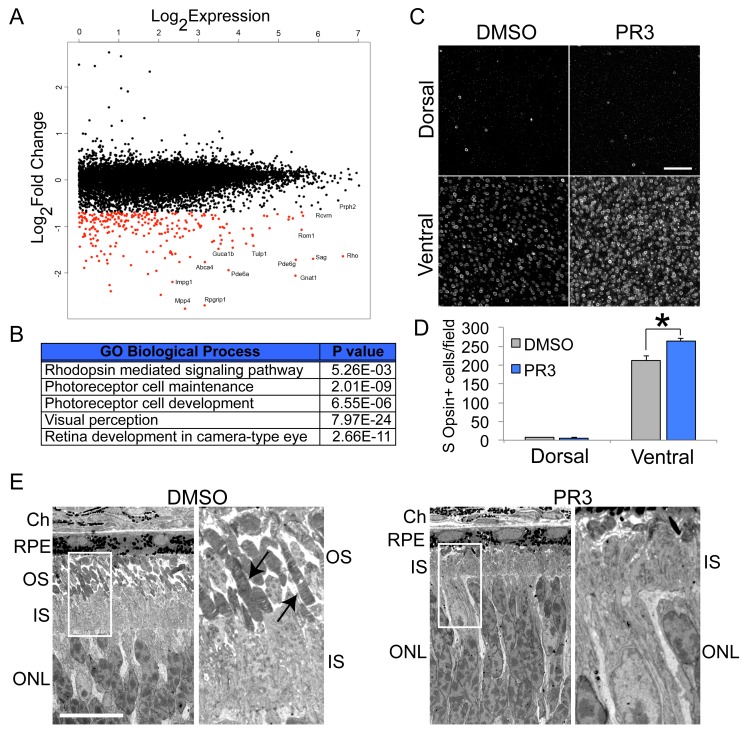
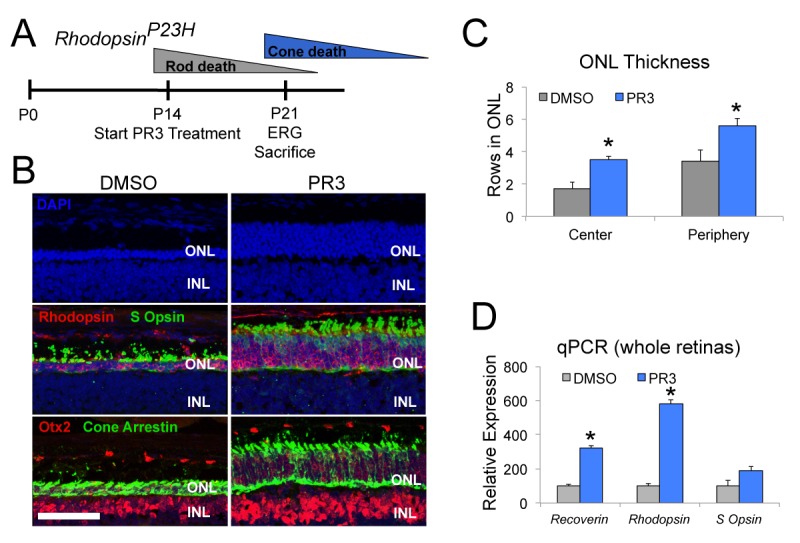
Regulation of rod gene expression has emerged as a potential therapeutic strategy to treat retinal degenerative diseases like retinitis pigmentosa (RP). We previously reported on a small molecule modulator of the rod transcription factor Nr2e3, Photoregulin1 (PR1), that regulates the expression of photoreceptor-specific genes. Although PR1 slows the progression of retinal degeneration in models of RP in vitro, in vivo analyses were not possible with PR1. We now report a structurally unrelated compound, Photoregulin3 (PR3) that also inhibits rod photoreceptor gene expression, potentially though Nr2e3 modulation. To determine the effectiveness of PR3 as a potential therapy for RP, we treated mice with PR3 and assessed retinal structure and function. PR3-treated mice showed significant structural and functional photoreceptor rescue compared with vehicle-treated littermate control mice. These results provide further support that pharmacological modulation of rod gene expression provides a potential strategy for the treatment of RP.
杆状基因表达的调控已成为治疗视网膜退行性疾病(如色素性视网膜炎)的潜在治疗策略。我们之前报道了一种杆状转录因子 Nr2e3 的小分子调节剂 Photoregulin1(PR1),它可以调节光感受器特异性基因的表达。虽然 PR1 可以减缓 RP 体外模型中视网膜变性的进展,但无法对 PR1 进行体内分析。我们现在报告了一种结构上不相关的化合物 Photoregulin3(PR3),它也可以通过 Nr2e3 调节抑制杆状光感受器基因的表达。为了确定 PR3 作为 RP 潜在治疗药物的有效性,我们用 PR3 治疗 小鼠,并评估视网膜结构和功能。与用载体处理的同窝对照小鼠相比,用 PR3 处理的 小鼠显示出明显的结构和功能光感受器挽救。这些结果进一步支持了杆状基因表达的药理学调节为治疗 RP 提供了一种潜在策略。