Biosciences Division, Oak Ridge National Laboratory, Oak Ridge, Tennessee, USA.
Department of Soil and Crop Sciences, Texas A&M University, Overton, Texas, USA.
Appl Environ Microbiol. 2018 Jan 17;84(3). doi: 10.1128/AEM.01049-17. Print 2018 Feb 1.
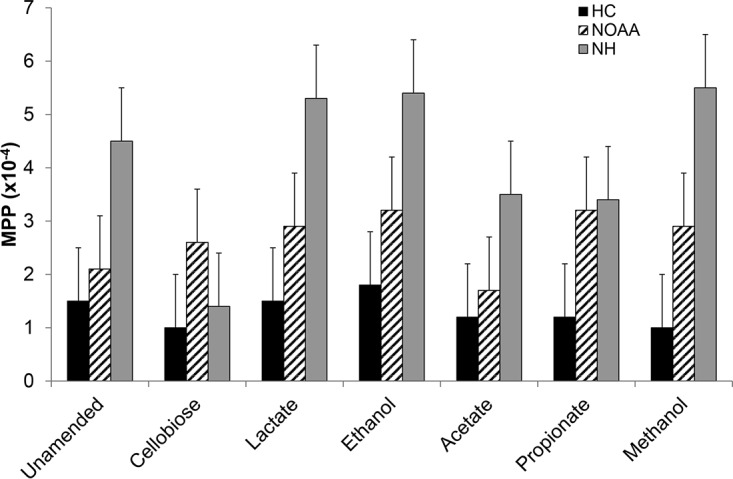
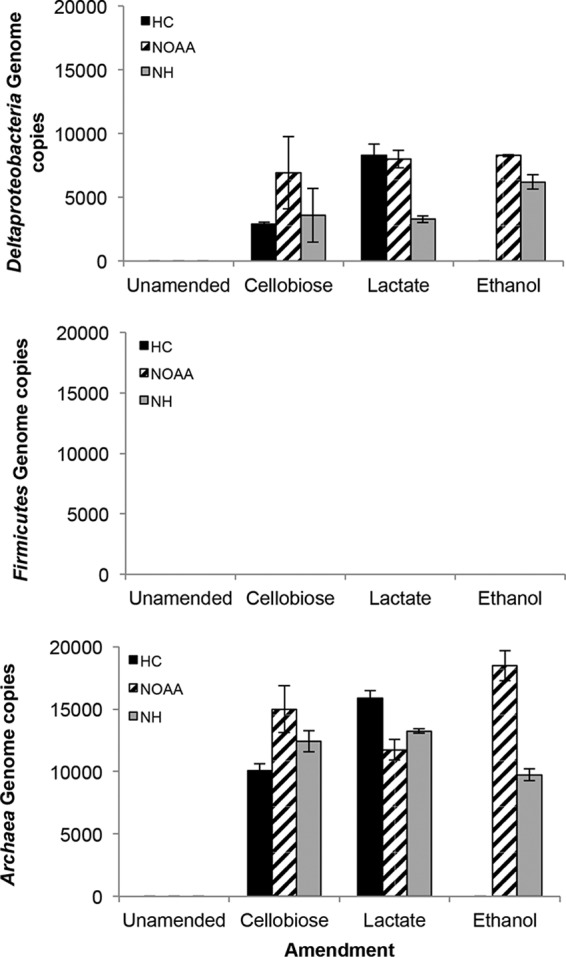
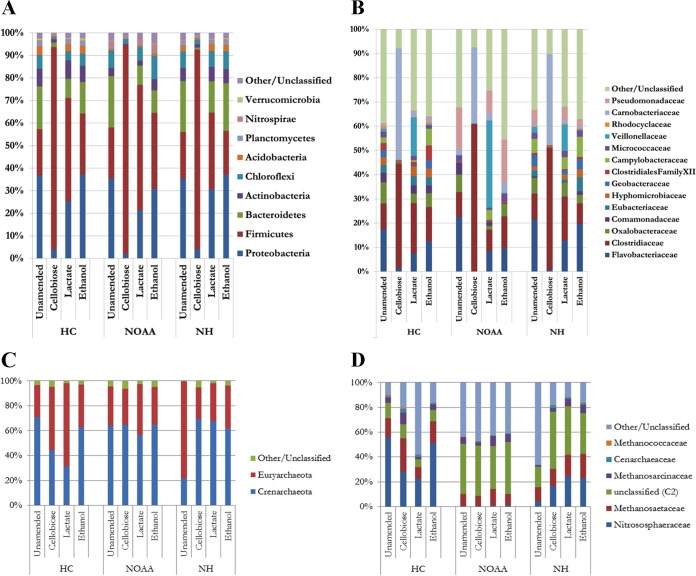
Neurotoxic methylmercury (MeHg) is produced by anaerobic and possessing the genes , but it is unknown how organic substrate and electron acceptor availability impacts the distribution and abundance of these organisms. We evaluated the impact of organic substrate amendments on mercury (Hg) methylation rates, microbial community structure, and the distribution of microbes with sediments. Sediment slurries were amended with short-chain fatty acids, alcohols, or a polysaccharide. Minimal increases in MeHg were observed following lactate, ethanol, and methanol amendments, while a significant decrease (∼70%) was observed with cellobiose incubations. Postincubation, microbial diversity was assessed via 16S rRNA amplicon sequencing. The presence of organisms was assessed with a broad-range degenerate PCR primer set for both genes, while the presence of microbes in each of the three dominant clades of methylators (, , and methanogenic ) was measured with clade-specific degenerate quantitative PCR (qPCR) primer sets. The predominant microorganisms in unamended sediments consisted of , , , and Clade-specific qPCR identified and in all sites but failed to detect Cellobiose shifted the communities in all samples to ∼90% non--containing (mainly spp. and spp.). These results suggest that either expression of is downregulated or, more likely given the lack of 16S rRNA gene presence after cellobiose incubation, Hg-methylating organisms are largely outcompeted by cellobiose degraders or degradation products of cellobiose. These results represent a step toward understanding and exploring simple methodologies for controlling MeHg production in the environment. Methylmercury (MeHg) is a neurotoxin produced by microorganisms that bioacummulates in the food web and poses a serious health risk to humans. Currently, the impact that organic substrate or electron acceptor availability has on the mercury (Hg)-methylating microorganisms is unclear. To study this, we set up microcosm experiments exposed to different organic substrates and electron acceptors and assayed for Hg methylation rates, for microbial community structure, and for distribution of Hg methylators. The sediment and groundwater was collected from East Fork Poplar Creek in Oak Ridge, TN. Amendment with cellobiose (a lignocellulosic degradation by-product) led to a drastic decrease in the Hg methylation rate compared to that in an unamended control, with an associated shift in the microbial community to mostly nonmethylating This, along with previous Hg-methylating microorganism identification methods, will be important for identifying strategies to control MeHg production and inform future remediation strategies.
神经毒性甲基汞(MeHg)由厌氧微生物产生,并拥有这些基因,但目前尚不清楚有机底物和电子受体的可用性如何影响这些微生物的分布和丰度。我们评估了有机底物添加物对汞(Hg)甲基化率、微生物群落结构以及带有沉积物的微生物分布的影响。用短链脂肪酸、醇或多糖对沉积物进行了处理。在添加丙氨酸、乙醇和甲醇后,观察到 MeHg 仅有最小的增加,而在使用纤维二糖孵育时,观察到显著的降低(约 70%)。孵育后,通过 16S rRNA 扩增子测序评估微生物多样性。使用针对这两个基因的广谱简并 PCR 引物对进行微生物的存在评估,而用针对三个主要甲基化菌(、和产甲烷菌)的特异性简并 定量 PCR(qPCR)引物对进行每个类群中微生物的存在评估。未经处理的沉积物中的主要微生物包括、、和 未处理沉积物中 clade-specific qPCR 鉴定出所有位点均存在 ,但未能检测到 纤维二糖使所有样本中的群落转移到约 90%非--含有的群落(主要是 spp. 和 spp.)。这些结果表明,要么是 表达被下调,要么更可能的是,由于在纤维二糖孵育后缺乏 16S rRNA 基因的存在,Hg 甲基化微生物在很大程度上被纤维二糖降解物或纤维二糖的降解产物所竞争。这些结果代表了朝着理解和探索控制环境中 MeHg 产生的简单方法迈出的一步。甲基汞(MeHg)是一种由微生物产生的神经毒素,在食物链中生物积累,并对人类健康构成严重威胁。目前,有机底物或电子受体的可用性对汞(Hg)甲基化微生物的影响尚不清楚。为了研究这一点,我们设置了微宇宙实验,暴露于不同的有机底物和电子受体,并检测 Hg 甲基化率、微生物群落结构和 Hg 甲基化菌的分布。沉积物和地下水是从田纳西州橡树岭的东溪溪口水坝采集的。与未处理的对照相比,用纤维二糖(木质纤维素降解的副产物)处理导致 Hg 甲基化率急剧下降,同时微生物群落向主要是非甲基化的方向转变 这一点,以及之前的 Hg 甲基化微生物鉴定方法,将对确定控制 MeHg 产生的策略和为未来的修复策略提供信息非常重要。