Department of Endocrinology, Xinqiao Hospital, Third Military Medical University, Chongqing, China.
John Moorhead Research Laboratory, Royal Free and University College Medical School, University College London, Royal Free Campus, London, United Kingdom.
Sci Rep. 2017 Nov 17;7(1):15804. doi: 10.1038/s41598-017-16074-1.
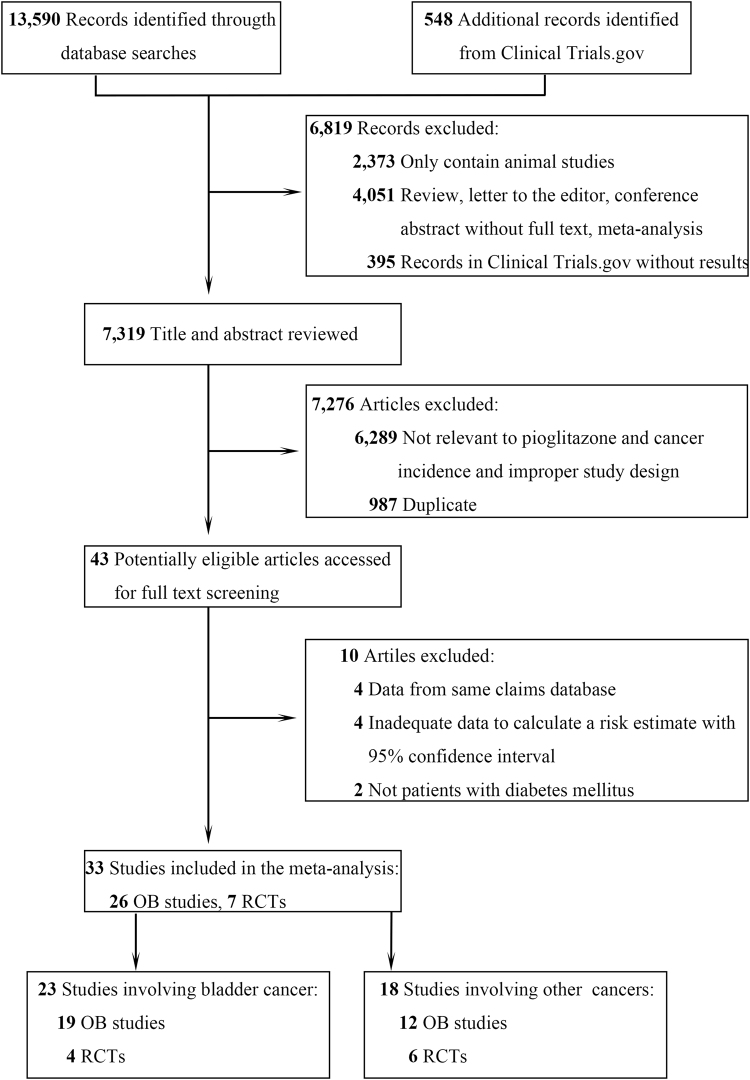
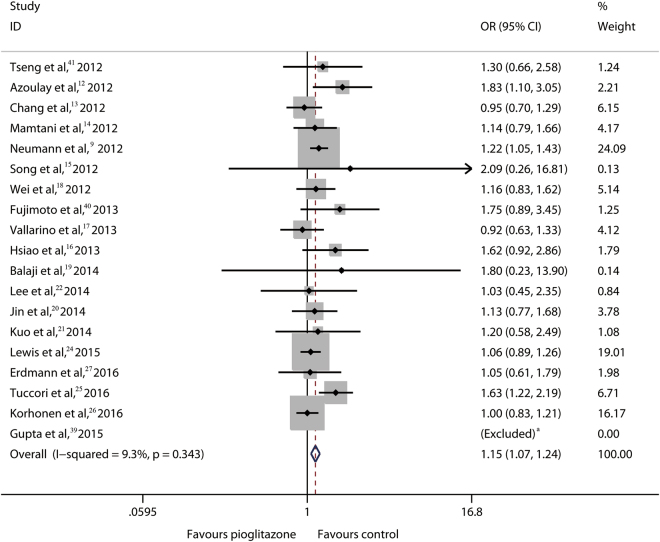
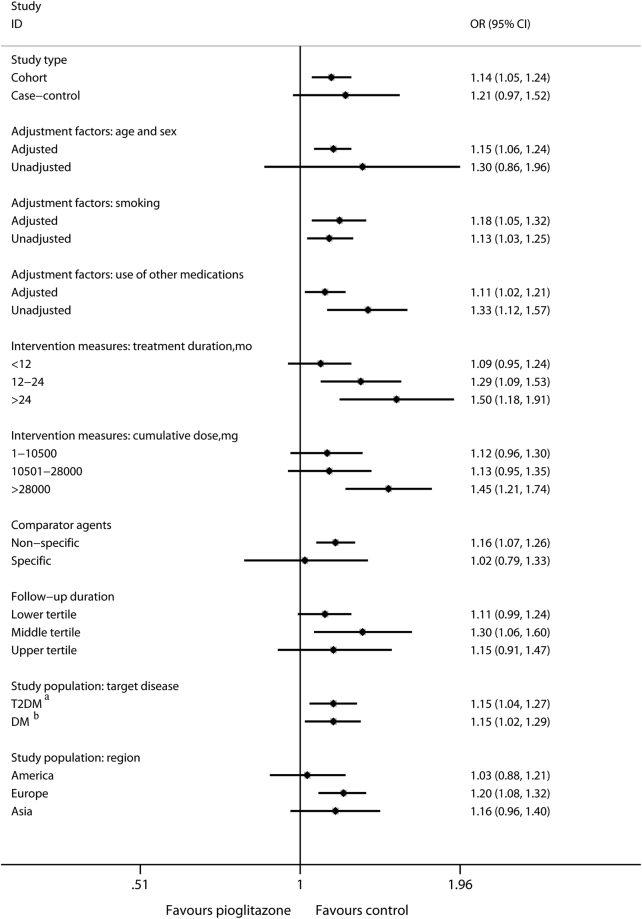
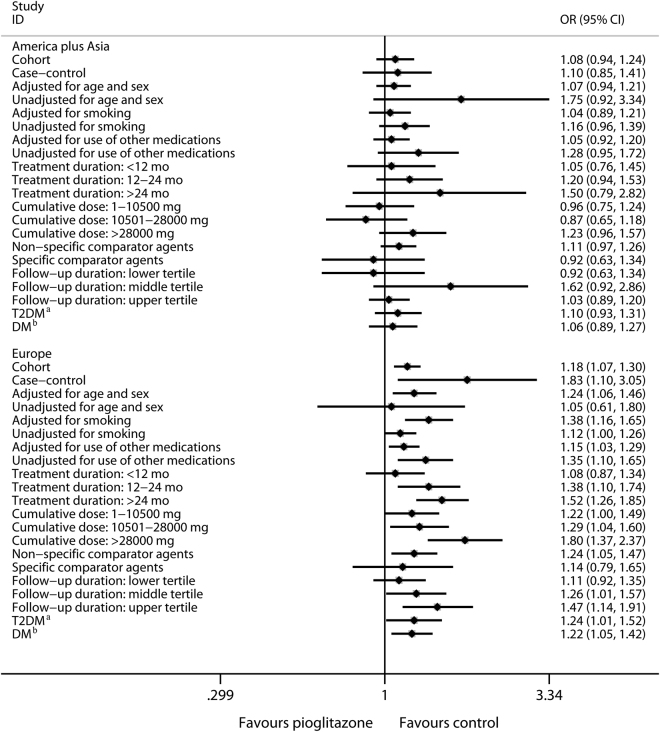
It has been debated for several years as to whether the antidiabetic drug pioglitazone increases the risk for bladder cancer. A series of recent large population studies yielded conflicting results. To investigate why the observational studies yielded conflicting results, we conducted stratified analyses to analyze the potential confounders behind these discordant outcomes. A total of 2,764,731 participants from observational (OB) studies and 9,999 from randomized control trials (RCTs) were identified for these analyses. The stratified analysis revealed that the study type, adjustment for age/sex, treatment duration, cumulative dose, agents used in a control group, mean period of follow-up and study population region might contribute to the discordant outcomes. In terms of population regions, pioglitazone increased the risk for bladder cancer could be found in European population, and patients who undergo treatment with pioglitazone for longer durations (>12 months) or are administrated a larger cumulative dose (>28,000 mg) might require more attention, and the long-term effects (≥3.6 years) of pioglitazone needs be monitored more carefully.
关于抗糖尿病药物吡格列酮是否会增加膀胱癌风险,已经争论了好几年。最近的一系列大型人群研究得出了相互矛盾的结果。为了探究为什么观察性研究得出了相互矛盾的结果,我们进行了分层分析,以分析这些不一致结果背后的潜在混杂因素。共有 2764731 名来自观察性(OB)研究和 9999 名来自随机对照试验(RCT)的参与者被纳入这些分析。分层分析表明,研究类型、年龄/性别调整、治疗持续时间、累积剂量、对照组中使用的药物、平均随访时间和研究人群地区可能导致结果不一致。就人群地区而言,在欧洲人群中发现吡格列酮增加膀胱癌风险,接受吡格列酮治疗时间较长(>12 个月)或接受累积剂量较大(>28000mg)的患者可能需要更多关注,需要更仔细地监测吡格列酮的长期效果(≥3.6 年)。