Campos-Cerqueira Marconi, Aide T Mitchell
University of Puerto Rico-Rio Piedras, San Juan, Puerto Rico.
PeerJ. 2017 Nov 15;5:e4059. doi: 10.7717/peerj.4059. eCollection 2017.
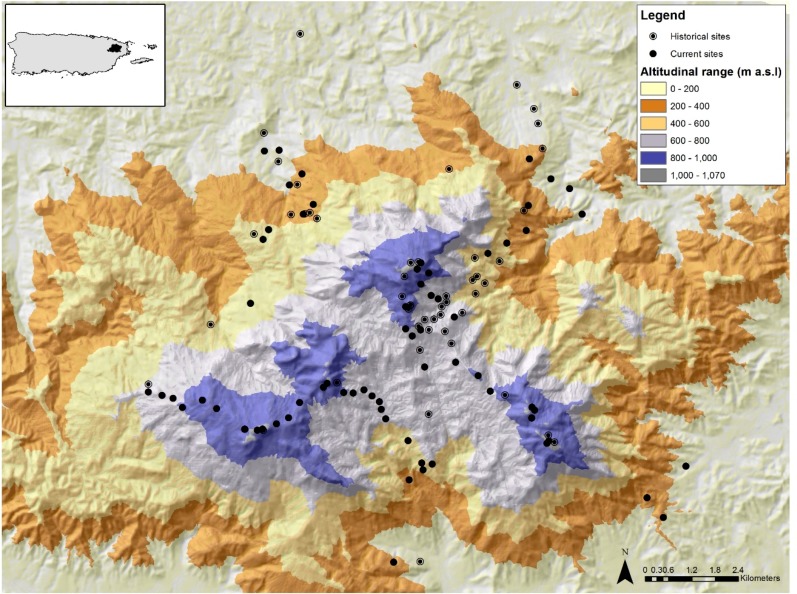
Climate change and infectious diseases threaten animal and plant species, even in natural and protected areas. To cope with these changes, species may acclimate, adapt, move or decline. Here, we test for shifts in anuran distributions in the Luquillo Mountains (LM), a tropical montane forest in Puerto Rico by comparing species distributions from historical (1931-1989)and current data (2015/2016).
Historical data, which included different methodologies, were gathered through the Global Biodiversity Information Facility (GBIF) and published literature, and the current data were collected using acoustic recorders along three elevational transects.
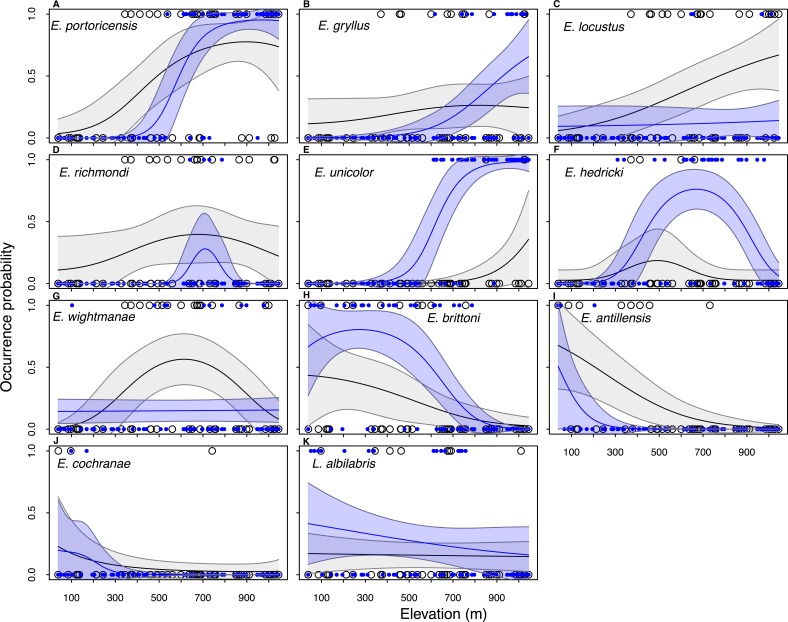
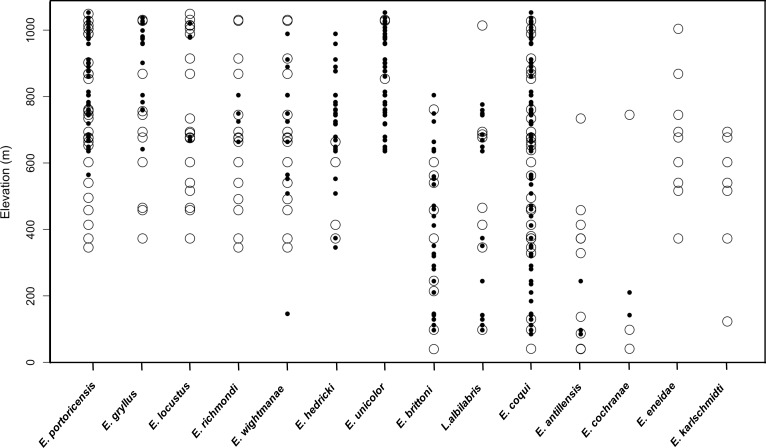
In the recordings, we detected the 12 native frog species known to occur in LM. Over a span of ∼25 years, two species have become extinct and four species suffered extirpation in lowland areas. As a consequence, low elevation areas in the LM (<300 m) have lost at least six anuran species.
We hypothesize that these extirpations are due to the effects of climate change and infectious diseases, which are restricting many species to higher elevations and a much smaller area. Land use change is not responsible for these changes because LM has been a protected reserve for the past 80 years. However, previous studies indicate that (1) climate change has increased temperatures in Puerto Rico, and (2) was found in 10 native species and early detection of Bd coincides with anurans declines in the LM. Our study confirms the general impressions of amphibian population extirpations at low elevations, and corroborates the levels of threat assigned by IUCN.
气候变化和传染病对动植物物种构成威胁,即便在自然保护区也是如此。为应对这些变化,物种可能会适应、迁移或数量减少。在此,我们通过比较历史数据(1931 - 1989年)和当前数据(2015/2016年),来检测波多黎各卢基洛山脉(LM)这一热带山地森林中无尾两栖动物分布的变化情况。
历史数据通过全球生物多样性信息机构(GBIF)及已发表文献收集,涵盖不同方法,当前数据则使用声学记录仪沿着三个海拔断面收集。
在录音中,我们检测到了已知在卢基洛山脉出现的12种本地蛙类物种。在约25年时间里,有两个物种灭绝,四个物种在低地地区绝迹。因此,卢基洛山脉海拔低于300米的低海拔地区至少失去了六种无尾两栖动物物种。
我们推测这些物种绝迹是气候变化和传染病造成的,它们将许多物种限制在更高海拔和更小区域。土地利用变化并非这些变化的原因,因为卢基洛山脉在过去80年一直是保护区。然而,先前研究表明:(1)气候变化使波多黎各气温升高;(2)在10种本地物种中发现了[蛙壶菌],且在卢基洛山脉,蛙壶菌的早期发现与无尾两栖动物数量减少同时出现。我们的研究证实了低海拔地区两栖动物种群绝迹的总体情况,并佐证了国际自然保护联盟(IUCN)认定的威胁等级。