Department of Paediatrics and Adolescent Medicine, Li Ka Shing Faculty of Medicine, The University of Hong Kong, Queen Mary Hospital, Pokfulam, Hong Kong, China.
Center for Nasopharyngeal Carcinoma Research, The University of Hong Kong, Hong Kong, China.
Viruses. 2017 Nov 21;9(11):352. doi: 10.3390/v9110352.
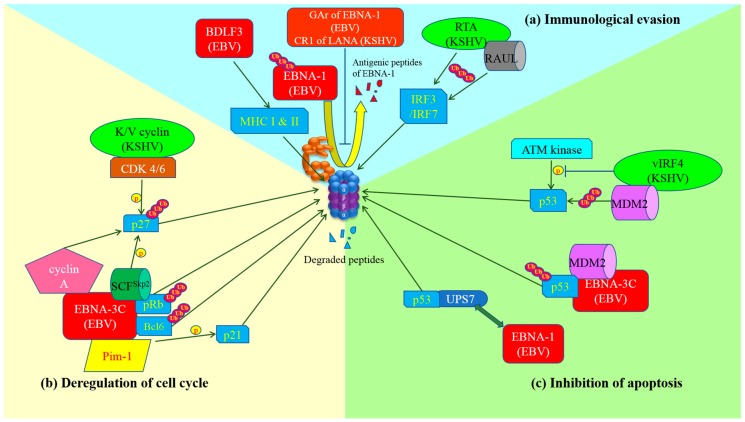
Epstein-Barr virus (EBV) is closely associated with several lymphomas (endemic Burkitt lymphoma, Hodgkin lymphoma and nasal NK/T-cell lymphoma) and epithelial cancers (nasopharyngeal carcinoma and gastric carcinoma). To maintain its persistence in the host cells, the virus manipulates the ubiquitin-proteasome system to regulate viral lytic reactivation, modify cell cycle checkpoints, prevent apoptosis and evade immune surveillance. In this review, we aim to provide an overview of the mechanisms by which the virus manipulates the ubiquitin-proteasome system in EBV-associated lymphoid and epithelial malignancies, to evaluate the efficacy of proteasome inhibitors on the treatment of these cancers and discuss potential novel viral-targeted treatment strategies against the EBV-associated cancers.
EB 病毒(EBV)与几种淋巴瘤(地方性 Burkitt 淋巴瘤、霍奇金淋巴瘤和鼻 NK/T 细胞淋巴瘤)和上皮性癌症(鼻咽癌和胃癌)密切相关。为了在宿主细胞中保持持续存在,病毒操纵泛素-蛋白酶体系统来调节病毒裂解再激活、修饰细胞周期检查点、防止细胞凋亡和逃避免疫监视。在这篇综述中,我们旨在概述病毒在 EBV 相关淋巴和上皮恶性肿瘤中操纵泛素-蛋白酶体系统的机制,评估蛋白酶体抑制剂对这些癌症治疗的疗效,并讨论针对 EBV 相关癌症的潜在新型病毒靶向治疗策略。