Medical Oncology Division, Hospital Universitarioss 12 de Octubre, Avda. Córdoba s/n, E-28041, Madrid, Spain.
Clinical and Translational Laboratory, Instituto de Investigación Hospital 12 de Octubre (I+12), Madrid, Spain.
J Exp Clin Cancer Res. 2021 Jun 21;40(1):202. doi: 10.1186/s13046-021-02010-9.
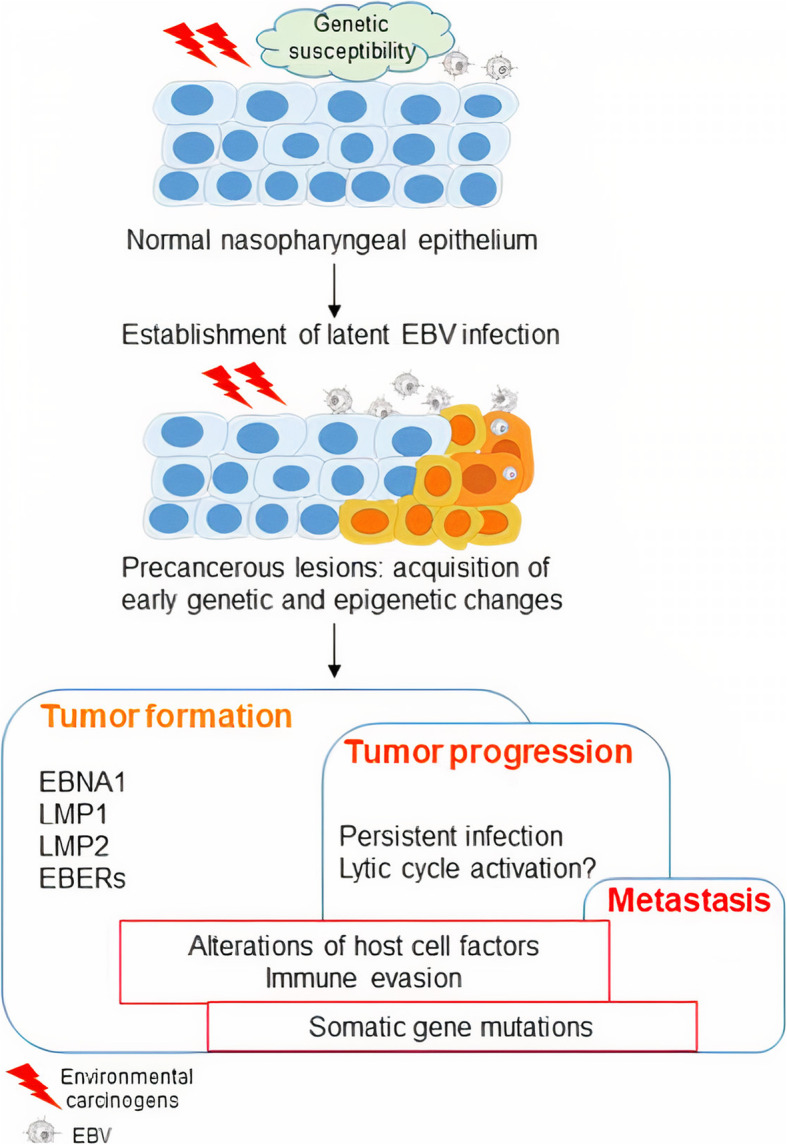
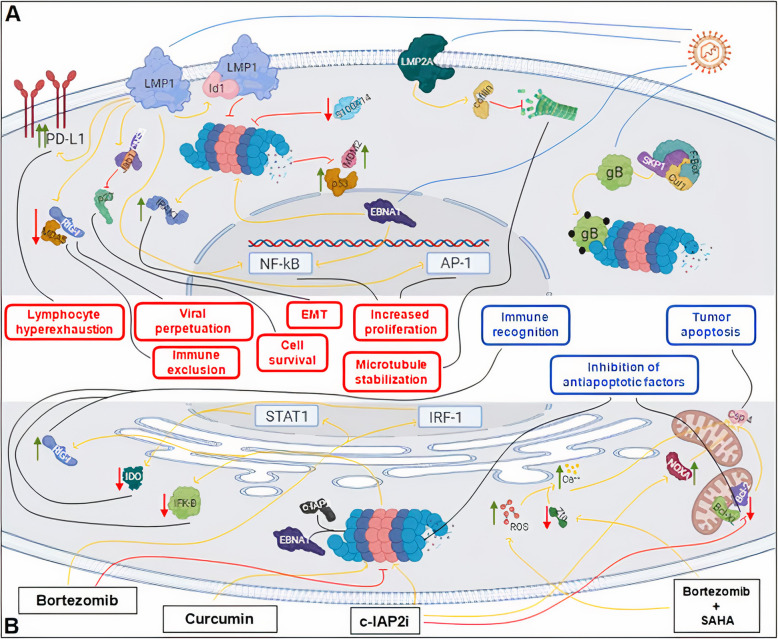
Nasopharyngeal carcinoma (NPC) represents a molecularly paradigmatic tumor given the complex diversity of environmental as well as host dependent factors that are closely implicated in tissue transformation and carcinogenesis. Epstein Barr Virus (EBV) plays a key role in tissue invasion, hyperplasia and malignant transformation. Therefore, EBV related oncoviral proteins such as Latent Membrane Protein family (LMP1, LMP2), Epstein Barr Nuclear Antigen 1 (EBNA1) and EBV related glycoprotein B (gB) are responsible for inducing intracellular signalling aberrations leading to sustained proliferation and further acquisition of NPC related invasive nature and metastatic potential.Dysregulation of proteasome signaling seems to be centrally implicated in oncoviral protein stabilization as well as in modulating tumor microenvironment. Different studies in vitro and in vivo suggest a potential role of proteasome inhibitors in the therapeutic setting of NPC. Furthermore, alterations affecting proteasome signalling in NPC have been associated to tumor growth and invasion, distant metastasis, immune exclusion and resistance as well as to clinical poor prognosis. So on, recent studies have shown the efficacy of immunotherapy as a suitable therapeutic approach to NPC. Nevertheless, novel strategies seem to look for combinatorial regimens aiming to potentiate immune recognition as well as to restore both primary and acquired immune resistance.In this work, our goal is to thoroughly review the molecular implications of proteasome dysregulation in the molecular pathogenesis of NPC, together with their direct relationship with EBV related oncoviral proteins and their role in promoting immune evasion and resistance. We also aim to hypothesize about the feasibility of the use of proteasome inhibitors as part of immunotherapy-including combinatorial regimens for their potential role in reversing immune resistance and favouring tumor recognition and eventual tumor death.
鼻咽癌(NPC)是一种分子模式典型的肿瘤,因为环境和宿主依赖因素的复杂多样性与组织转化和癌变密切相关。EB 病毒(EBV)在组织侵袭、增生和恶性转化中起着关键作用。因此,EBV 相关的癌蛋白,如潜伏膜蛋白家族(LMP1、LMP2)、EBV 核抗原 1(EBNA1)和 EBV 相关糖蛋白 B(gB),负责诱导细胞内信号异常,导致持续增殖,并进一步获得 NPC 相关的侵袭性和转移性潜能。蛋白酶体信号的失调似乎与癌蛋白的稳定以及调节肿瘤微环境密切相关。体外和体内的不同研究表明蛋白酶体抑制剂在 NPC 的治疗中有潜在的作用。此外,NPC 中影响蛋白酶体信号的改变与肿瘤生长和侵袭、远处转移、免疫排斥和耐药以及临床预后不良有关。因此,最近的研究表明免疫疗法作为 NPC 的一种合适的治疗方法是有效的。然而,新的策略似乎在寻找联合方案,旨在增强免疫识别,并恢复原发性和获得性免疫抵抗。在这项工作中,我们的目标是全面回顾蛋白酶体失调在 NPC 分子发病机制中的分子意义,以及它们与 EBV 相关癌蛋白的直接关系及其在促进免疫逃逸和耐药中的作用。我们还假设使用蛋白酶体抑制剂作为免疫疗法的一部分的可行性,包括联合方案,以其在逆转免疫耐药和促进肿瘤识别和最终肿瘤死亡方面的潜在作用。