Chen Xiaojun, Mou Xiaoqing, He Zhiyu, Zhu Yong
Department of Orthopaedics, the Affiliated Traditional Chinese Medicine Hospital of Southwest Medical University, Luzhou, Sichuan, China.
Department of Radiology, the Affiliated Hospital of Southwest Medical University, Luzhou, Sichuan, China.
J Orthop Surg Res. 2017 Nov 21;12(1):179. doi: 10.1186/s13018-017-0682-0.
Midazolam has some potential in pain control of patients undergoing knee arthroscopy. However, the results remain controversial. We conduct a systematic review and meta-analysis to explore the effect of midazolam on pain control after knee arthroscopy.
PubMed, EMbase, Web of science, EBSCO, and Cochrane library databases are systematically searched. Randomized controlled trials (RCTs) assessing the effect of midazolam on pain management after knee arthroscopy are included. Two investigators have independently searched articles, extracted the data, and assessed the quality of the included studies. This meta-analysis is performed using the random-effect model.
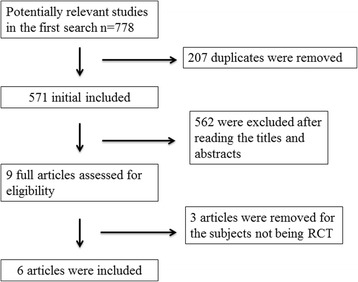
Six RCTs are included in this meta-analysis. Compared with control intervention after knee arthroscopy, midazolam intervention can significantly reduce the pain scores (standard mean difference (Std. MD) = - 3.70; 95% confidence interval (CI) = - 6.81 to - 0.60; P = 0.02), the number of patients requiring analgesics (risk ratio (RR) = 0.66; 95% CI = 0.49 to 0.88; P = 0.005), and analgesic consumption (Std. MD = -1.62; 95% CI = - 3.04 to - 0.19; P = 0.03), as well as increase the time to first analgesic requirement (Std. MD = 1.58; 95% CI = 0.17 to 2.99; P = 0.03). In addition, midazolam intervention results in no increase in adverse events following knee arthroscopy (RR = 0.74; 95% CI = 0.18 to 2.98; P = 0.67).
Midazolam intervention is revealed to substantially reduce the pain scores, the number of patients requiring analgesics, and analgesic consumption, as well as improve the time to first analgesic requirement after knee arthroscopy.
咪达唑仑在膝关节镜手术患者的疼痛控制方面具有一定潜力。然而,结果仍存在争议。我们进行了一项系统评价和荟萃分析,以探讨咪达唑仑对膝关节镜检查后疼痛控制的效果。
系统检索了PubMed、EMbase、Web of science、EBSCO和Cochrane图书馆数据库。纳入评估咪达唑仑对膝关节镜检查后疼痛管理效果的随机对照试验(RCT)。两名研究者独立检索文章、提取数据并评估纳入研究的质量。本荟萃分析采用随机效应模型。
本荟萃分析纳入了6项RCT。与膝关节镜检查后的对照干预相比,咪达唑仑干预可显著降低疼痛评分(标准均差(Std.MD)=-3.70;95%置信区间(CI)=-6.81至-0.60;P=0.02)、需要镇痛剂的患者数量(风险比(RR)=0.66;95%CI=0.49至0.88;P=0.005)和镇痛剂消耗量(Std.MD=-1.62;95%CI=-3.04至-0.19;P=0.03),并延长首次需要镇痛剂的时间(Std.MD=1.58;95%CI=0.17至2.99;P=0.03)。此外,咪达唑仑干预不会增加膝关节镜检查后的不良事件发生率(RR=0.74;95%CI=0.18至2.98;P=0.67)。
咪达唑仑干预可显著降低膝关节镜检查后的疼痛评分、需要镇痛剂的患者数量和镇痛剂消耗量,并改善首次需要镇痛剂的时间。