Solovyev Andrey G, Morozov Sergey Y
A. N. Belozersky Institute of Physico-Chemical Biology, Moscow State University, Moscow, Russia.
Institute of Molecular Medicine, Sechenov First Moscow State Medical University, Moscow, Russia.
Front Plant Sci. 2017 Oct 27;8:1820. doi: 10.3389/fpls.2017.01820. eCollection 2017.
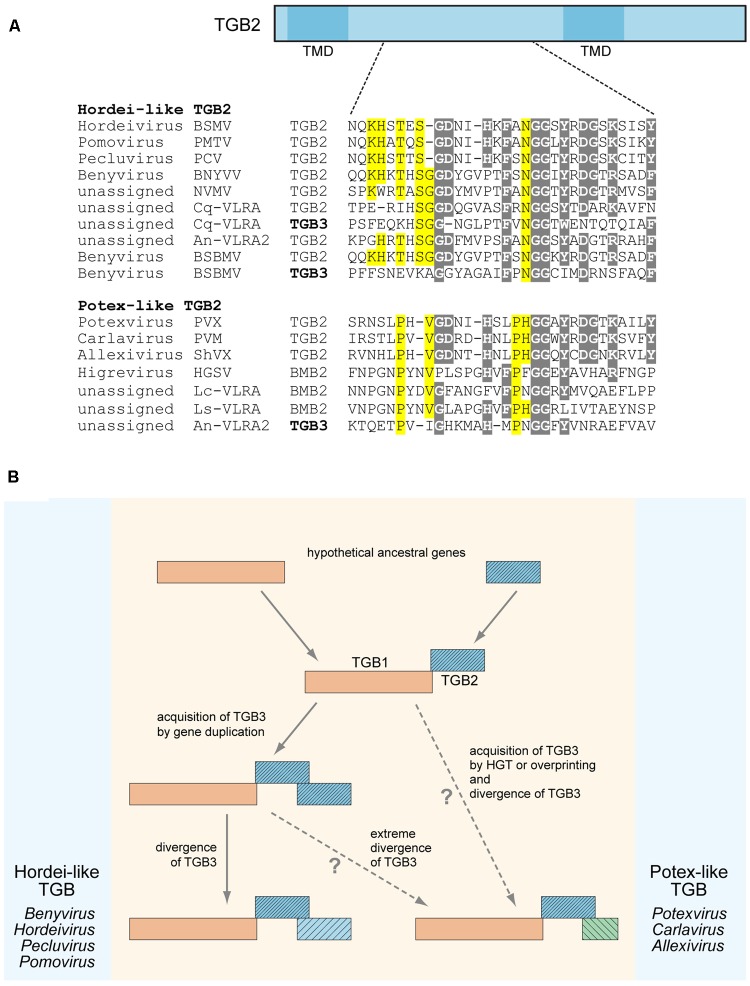
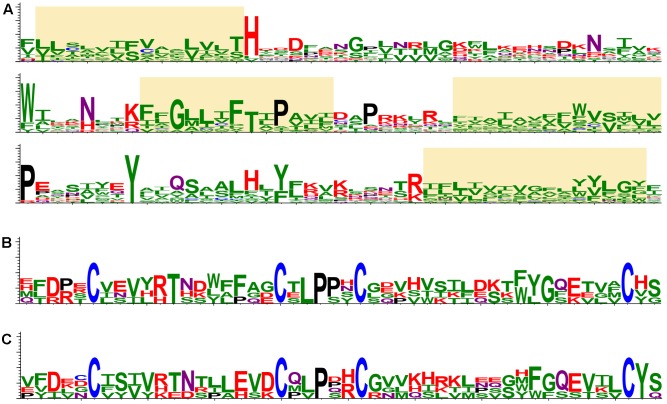
Fast accumulation of sequencing data on plant virus genomes and plant transcriptomes demands periodic re-evaluation of current views on the genome evolution of viruses. Here, we substantiate and further detail our previously mostly speculative model on the origin and evolution of triple gene block (TGB) encoding plant virus movement proteins TGB1, TGB2, and TGB3. Recent experimental data on functional competence of transport gene modules consisting of two proteins related to TGB1 and TGB2, as well as sequence analysis data on similarity of TGB2 and TGB3 encoded by a viral genome and virus-like RNAs identified in a plant transcriptomes, suggest that TGB evolution involved events of gene duplication and gene transfer between viruses. In addition, our analysis identified that plant RNA-seq data assembled into RNA virus-like contigs encode a significant variety of hydrophobic proteins. Functions of these orphan proteins are still obscure; however, some of them are obviously related to hydrophobic virion proteins of recently sequenced invertebrate (mostly insect) viruses, therefore supporting the current view on a common origin for many groups of plant and insect RNA-containing viruses. Moreover, these findings may suggest that the function of at least some orphan hydrophobic proteins is to provide plant viruses with the ability to infect insect hosts. In general, our observations emphasize that comparison of RNA virus sequences in a large variety of land plants and algae isolated geographically and ecologically may lead to experimental confirmation of previously purely speculative schemes of evolution of single genes, gene modules, and whole genomes.
植物病毒基因组和植物转录组测序数据的快速积累,要求定期重新评估当前关于病毒基因组进化的观点。在此,我们证实并进一步详细阐述了我们之前大多基于推测的关于编码植物病毒运动蛋白TGB1、TGB2和TGB3的三基因块(TGB)起源和进化的模型。最近关于由与TGB1和TGB2相关的两种蛋白质组成的转运基因模块功能能力的实验数据,以及关于病毒基因组编码的TGB2和TGB3与植物转录组中鉴定的病毒样RNA相似性的序列分析数据,表明TGB的进化涉及病毒之间的基因复制和基因转移事件。此外,我们的分析发现,组装成RNA病毒样重叠群的植物RNA-seq数据编码了大量种类的疏水蛋白。这些孤儿蛋白的功能仍然不清楚;然而,其中一些显然与最近测序的无脊椎动物(主要是昆虫)病毒的疏水病毒粒子蛋白有关,因此支持了目前关于许多植物和昆虫含RNA病毒起源相同的观点。此外,这些发现可能表明,至少一些孤儿疏水蛋白的功能是赋予植物病毒感染昆虫宿主的能力。总体而言,我们的观察结果强调,对地理和生态上分离的多种陆地植物和藻类中的RNA病毒序列进行比较,可能会导致对以前纯粹基于推测的单基因、基因模块和全基因组进化方案的实验证实。