
组蛋白去乙酰化酶抑制剂可增强来那替尼的活性,二者联合使用时可增强抗程序性死亡蛋白1免疫调节抗体的作用。
HDAC inhibitors enhance neratinib activity and when combined enhance the actions of an anti-PD-1 immunomodulatory antibody .
作者信息
Booth Laurence, Roberts Jane L, Poklepovic Andrew, Avogadri-Connors Francesca, Cutler Richard E, Lalani Alshad S, Dent Paul
机构信息
Department of Biochemistry and Molecular Biology, Virginia Commonwealth University, Richmond, VA 23298, USA.
Department of Medicine, Virginia Commonwealth University, Richmond, VA 23298, USA.
出版信息
Oncotarget. 2017 Oct 9;8(52):90262-90277. doi: 10.18632/oncotarget.21660. eCollection 2017 Oct 27.
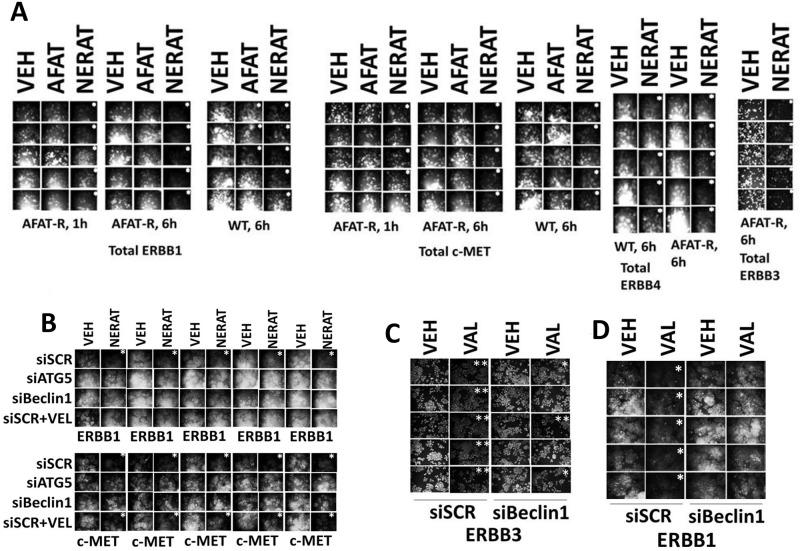
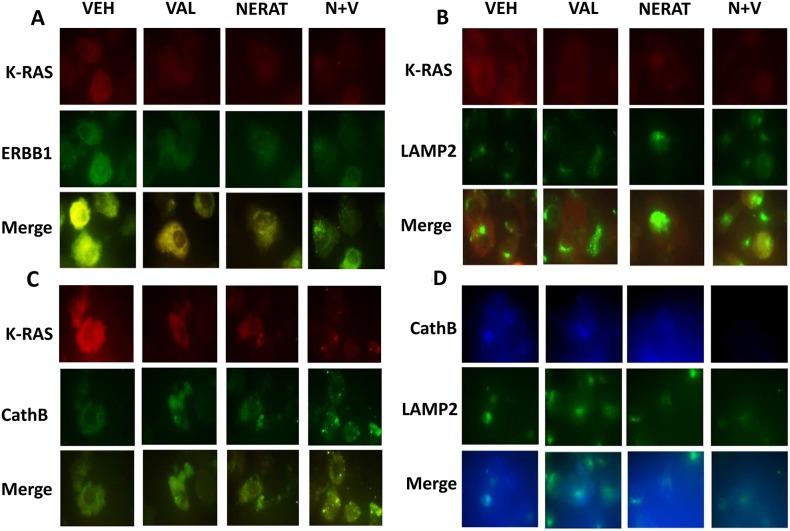
Patients whose NSCLC tumors become afatinib resistant presently have few effective therapeutic options to extend their survival. Afatinib resistant NSCLC cells were sensitive to clinically relevant concentrations of the irreversible pan-HER inhibitor neratinib, but not by the first generation ERBB1/2/4 inhibitor lapatinib. In multiple afatinib resistant NSCLC clones, HDAC inhibitors reduced the expression of ERBB1/3/4, but activated c-SRC, which resulted in higher total levels of ERBB1/3 phosphorylation. Neratinib also rapidly reduced the of ERBB1/2/3/4, c-MET and of mutant K-/N-RAS; K-RAS co-localized with phosphorylated ATG13 and with cathepsin B in vesicles. Combined exposure of cells to [neratinib + HDAC inhibitors] caused inactivation of mTORC1 and mTORC2, enhanced autophagosome and subsequently autolysosome formation, and caused an additive to greater than additive induction of cell death. Knock down of Beclin1 or ATG5 prevented HDAC inhibitors or neratinib from reducing ERBB1/3/4 and K-/N-RAS expression and reduced [neratinib + HDAC inhibitor] lethality. Neratinib and HDAC inhibitors reduced the expression of multiple HDAC proteins via autophagy that was causal in the reduced expression of PD-L1, PD-L2 and ornithine decarboxylase, and increased expression of Class I MHCA. , neratinib and HDAC inhibitors interacted to suppress the growth of 4T1 mammary tumors, an effect that was enhanced by an anti-PD-1 antibody. Our data support the premises that neratinib lethality can be enhanced by HDAC inhibitors, that neratinib may be a useful therapeutic tool in afatinib resistant NSCLC, and that [neratinib + HDAC inhibitor] exposure facilitates anti-tumor immune responses.
目前,非小细胞肺癌(NSCLC)肿瘤对阿法替尼产生耐药性的患者几乎没有有效的治疗选择来延长生存期。阿法替尼耐药的NSCLC细胞对临床相关浓度的不可逆泛HER抑制剂来那替尼敏感,但对第一代ERBB1/2/4抑制剂拉帕替尼不敏感。在多个阿法替尼耐药的NSCLC克隆中,组蛋白去乙酰化酶(HDAC)抑制剂降低了ERBB1/3/4的表达,但激活了c-SRC,导致ERBB1/3磷酸化的总水平升高。来那替尼也迅速降低了ERBB1/2/3/4、c-MET以及突变型K-/N-RAS的水平;K-RAS与磷酸化的ATG13以及组织蛋白酶B在囊泡中共定位。细胞联合暴露于[来那替尼+HDAC抑制剂]导致mTORC1和mTORC2失活,增强自噬体并随后促进自溶酶体形成,并导致细胞死亡的相加至大于相加诱导作用。敲低Beclin1或ATG5可阻止HDAC抑制剂或来那替尼降低ERBB1/3/4和K-/N-RAS表达,并降低[来那替尼+HDAC抑制剂]的致死性。来那替尼和HDAC抑制剂通过自噬降低了多种HDAC蛋白的表达,这在PD-L1、PD-L2和鸟氨酸脱羧酶表达降低以及I类MHC A表达增加中起因果作用。此外,来那替尼和HDAC抑制剂相互作用以抑制4T1乳腺肿瘤的生长,抗PD-1抗体可增强这种作用。我们的数据支持以下前提:HDAC抑制剂可增强来那替尼的致死性,来那替尼可能是治疗阿法替尼耐药NSCLC的有用治疗工具,并且[来那替尼+HDAC抑制剂]暴露促进抗肿瘤免疫反应。





 Zotero 插件