Booth Laurence, Roberts Jane L, Rais Rumeesa, Kirkwood John, Avogadri-Connors Francesca, Cutler Richard E, Lalani Alshad S, Poklepovic Andrew, Dent Paul
Department of Biochemistry and Molecular Biology, Virginia Commonwealth University, Richmond, VA 23298, USA.
University of Pittsburgh Cancer Institute Melanoma and Skin Cancer Program, Hillman Cancer Research Pavilion Laboratory L1.32c, Pittsburgh, PA 15232, USA.
Oncotarget. 2017 Dec 26;9(5):6062-6074. doi: 10.18632/oncotarget.23681. eCollection 2018 Jan 19.
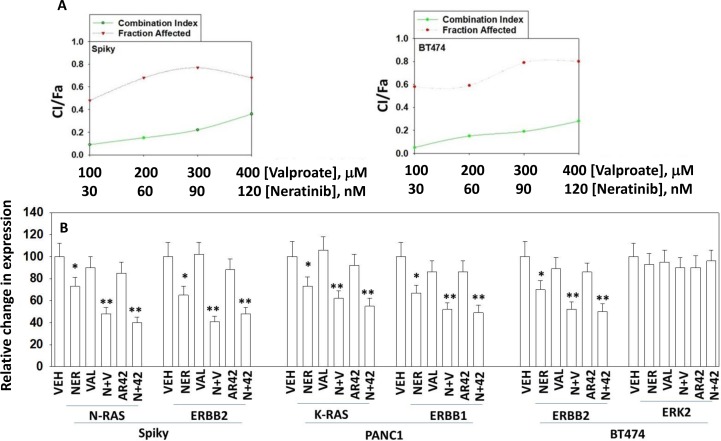
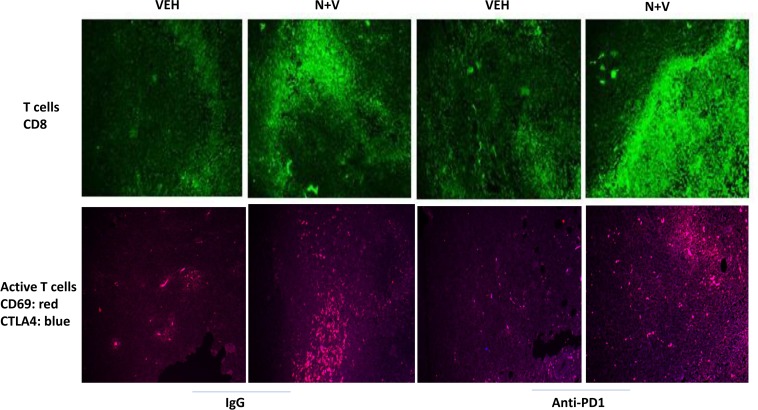
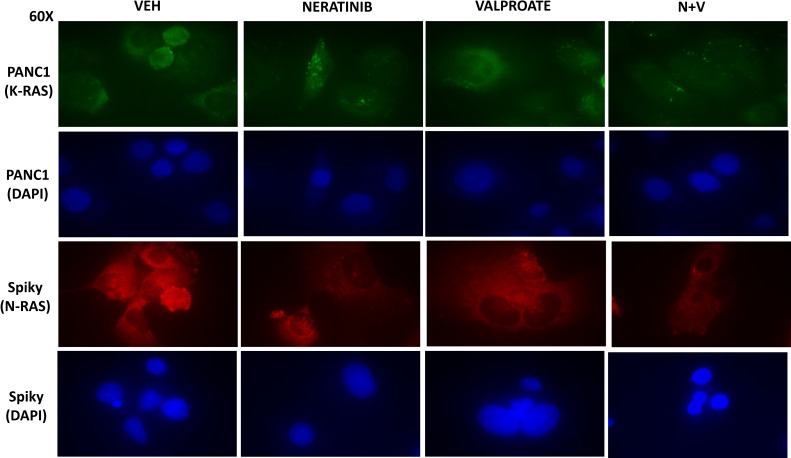
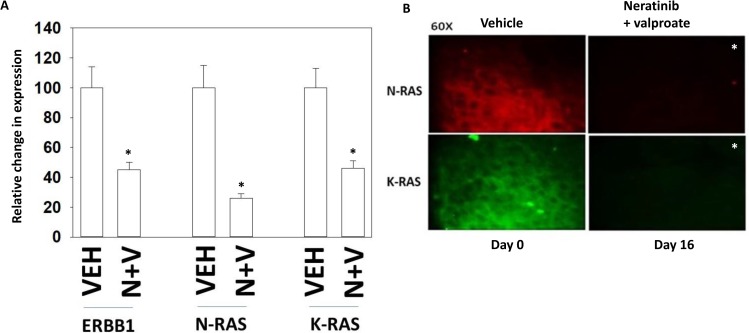
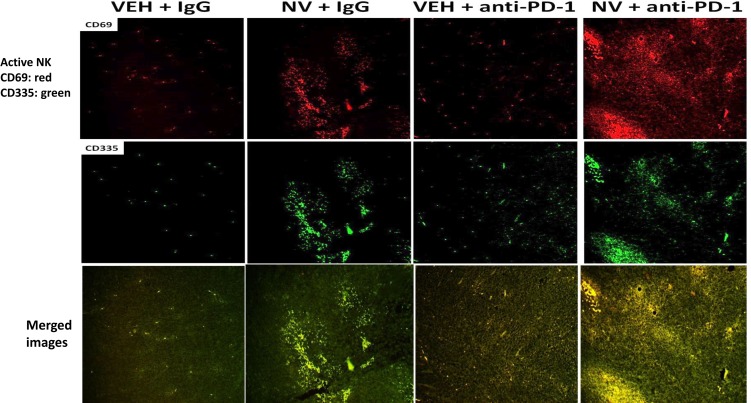
The irreversible ERBB1/2/4 inhibitor neratinib has been shown to rapidly reduce the expression of ERBB1/2/4 and RAS proteins via autophagic/lysosomal degradation. We have recently demonstrated that neratinib and valproate interact to suppress the growth of 4T1 mammary tumors but had not defined whether the [neratinib + valproate] drug combination, in a mouse, had altered the biology of the 4T1 cells. Exposure of 4T1 mammary tumors to [neratinib + valproate] for three days resulted, two weeks later, in tumors that expressed less ERBB1, K-RAS, N-RAS, indoleamine-pyrrole 2,3-dioxygenase (IDO-1), ornithine decarboxylase (ODC) and had increased Class I MHCA expression. Tumors previously exposed to [neratinib + valproate] grew more slowly than those exposed to vehicle control and contained more CD8+ cells and activated NK cells. M1 but not M2 macrophage infiltration was significantly enhanced by the drug combination. exposure of 4T1 tumor cells to [neratinib + valproate] variably reduced the expression of histone deacetylases 1-11. , prior exposure of tumors to [neratinib + valproate] permanently reduced the expression of HDACs 1-3, 6 and 10. Combined knock down of HDACs 1/2/3 or of 3/10 rapidly reduced the expression IDO-1, and ODC and increased the expression of MHCA. H&E staining of normal tissues at animal nadir revealed no obvious cyto-architectural differences between control and drug-treated animals. We conclude that [neratinib + valproate] evolves 4T1 tumors to grow more slowly and to be more sensitive to checkpoint immunotherapy antibodies.
不可逆的ERBB1/2/4抑制剂来那替尼已被证明可通过自噬/溶酶体降解迅速降低ERBB1/2/4和RAS蛋白的表达。我们最近证明来那替尼和丙戊酸相互作用可抑制4T1乳腺肿瘤的生长,但尚未确定在小鼠中[来那替尼+丙戊酸]药物组合是否改变了4T1细胞的生物学特性。4T1乳腺肿瘤暴露于[来那替尼+丙戊酸]三天后,两周后导致肿瘤中ERBB1、K-RAS、N-RAS、吲哚胺-吡咯2,3-双加氧酶(IDO-1)、鸟氨酸脱羧酶(ODC)表达减少,且I类MHC A表达增加。先前暴露于[来那替尼+丙戊酸]的肿瘤比暴露于载体对照的肿瘤生长更慢,且含有更多的CD8+细胞和活化的NK细胞。药物组合显著增强了M1而非M2巨噬细胞浸润。4T1肿瘤细胞暴露于[来那替尼+丙戊酸]可不同程度地降低组蛋白脱乙酰酶1-11的表达。此外,肿瘤先前暴露于[来那替尼+丙戊酸]可永久性降低HDACs 1-3、6和10的表达。联合敲低HDACs 1/2/3或3/10可迅速降低IDO-1和ODC的表达,并增加MHC A的表达。在动物最低点时对正常组织进行苏木精-伊红染色显示,对照动物和药物治疗动物之间没有明显的细胞结构差异。我们得出结论,[来那替尼+丙戊酸]使4T1肿瘤生长更慢,并对检查点免疫治疗抗体更敏感。