From the Manchester Academic Health Science Centre, Division of Cell Matrix Biology and Regenerative Medicine, Faculty of Biology, Medicine and Health, (U.R., B.A., A.A., J.K.F.W., G.C.) and Transgenic Core Research Facility, Faculty of Biology, Medicine and Health (N.H., M.S.-J.), University of Manchester, United Kingdom; and Plastic Surgery Department, Wythenshawe Hospital, Manchester University NHS Foundation Trust, United Kingdom (J.K.F.W.).
Circ Res. 2018 Jan 19;122(2):267-281. doi: 10.1161/CIRCRESAHA.117.312111. Epub 2017 Nov 22.
Vascular smooth muscle turnover has important implications for blood vessel repair and for the development of cardiovascular diseases, yet lack of specific transgenic animal models has prevented it's in vivo analysis.
The objective of this study was to characterize the dynamics and mechanisms of vascular smooth muscle turnover from the earliest stages of embryonic development to arterial repair in the adult.
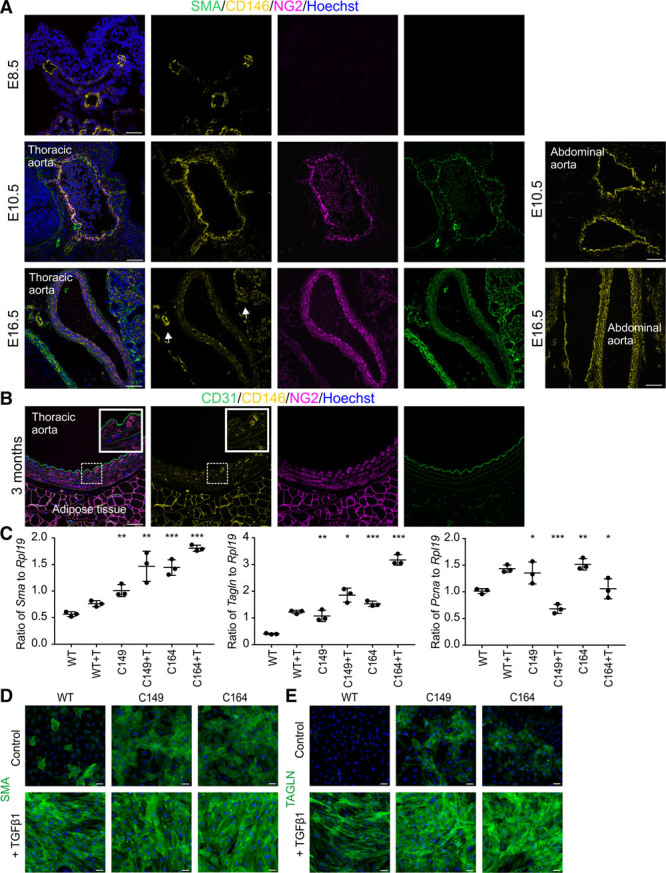
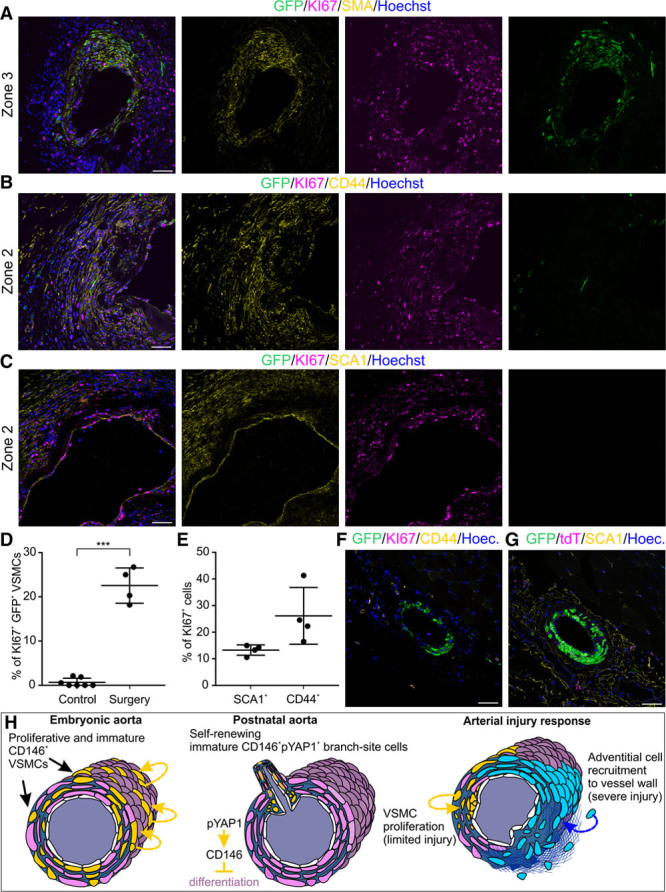
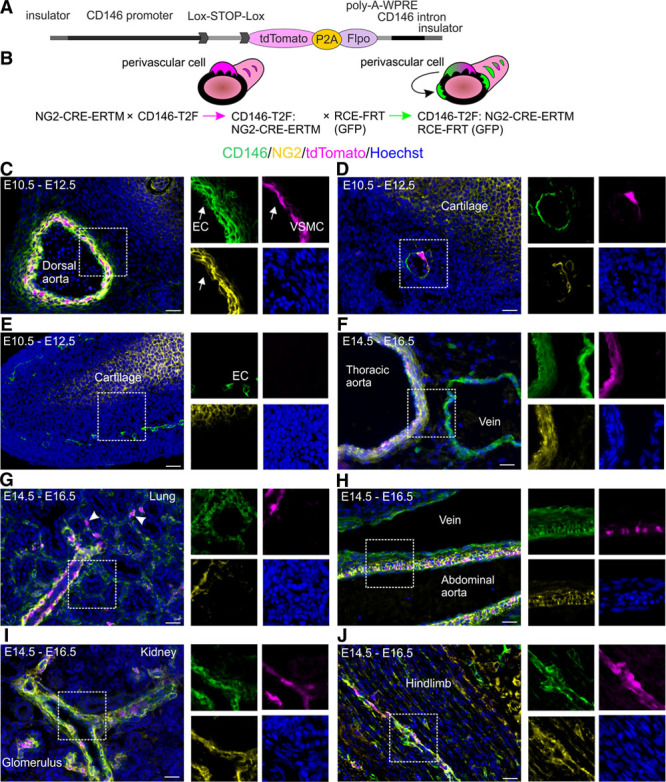
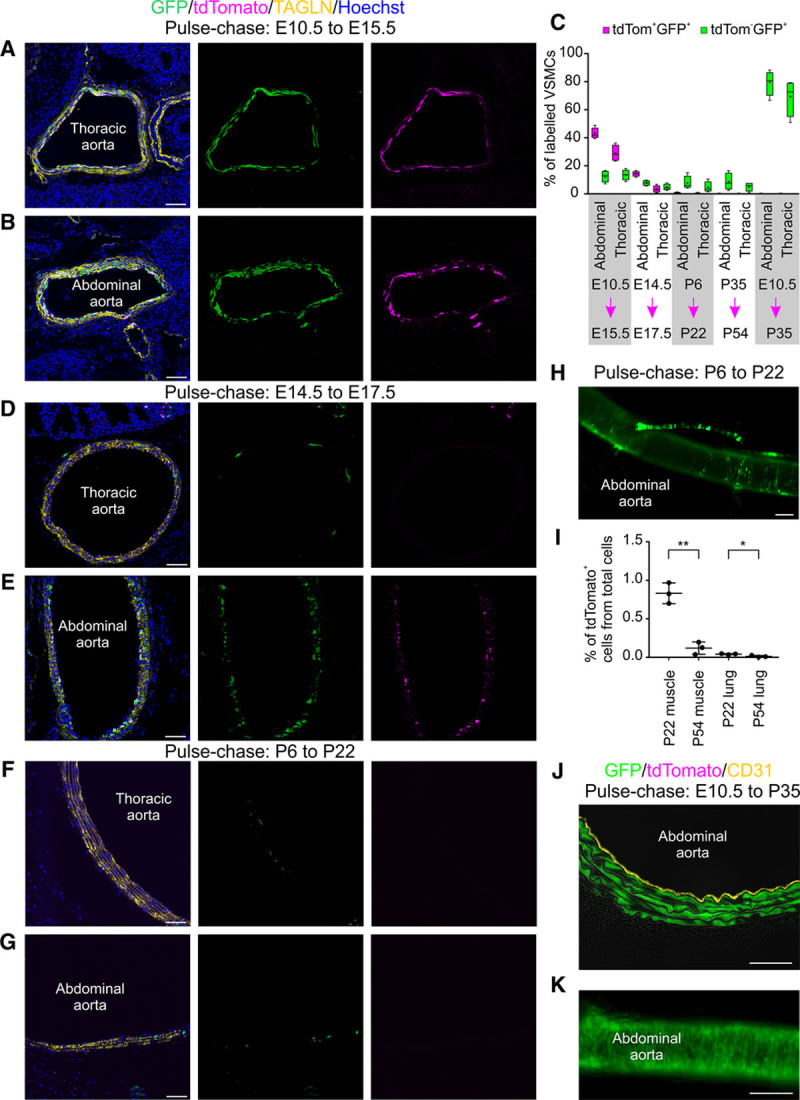
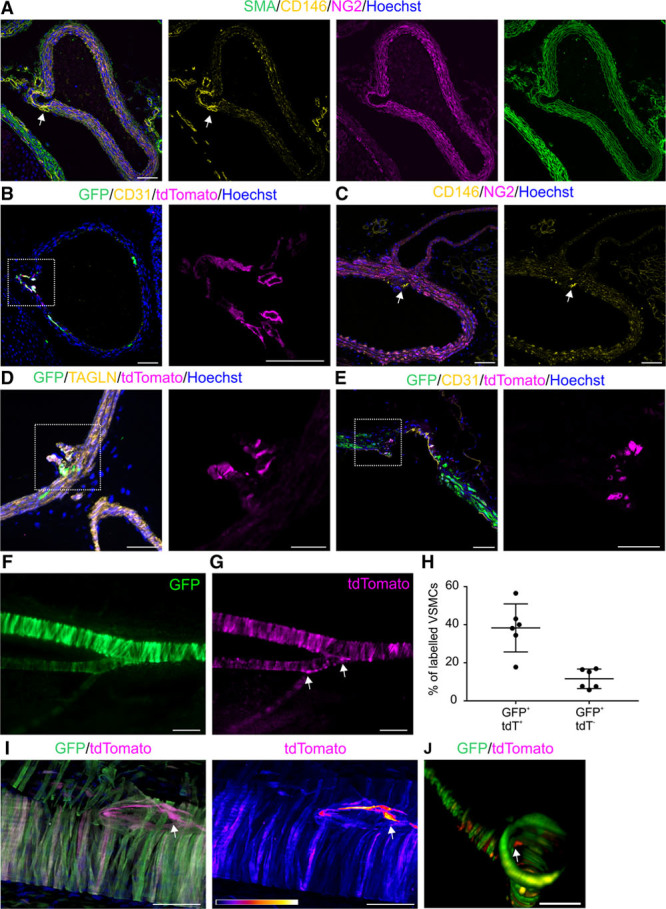
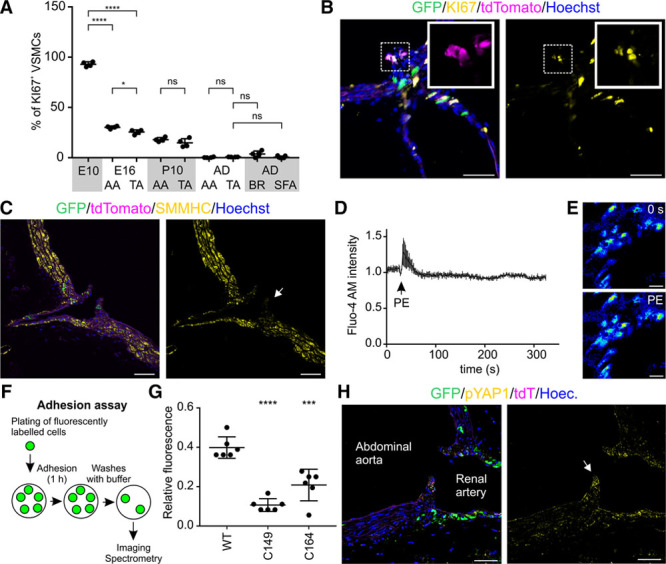
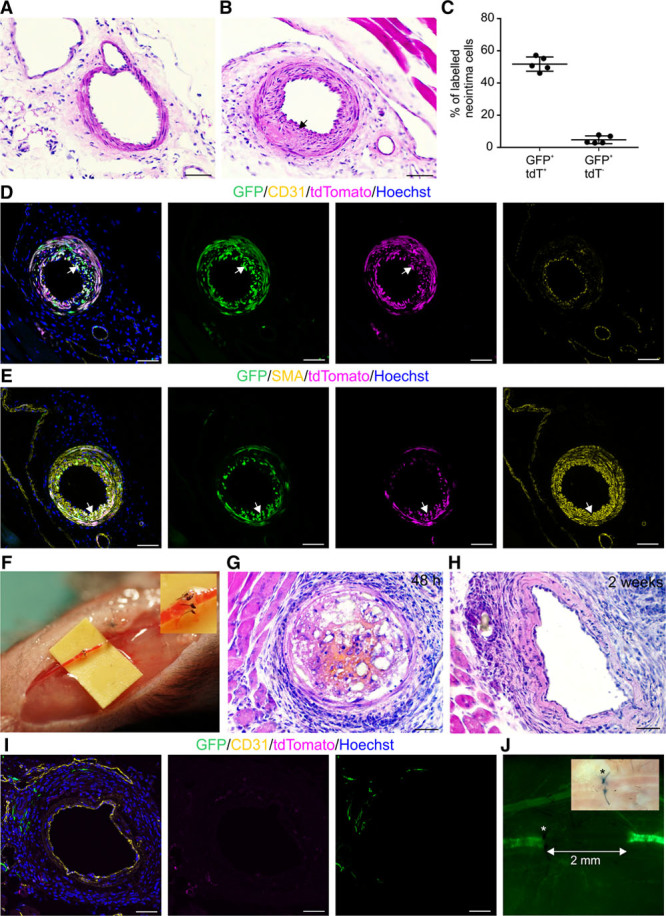
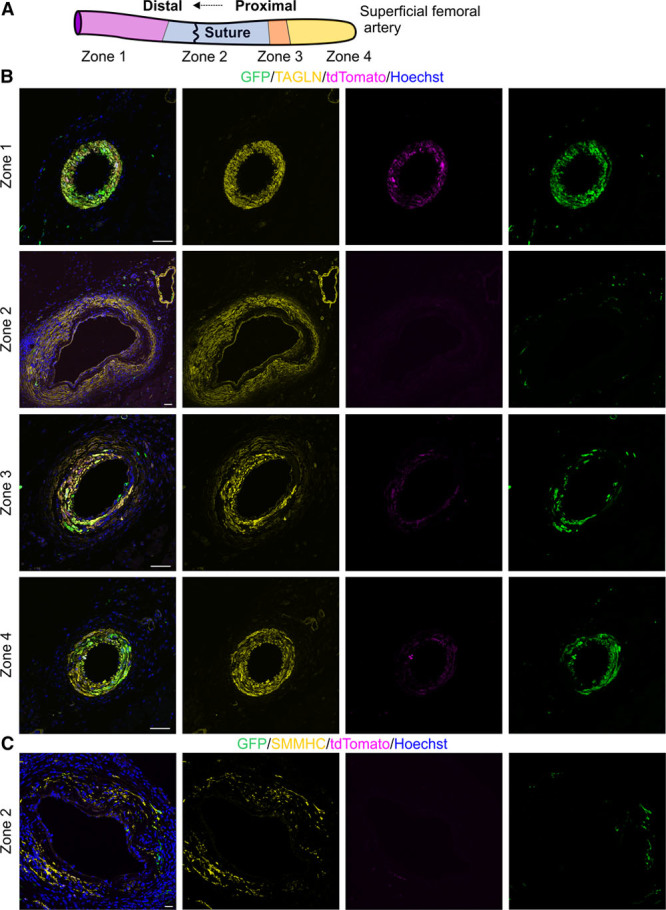
We show that CD146 is transiently expressed in vascular smooth muscle development. By using CRISPR-Cas9 genome editing and in vitro smooth muscle differentiation assay, we demonstrate that CD146 regulates the balance between proliferation and differentiation. We developed a triple-transgenic mouse model to map the fate of NG2CD146 immature smooth muscle cells. A series of pulse-chase experiments revealed that the origin of aortic vascular smooth muscle cells can be traced back to progenitor cells that reside in the wall of the dorsal aorta of the embryo at E10.5. A distinct population of CD146 smooth muscle progenitor cells emerges during embryonic development and is maintained postnatally at arterial branch sites. To characterize the contribution of different cell types to arterial repair, we used 2 injury models. In limited wire-induced injury response, existing smooth muscle cells are the primary contributors to neointima formation. In contrast, microanastomosis leads to early smooth muscle death and subsequent colonization of the vascular wall by proliferative adventitial cells that contribute to the repair.
Extensive proliferation of immature smooth muscle cells in the primitive embryonic dorsal aorta establishes the long-lived lineages of smooth muscle cells that make up the wall of the adult aorta. A discrete population of smooth muscle cells forms in the embryo and is postnatally sustained at arterial branch sites. In response to arterial injuries, existing smooth muscle cells give rise to neointima, but on extensive damage, they are replaced by adventitial cells.
血管平滑肌更新对于血管修复和心血管疾病的发展具有重要意义,但缺乏特定的转基因动物模型阻碍了其体内分析。
本研究旨在从胚胎发育的最早阶段到成年动脉修复,对血管平滑肌更新的动力学和机制进行研究。
我们发现 CD146 在血管平滑肌发育过程中短暂表达。通过使用 CRISPR-Cas9 基因组编辑和体外平滑肌分化实验,我们证明 CD146 调节增殖和分化之间的平衡。我们开发了一种三重转基因小鼠模型,以追踪 NG2CD146 未成熟平滑肌细胞的命运。一系列脉冲追踪实验表明,主动脉血管平滑肌细胞的起源可以追溯到胚胎第 10.5 天背部主动脉壁中的祖细胞。在胚胎发育过程中出现了一个独特的 CD146 平滑肌祖细胞群体,并在出生后保持在动脉分支部位。为了研究不同细胞类型对动脉修复的贡献,我们使用了 2 种损伤模型。在有限的线诱导损伤反应中,现有的平滑肌细胞是新生内膜形成的主要贡献者。相比之下,微吻合导致早期平滑肌细胞死亡,随后增殖的外膜细胞殖民化血管壁,参与修复。
原始胚胎背主动脉中未成熟平滑肌细胞的广泛增殖建立了构成成年主动脉壁的平滑肌细胞的长寿谱系。胚胎中形成了一个离散的平滑肌细胞群体,并在出生后维持在动脉分支部位。在动脉损伤时,现有的平滑肌细胞产生新生内膜,但在广泛损伤时,它们被外膜细胞取代。