Department of Neurology, Affiliated ZhongDa Hospital, School of Medicine, Southeast University, Nanjing, Jiangsu 210009, PR China.
Department of Basic Medicine, Wuxi School of Medicine, Jiangnan University, Wuxi, Jiangsu 214122, PR China.
Redox Biol. 2018 Apr;14:656-668. doi: 10.1016/j.redox.2017.11.012. Epub 2017 Nov 16.
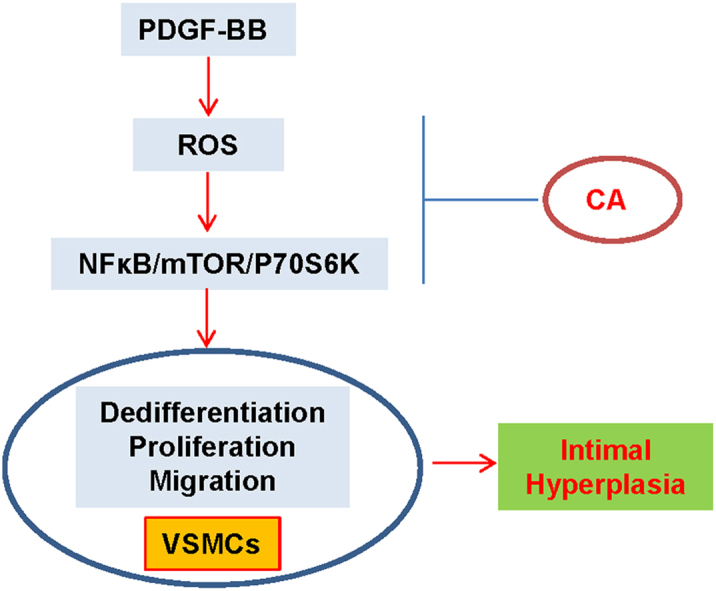
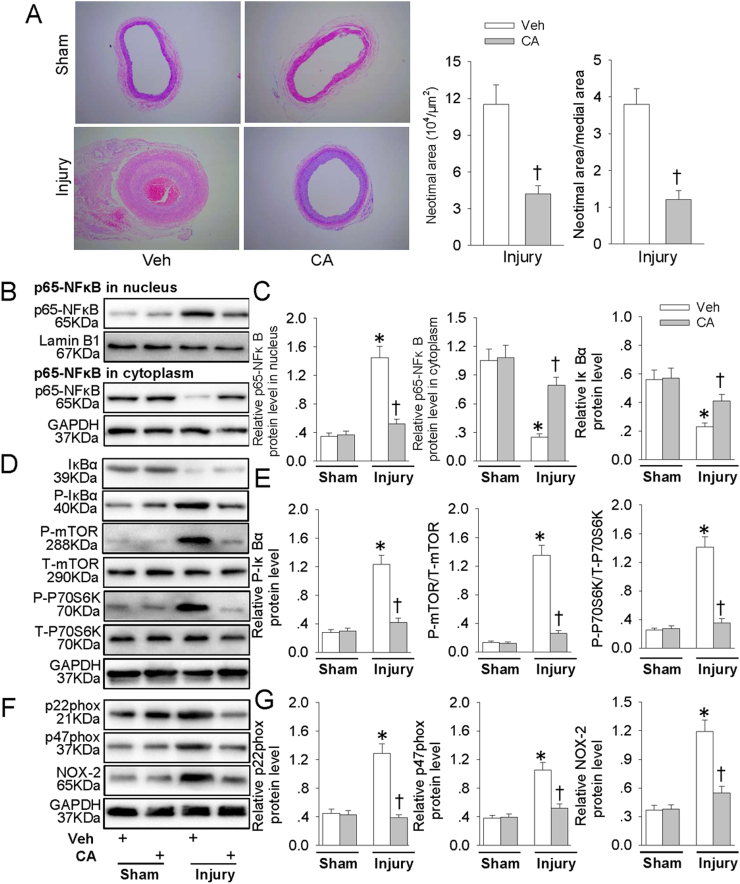
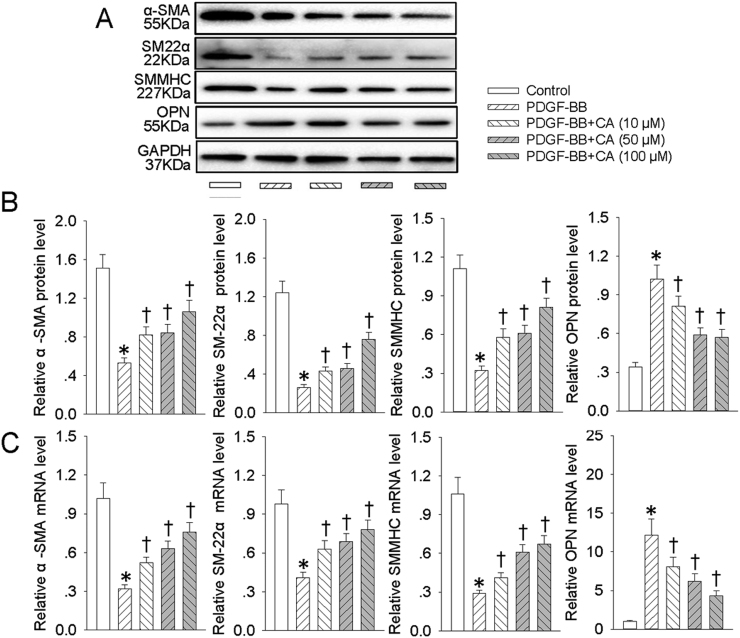
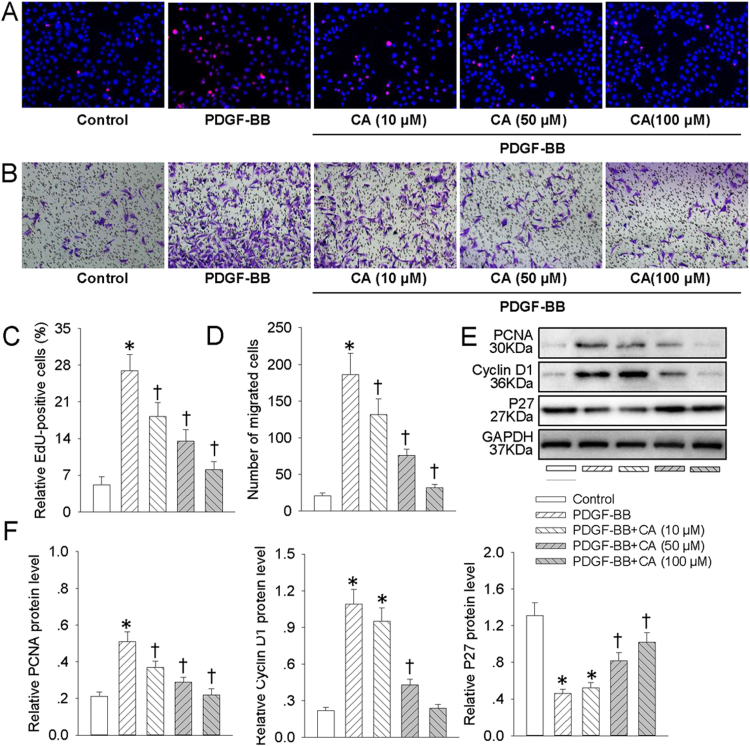
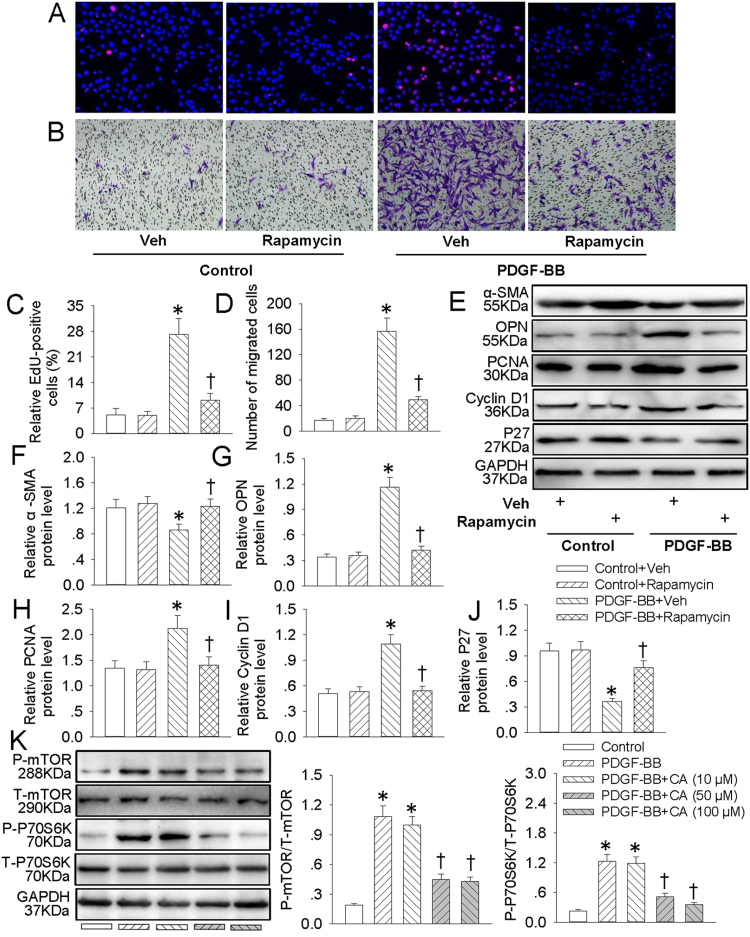
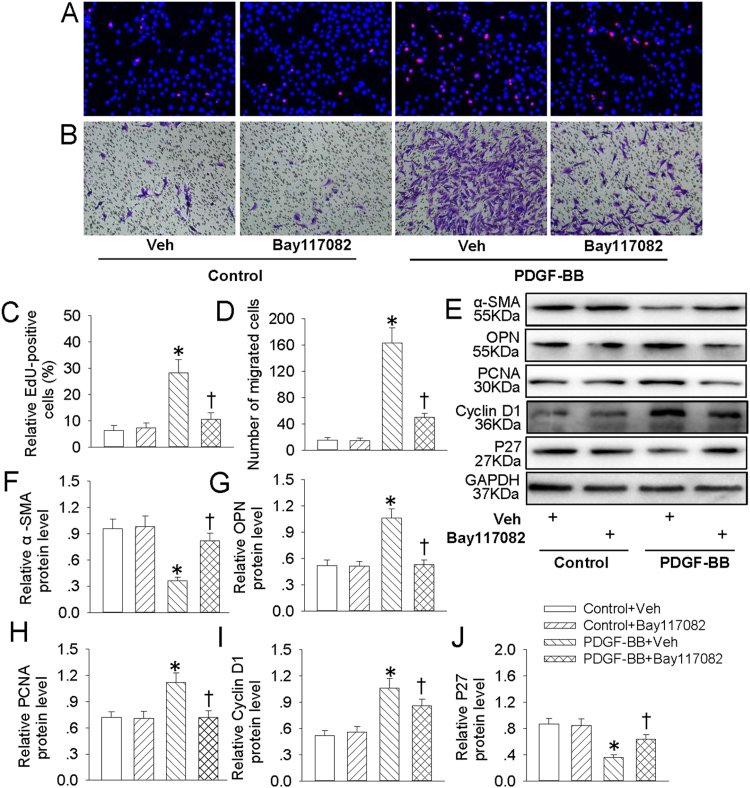
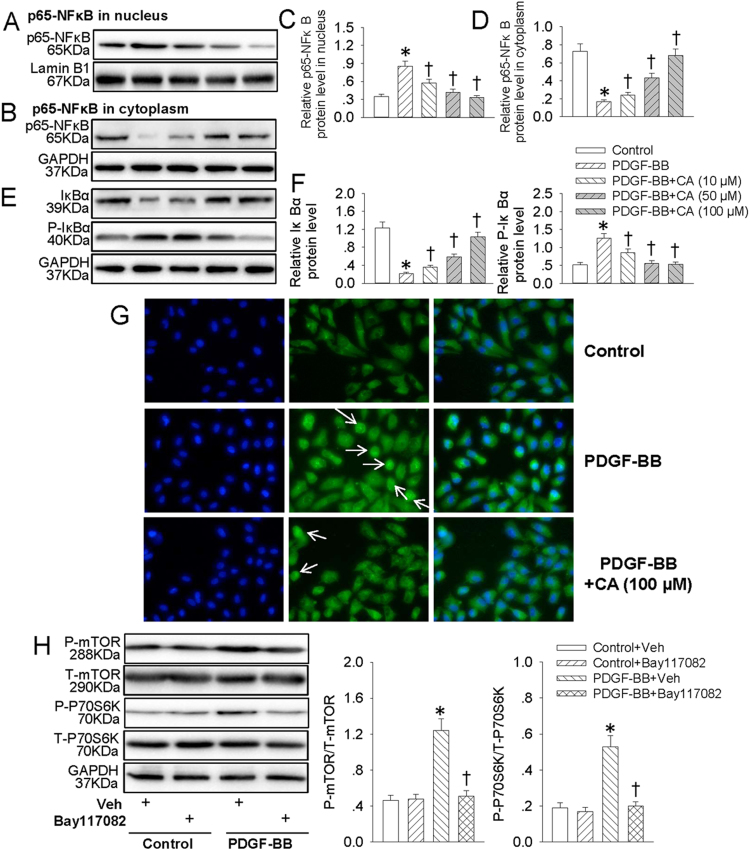
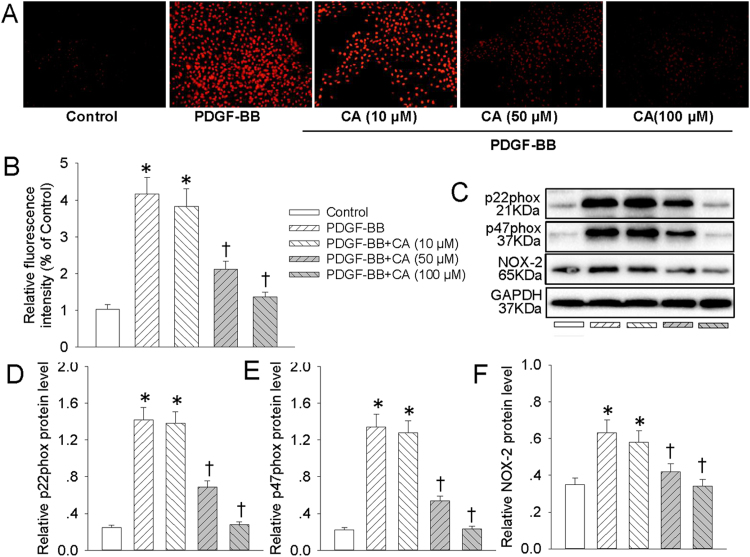
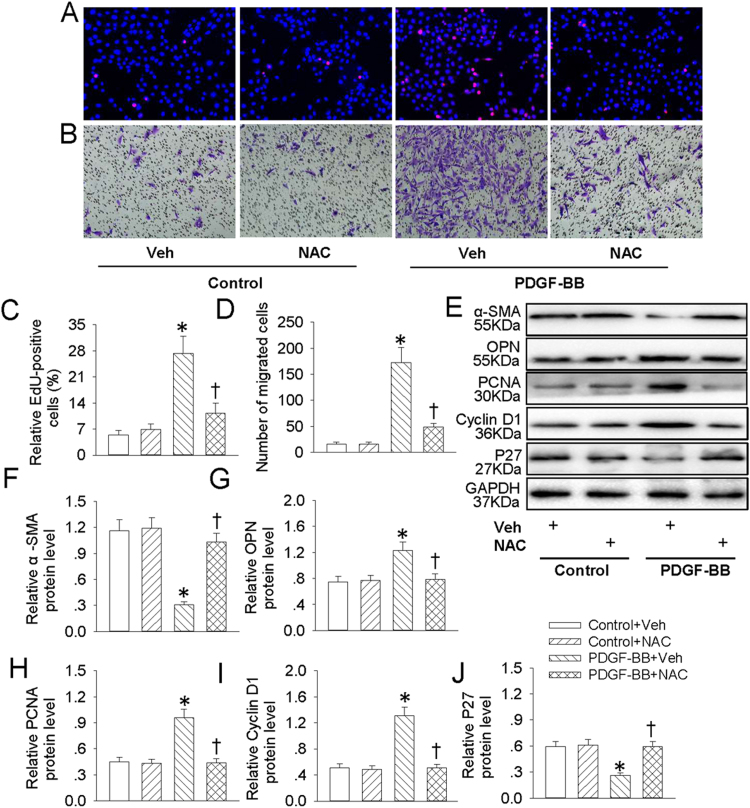
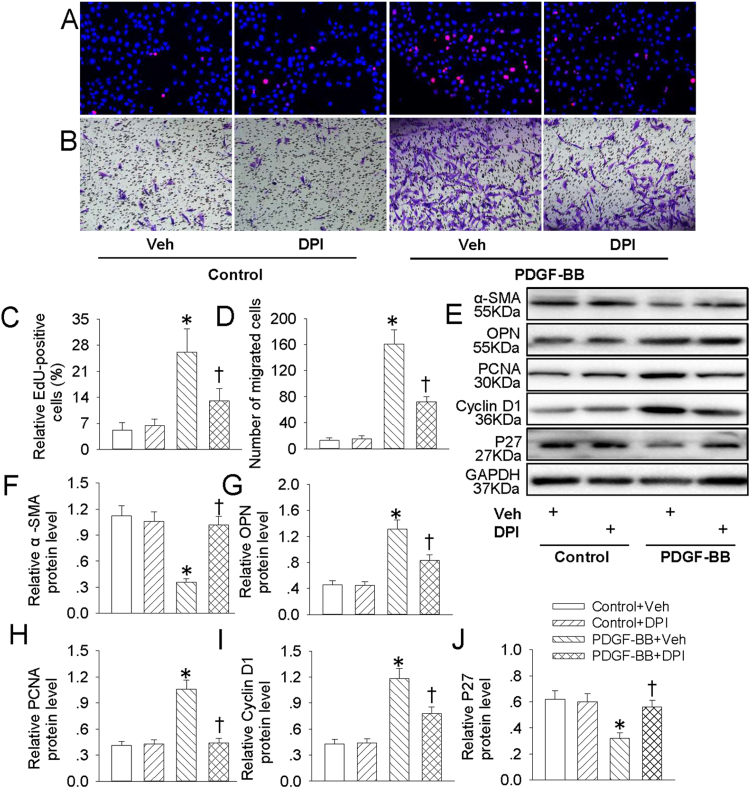
Phenotypic switch of vascular smooth muscle cells (VSMCs) is characterized by increased expressions of VSMC synthetic markers and decreased levels of VSMC contractile markers, which is an important step for VSMC proliferation and migration during the development and progression of cardiovascular diseases including atherosclerosis. Chicoric acid (CA) is identified to exert powerful cardiovascular protective effects. However, little is known about the effects of CA on VSMC biology. Herein, in cultured VSMCs, we showed that pretreatment with CA dose-dependently suppressed platelet-derived growth factor type BB (PDGF-BB)-induced VSMC phenotypic alteration, proliferation and migration. Mechanistically, PDGF-BB-treated VSMCs exhibited higher mammalian target of rapamycin (mTOR) and P70S6K phosphorylation, which was attenuated by CA pretreatment, diphenyleneiodonium chloride (DPI), reactive oxygen species (ROS) scavenger N-acetyl-l-cysteine (NAC) and nuclear factor-κB (NFκB) inhibitor Bay117082. PDGF-BB-triggered ROS production and p65-NFκB activation were inhibited by CA. In addition, both NAC and DPI abolished PDGF-BB-evoked p65-NFκB nuclear translocation, phosphorylation and degradation of Inhibitor κBα (IκBα). Of note, blockade of ROS/NFκB/mTOR/P70S6K signaling cascade prevented PDGF-BB-evoked VSMC phenotypic transformation, proliferation and migration. CA treatment prevented intimal hyperplasia and vascular remodeling in rat models of carotid artery ligation in vivo. These results suggest that CA impedes PDGF-BB-induced VSMC phenotypic switching, proliferation, migration and neointima formation via inhibition of ROS/NFκB/mTOR/P70S6K signaling cascade.
血管平滑肌细胞(VSMCs)的表型转换的特征是 VSMC 合成标志物的表达增加和 VSMC 收缩标志物的水平降低,这是 VSMC 增殖和迁移的重要步骤,在包括动脉粥样硬化在内的心血管疾病的发生和发展过程中。 chicoric 酸(CA)被鉴定为具有强大的心血管保护作用。然而,对于 CA 对 VSMC 生物学的影响知之甚少。在此,在培养的 VSMCs 中,我们表明,CA 预处理剂量依赖性地抑制血小板衍生生长因子 BB(PDGF-BB)诱导的 VSMC 表型改变、增殖和迁移。在机制上,CA 预处理、二苯乙烯碘化物(DPI)、活性氧(ROS)清除剂 N-乙酰-L-半胱氨酸(NAC)和核因子-κB(NFκB)抑制剂 Bay117082 减弱了 PDGF-BB 处理的 VSMCs 中更高的哺乳动物雷帕霉素靶蛋白(mTOR)和 P70S6K 磷酸化。CA 抑制了 PDGF-BB 触发的 ROS 产生和 p65-NFκB 激活。此外,NAC 和 DPI 均消除了 PDGF-BB 引起的 p65-NFκB 核转位、磷酸化和 IκBα 的降解。值得注意的是,ROS/NFκB/mTOR/P70S6K 信号通路的阻断阻止了 PDGF-BB 引起的 VSMC 表型转化、增殖和迁移。CA 处理可预防体内颈动脉结扎大鼠模型中的内膜增生和血管重塑。这些结果表明,CA 通过抑制 ROS/NFκB/mTOR/P70S6K 信号通路来阻碍 PDGF-BB 诱导的 VSMC 表型转换、增殖、迁移和新生内膜形成。