Riera Marina, Wert Ana, Nieto Isabel, Pomares Esther
Departament de Genètica, Institut de Microcirurgia Ocular (IMO), Barcelona, Spain.
Departament d'Oftalmologia Pediàtrica, Estrabisme i Neuroftalmologia, Institut de Microcirurgia Ocular (IMO), Barcelona, Spain.
Mol Genet Genomic Med. 2017 Nov;5(6):709-719. doi: 10.1002/mgg3.329. Epub 2017 Aug 21.
Microphthalmia and anophthalmia (MA) are congenital eye abnormalities that show an extremely high clinical and genetic complexity. In this study, we evaluated the implementation of whole exome sequencing (WES) for the genetic analysis of MA patients. This approach was used to investigate three unrelated families in which previous single-gene analyses failed to identify the molecular cause.
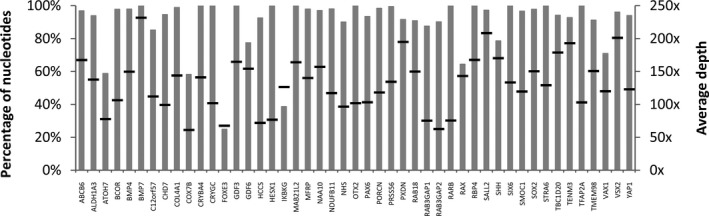
A total of 47 genes previously associated with nonsyndromic MA were included in our panel. WES was performed in one affected patient from each family using the AmpliSeq Exome technology and the Ion Proton platform.
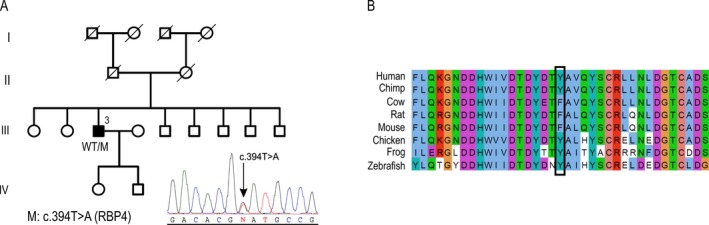
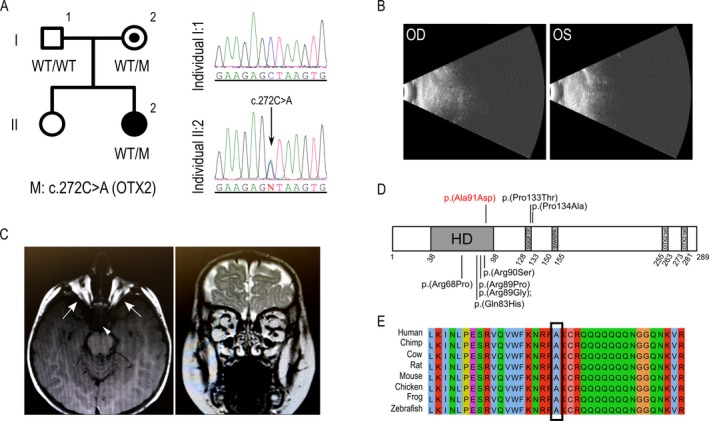
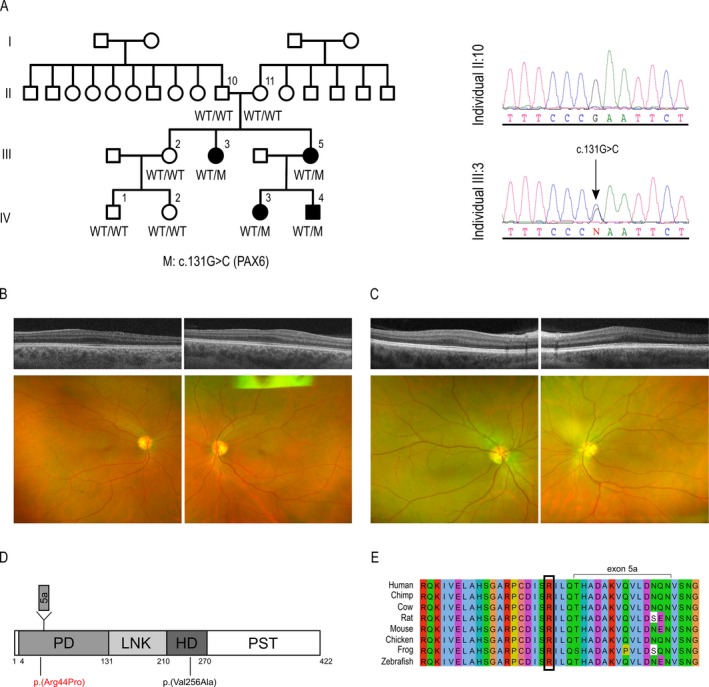
A novel heterozygous OTX2 missense mutation was identified in a patient showing bilateral anophthalmia who inherited the variant from a parent who was a carrier, but showed no sign of the condition. We also describe a new PAX6 missense variant in an autosomal-dominant pedigree affected by mild bilateral microphthalmia showing high intrafamiliar variability, with germline mosaicism determined to be the most plausible molecular cause of the disease. Finally, a heterozygous missense mutation in RBP4 was found to be responsible in an isolated case of bilateral complex microphthalmia.
This study highlights that panel-based WES is a reliable and effective strategy for the genetic diagnosis of MA. Furthermore, using this technique, the mutational spectrum of these diseases was broadened, with novel variants identified in each of the OTX2, PAX6, and RBP4 genes. Moreover, we report new cases of reduced penetrance, mosaicism, and variable phenotypic expressivity associated with MA, further demonstrating the heterogeneity of such disorders.
小眼症和无眼症(MA)是先天性眼部异常,具有极高的临床和遗传复杂性。在本研究中,我们评估了全外显子组测序(WES)在MA患者基因分析中的应用。该方法用于调查三个无血缘关系的家庭,此前的单基因分析未能确定其分子病因。
我们的检测板共纳入了47个先前与非综合征性MA相关的基因。使用AmpliSeq外显子组技术和Ion Proton平台对每个家庭的一名患病患者进行WES检测。
在一名双侧无眼症患者中鉴定出一种新的杂合型OTX2错义突变,该患者从身为携带者的父母一方遗传了该变异,但父母未表现出该病症状。我们还在一个常染色体显性遗传家系中描述了一种新的PAX6错义变异,该家系受轻度双侧小眼症影响,家系内变异性高,种系嵌合体被确定为该病最可能的分子病因。最后,在一例双侧复杂性小眼症孤立病例中发现RBP4杂合错义突变与之相关。
本研究强调基于检测板的WES是MA基因诊断的可靠有效策略。此外,使用该技术拓宽了这些疾病的突变谱,在OTX2、PAX6和RBP4基因中均鉴定出了新变异。而且,我们报告了与MA相关的外显率降低、嵌合体和可变表型表达的新病例,进一步证明了此类疾病的异质性。