• 文献检索
  • 文档翻译
  • 深度研究
  • 学术资讯
  • Suppr Zotero 插件Zotero 插件
  • 邀请有礼
  • 套餐&价格
  • 历史记录
应用&插件
Suppr Zotero 插件Zotero 插件浏览器插件Mac 客户端Windows 客户端微信小程序
定价
高级版会员购买积分包购买API积分包
服务
文献检索文档翻译深度研究API 文档MCP 服务
关于我们
关于 Suppr公司介绍联系我们用户协议隐私条款
关注我们

Suppr 超能文献

核心技术专利:CN118964589B侵权必究
粤ICP备2023148730 号-1Suppr @ 2026

文献检索

告别复杂PubMed语法,用中文像聊天一样搜索,搜遍4000万医学文献。AI智能推荐,让科研检索更轻松。

立即免费搜索

文件翻译

保留排版,准确专业,支持PDF/Word/PPT等文件格式,支持 12+语言互译。

免费翻译文档

深度研究

AI帮你快速写综述,25分钟生成高质量综述,智能提取关键信息,辅助科研写作。

立即免费体验

现在和过去的自我:一种稳态视觉诱发电位方法来处理自我面孔。

Present and past selves: a steady-state visual evoked potentials approach to self-face processing.

机构信息

Laboratory of Psychophysiology, Department of Neurophysiology, Nencki Institute of Experimental Biology, 3 Pasteur St., 02-093, Warsaw, Poland.

Wroclaw Faculty of Psychology, SWPS University of Social Sciences and Humanities, 30b Ostrowskiego St., 53-238, Wroclaw, Poland.

出版信息

Sci Rep. 2017 Nov 27;7(1):16438. doi: 10.1038/s41598-017-16679-6.

DOI:10.1038/s41598-017-16679-6
PMID:29180637
原文链接:https://pmc.ncbi.nlm.nih.gov/articles/PMC5703895/
Abstract

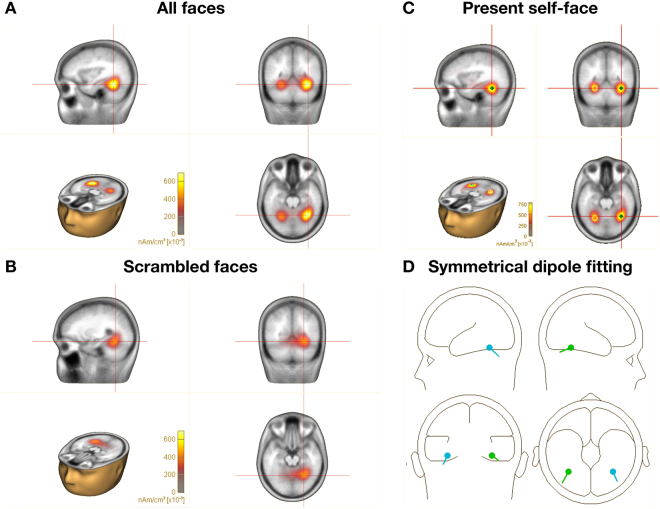
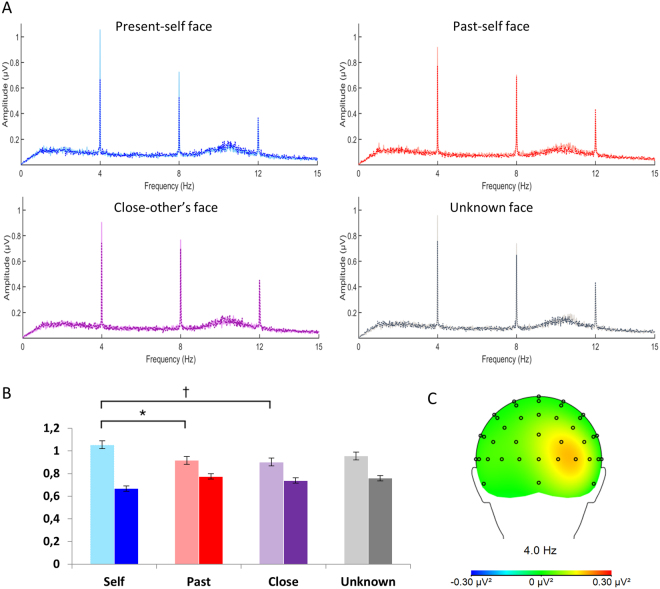
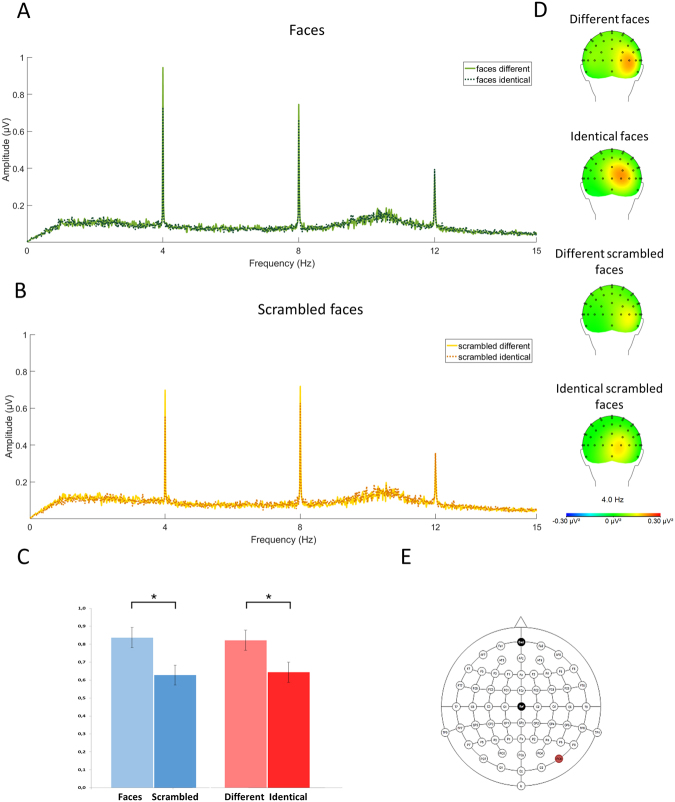
The self-face has a prioritized status in the processing of incoming visual inputs. As the self-face changes over the lifespan, this stimulus seems to be well-suited for investigation of the self across time. Here, steady-state visual evoked potentials (SSVEP, oscillatory responses to periodic stimulation with a frequency that mirrors the frequency of stimulation) were used to investigate this topic. Different types of faces (present self, past self, close-other's, unknown, scrambled) flickered four times per second in two types of stimulation ('identical', with the same image of a given type of face; 'different', with different images of the same type of face). Each of the 10 stimulation sessions lasted 90 seconds and was repeated three times. EEG data were recorded and analyzed in 20 participants. In general, faces evoked higher SSVEP than scrambled faces. The impact of identical and different stimulation was similar for faces and scrambled faces: SSVEP to different stimuli (faces, scrambled faces) was enhanced in comparison to identical ones. Present self-faces evoked higher SSVEP responses than past self-faces in the different stimulation condition only. Thus, our results showed that the physical aspects of the present and past selves are differentiated on the neural level in the absence of an overt behavior.

摘要

自我面孔在处理传入的视觉输入时有优先地位。随着个体生命历程中自我面孔的变化,这种刺激似乎非常适合跨时间研究自我。在这里,我们使用稳态视觉诱发电位(SSVEP,对以与刺激频率相同的频率周期性刺激的振荡反应)来研究这个问题。不同类型的面孔(现在的自我、过去的自我、亲近的他人、未知的、打乱的)以每秒四次的速度在两种刺激类型(“相同”,即给定类型的面孔的相同图像;“不同”,即同一类型的面孔的不同图像)中闪烁。每个刺激阶段持续 90 秒,重复三次。在 20 名参与者中记录和分析 EEG 数据。总的来说,面孔比打乱的面孔诱发更高的 SSVEP。相同和不同刺激的影响对于面孔和打乱的面孔是相似的:与相同刺激相比,不同刺激(面孔、打乱的面孔)的 SSVEP 增强。只有在不同刺激条件下,现在的自我面孔比过去的自我面孔诱发更高的 SSVEP 反应。因此,我们的结果表明,在没有明显行为的情况下,现在和过去的自我的物理方面在神经水平上是有区别的。
https://cdn.ncbi.nlm.nih.gov/pmc/blobs/d76b/5703895/4b1d9e536078/41598_2017_16679_Fig3_HTML.jpg
https://cdn.ncbi.nlm.nih.gov/pmc/blobs/d76b/5703895/8d15bdc19452/41598_2017_16679_Fig1_HTML.jpg
https://cdn.ncbi.nlm.nih.gov/pmc/blobs/d76b/5703895/5b782d69af61/41598_2017_16679_Fig2_HTML.jpg
https://cdn.ncbi.nlm.nih.gov/pmc/blobs/d76b/5703895/4b1d9e536078/41598_2017_16679_Fig3_HTML.jpg
https://cdn.ncbi.nlm.nih.gov/pmc/blobs/d76b/5703895/8d15bdc19452/41598_2017_16679_Fig1_HTML.jpg
https://cdn.ncbi.nlm.nih.gov/pmc/blobs/d76b/5703895/5b782d69af61/41598_2017_16679_Fig2_HTML.jpg
https://cdn.ncbi.nlm.nih.gov/pmc/blobs/d76b/5703895/4b1d9e536078/41598_2017_16679_Fig3_HTML.jpg

相似文献

1
Present and past selves: a steady-state visual evoked potentials approach to self-face processing.现在和过去的自我:一种稳态视觉诱发电位方法来处理自我面孔。
Sci Rep. 2017 Nov 27;7(1):16438. doi: 10.1038/s41598-017-16679-6.
2
A steady-state visual evoked potential approach to individual face perception: effect of inversion, contrast-reversal and temporal dynamics.稳态视觉诱发电位方法在个体面孔知觉中的应用:倒置、对比度反转和时间动态的影响。
Neuroimage. 2012 Nov 15;63(3):1585-600. doi: 10.1016/j.neuroimage.2012.08.033. Epub 2012 Aug 17.
3
The face evoked steady-state visual potentials are sensitive to the orientation, viewpoint, expression and configuration of the stimuli.面部诱发的稳态视觉电位对刺激的方向、视角、表情和形态敏感。
Int J Psychophysiol. 2014 Dec;94(3):336-50. doi: 10.1016/j.ijpsycho.2014.10.008. Epub 2014 Oct 22.
4
Temporal dynamics of repetition suppression to individual faces presented at a fast periodic rate.以快速周期性速率呈现的个体面孔重复抑制的时间动态。
Int J Psychophysiol. 2015 Oct;98(1):35-43. doi: 10.1016/j.ijpsycho.2015.06.006. Epub 2015 Jun 22.
5
The effect of contrast polarity reversal on face detection: evidence of perceptual asymmetry from sweep VEP.对比极性反转对人脸检测的影响:来自扫频视觉诱发电位的知觉不对称证据。
Vision Res. 2015 Mar;108:8-19. doi: 10.1016/j.visres.2015.01.001. Epub 2015 Jan 13.
6
Different time course of visuocortical signal changes to fear-conditioned faces with direct or averted gaze: a ssVEP study with single-trial analysis.视皮层信号对直视或回避注视的恐惧条件化面孔变化的不同时间进程:一项采用单试次分析的稳态视觉诱发电位研究
Neuropsychologia. 2014 Sep;62:101-10. doi: 10.1016/j.neuropsychologia.2014.07.009. Epub 2014 Jul 19.
7
Steady state visually evoked potential correlates of static and dynamic emotional face processing.静态和动态情绪面孔加工的稳态视觉诱发电位相关性
Brain Topogr. 2009 Nov;22(3):145-57. doi: 10.1007/s10548-009-0106-5. Epub 2009 Aug 4.
8
Investigating the perception of face identity in adults on the autism spectrum using behavioural and electrophysiological measures.使用行为和电生理测量方法研究自闭症谱系障碍成年人对面孔身份的感知。
Vision Res. 2019 Apr;157:132-141. doi: 10.1016/j.visres.2018.02.013. Epub 2018 Jul 26.
9
EEG phase synchrony differences across visual perception conditions may depend on recording and analysis methods.跨视觉感知条件的脑电图相位同步差异可能取决于记录和分析方法。
Clin Neurophysiol. 2005 Jan;116(1):172-89. doi: 10.1016/j.clinph.2004.07.025.
10
Robust sensitivity to facial identity in the right human occipito-temporal cortex as revealed by steady-state visual-evoked potentials.稳态视觉诱发电位揭示人类右侧枕颞叶皮质对面部身份的强烈敏感性。
J Vis. 2011 Feb 23;11(2):16. doi: 10.1167/11.2.16.

引用本文的文献

1
A review on the performance of brain-computer interface systems used for patients with locked-in and completely locked-in syndrome.用于闭锁综合征和完全闭锁综合征患者的脑机接口系统性能综述。
Cogn Neurodyn. 2024 Aug;18(4):1419-1443. doi: 10.1007/s11571-023-09995-3. Epub 2023 Aug 19.
2
Differences in own-face but not own-name discrimination between autistic and neurotypical adults: A fast periodic visual stimulation-EEG study.自闭症和神经典型成人对面孔自身但非姓名自身的辨别差异:一项快速周期性视觉刺激-EEG 研究。
Cortex. 2024 Feb;171:308-318. doi: 10.1016/j.cortex.2023.10.023. Epub 2023 Nov 21.
3
How far can the self be extended? Automatic attention capture is triggered not only by the self-face.

本文引用的文献

1
The neural representation of personally familiar and unfamiliar faces in the distributed system for face perception.分布式面孔知觉系统中个人熟悉和不熟悉面孔的神经表象。
Sci Rep. 2017 Sep 25;7(1):12237. doi: 10.1038/s41598-017-12559-1.
2
The Code for Facial Identity in the Primate Brain.灵长类大脑中的面部识别编码
Cell. 2017 Jun 1;169(6):1013-1028.e14. doi: 10.1016/j.cell.2017.05.011.
3
Nonlinear Origin of SSVEP Spectra-A Combined Experimental and Modeling Study.稳态视觉诱发电位频谱的非线性起源——一项实验与建模相结合的研究
自我能扩展到多远?自动注意捕获不仅由自我面孔触发。
Front Psychol. 2023 Nov 3;14:1279653. doi: 10.3389/fpsyg.2023.1279653. eCollection 2023.
4
The self and a close-other: differences between processing of faces and newly acquired information.自我与亲近他人:面孔与新获取信息加工的差异。
Cereb Cortex. 2023 Feb 20;33(5):2183-2199. doi: 10.1093/cercor/bhac201.
5
Are covered faces eye-catching for us? The impact of masks on attentional processing of self and other faces during the COVID-19 pandemic.戴口罩的脸对我们有吸引力吗?新冠疫情期间口罩对自我和他人面部注意加工的影响。
Cortex. 2022 Apr;149:173-187. doi: 10.1016/j.cortex.2022.01.015. Epub 2022 Feb 10.
6
Self-face and emotional faces-are they alike?自我面孔和情绪面孔——它们相似吗?
Soc Cogn Affect Neurosci. 2021 May 21;16(6):593-607. doi: 10.1093/scan/nsab020.
7
The impact of self-esteem on the preferential processing of self-related information: Electrophysiological correlates of explicit self vs. other evaluation.自尊对自我相关信息偏好加工的影响:自我与他人评价的电生理相关性。
PLoS One. 2018 Jul 16;13(7):e0200604. doi: 10.1371/journal.pone.0200604. eCollection 2018.
Front Comput Neurosci. 2016 Dec 27;10:129. doi: 10.3389/fncom.2016.00129. eCollection 2016.
4
Present-self, past-self and the close-other: neural correlates of assigning trait adjectives to oneself and others.当前自我、过去自我与亲密他人:将特质形容词赋予自己和他人的神经关联。
Eur J Neurosci. 2016 Aug;44(4):2064-71. doi: 10.1111/ejn.13293. Epub 2016 Jun 28.
5
A single glance at natural face images generate larger and qualitatively different category-selective spatio-temporal signatures than other ecologically-relevant categories in the human brain.与人类大脑中其他与生态相关的类别相比,对自然面部图像的单次扫视会产生更大且在质量上不同的类别选择性时空特征。
Neuroimage. 2016 Aug 15;137:21-33. doi: 10.1016/j.neuroimage.2016.04.045. Epub 2016 Apr 30.
6
Visual adaptation provides objective electrophysiological evidence of facial identity discrimination.视觉适应为面部身份识别提供了客观的电生理证据。
Cortex. 2016 Jul;80:35-50. doi: 10.1016/j.cortex.2015.11.025. Epub 2016 Jan 19.
7
Present self, past self and close-other: Event-related potential study of face and name detection.当前自我、过去自我与亲密他人:面孔与姓名识别的事件相关电位研究。
Biol Psychol. 2015 Sep;110:201-11. doi: 10.1016/j.biopsycho.2015.07.015. Epub 2015 Jul 30.
8
The steady-state visual evoked potential in vision research: A review.视觉研究中的稳态视觉诱发电位:综述
J Vis. 2015;15(6):4. doi: 10.1167/15.6.4.
9
Fast periodic presentation of natural images reveals a robust face-selective electrophysiological response in the human brain.自然图像的快速周期性呈现揭示了人类大脑中一种强大的面部选择性电生理反应。
J Vis. 2015 Jan 16;15(1):15.1.18. doi: 10.1167/15.1.18.
10
The face evoked steady-state visual potentials are sensitive to the orientation, viewpoint, expression and configuration of the stimuli.面部诱发的稳态视觉电位对刺激的方向、视角、表情和形态敏感。
Int J Psychophysiol. 2014 Dec;94(3):336-50. doi: 10.1016/j.ijpsycho.2014.10.008. Epub 2014 Oct 22.