Liu Kang, Chen Weijuan, Yang Tingting, Wen Baofang, Ding Dejun, Keidar Michael, Tang Jinbao, Zhang Weifen
College of Pharmacy, Weifang Medical University, Weifang.
Department of Pathology, People's Hospital of Shouguang, Shouguang, People's Republic of China.
Int J Nanomedicine. 2017 Nov 13;12:8239-8255. doi: 10.2147/IJN.S147028. eCollection 2017.
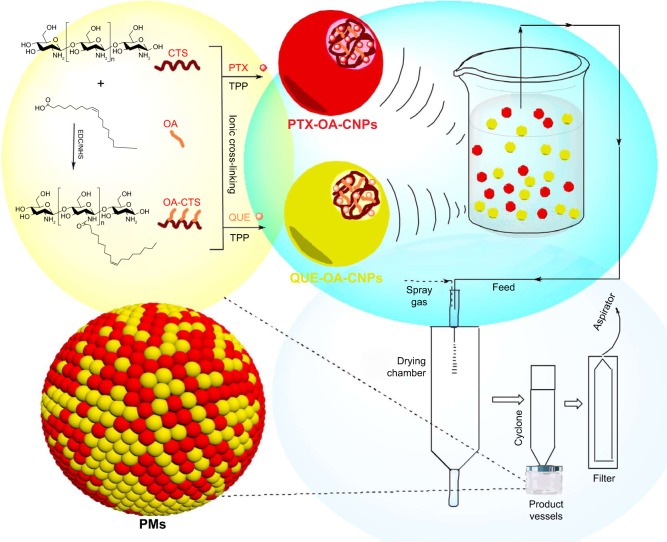
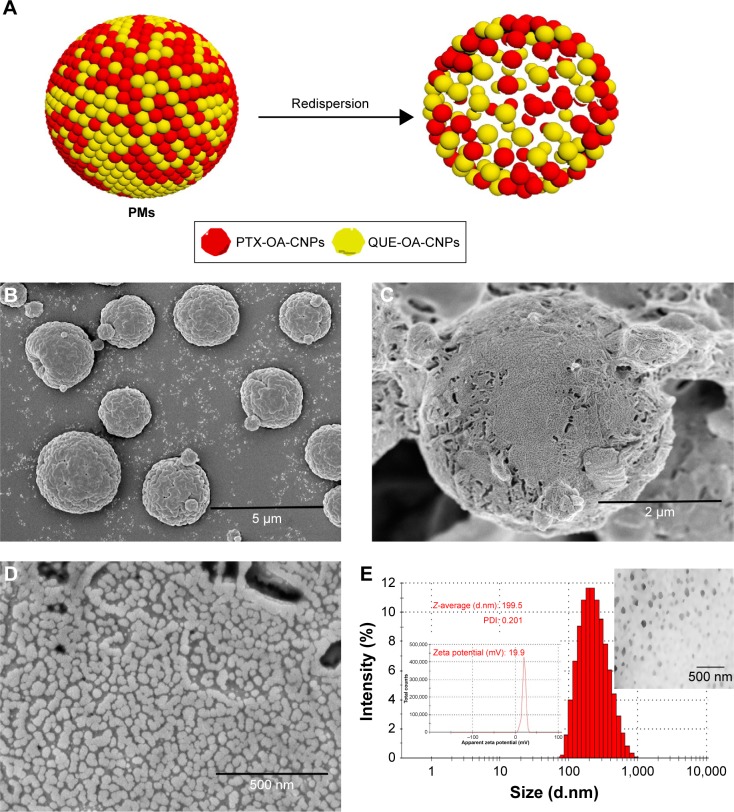
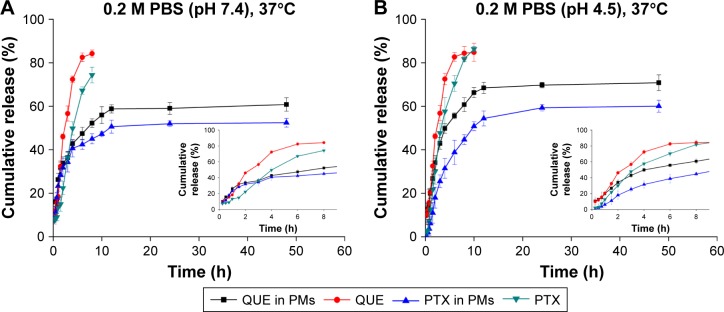
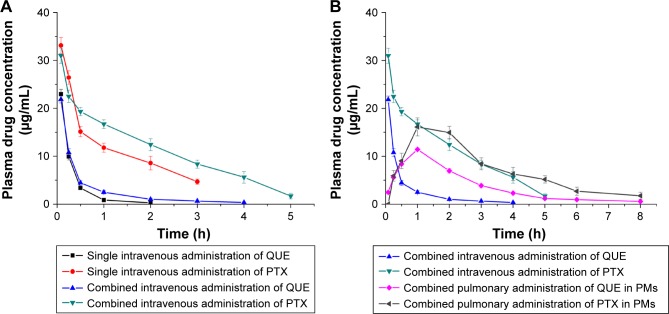
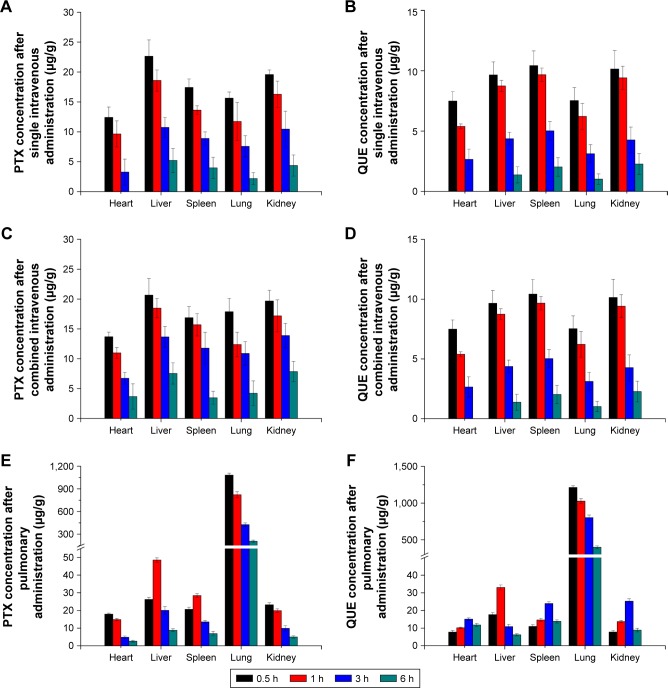
High drug resistance, poor water solubility, short half-life, and low local drug concentration are obstacles for successful delivery of chemotherapeutic drugs for lung cancer. A new method involving the use of nanoparticles (NPs) for pulmonary delivery is proposed. However, use of NPs is limited by the particle size range for pulmonary drug delivery considering that NPs cannot be deposited directly into the lungs. NPs polymerized into microspheres (polymeric microspheres, PMs) will result in suitable particle sizes and retain the advantages of nanodrugs after redispersion when applied in pulmonary delivery. We report the development of novel NPs in the form of PMs loaded with paclitaxel (PTX) and quercetin (QUE) double drugs based on the synthesis of oleic acid-conjugated chitosan (OA-CTS) for pulmonary delivery. This approach is aimed toward prolonging PTX retention time in the presence of QUE and bypassing P-glycoprotein drug efflux pumps. NPs loaded with PTX or QUE were prepared with 11% substitution degree using OA-CTS as the carrier by ionic cross-linking method, which NPs loaded with PTX or QUE were used in the preparation of PMs by spray-drying. The diameters of the PMs ranged from 1 to 5 μm which had uniform size range. Scanning electron microscopy showed that PMs were polymers formed by a large number of NPs and readily redispersed (after redispersion, size of NPs ranged between 250 and 350 nm) in water within 1 h. PMs displayed slow-release characteristics at pH 4.5 and 7.4. The in vivo pharmacokinetic and biodistribution studies suggested that PMs exhibit prolonged circulation time and a markedly high accumulation in the lung. The obtained results indicate that PMs can serve as a promising pulmonary delivery system for combined pharmacotherapy using hydrophobic anticancer drugs.
高耐药性、低水溶性、短半衰期和低局部药物浓度是肺癌化疗药物成功递送的障碍。本文提出了一种利用纳米颗粒(NPs)进行肺部给药的新方法。然而,考虑到NPs不能直接沉积到肺部,NPs在肺部药物递送中的应用受到粒径范围的限制。聚合成微球(聚合物微球,PMs)的NPs将产生合适的粒径,并在肺部给药时重新分散后保留纳米药物的优势。我们报道了基于油酸共轭壳聚糖(OA-CTS)的合成,开发了一种新型的负载紫杉醇(PTX)和槲皮素(QUE)双药的PMs形式的NPs用于肺部给药。该方法旨在延长PTX在QUE存在下的保留时间,并绕过P-糖蛋白药物外排泵。以OA-CTS为载体,采用离子交联法制备了取代度为11%的负载PTX或QUE的NPs,将负载PTX或QUE 的NPs用于喷雾干燥制备PMs。PMs的直径范围为1至5μm,粒径范围均匀。扫描电子显微镜显示,PMs是由大量NPs形成的聚合物,在1小时内可在水中容易地重新分散(重新分散后,NPs的尺寸在250至350nm之间)。PMs在pH 4.5和7.4时表现出缓释特性。体内药代动力学和生物分布研究表明,PMs具有延长的循环时间和在肺部明显的高蓄积。所得结果表明,PMs可作为一种有前景的肺部给药系统,用于使用疏水抗癌药物的联合药物治疗。