Center for Drug Evaluation and Research, US FDA, Silver Spring, MD, USA.
Department of Integrative Pharmacology, AbbVie, North Chicago, IL, USA.
Br J Pharmacol. 2018 Feb;175(4):606-617. doi: 10.1111/bph.14101. Epub 2018 Jan 15.
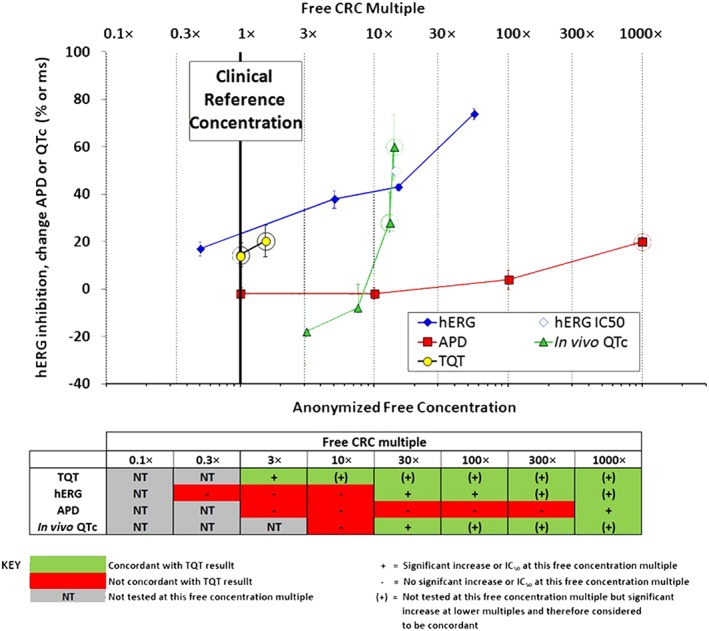
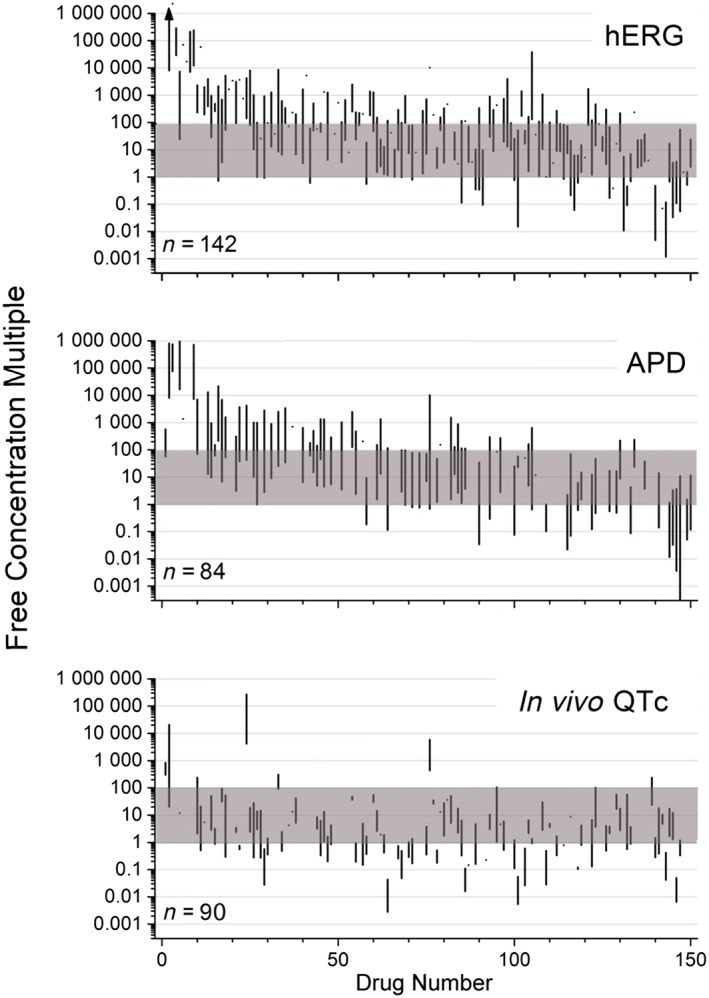
Translation of non-clinical markers of delayed ventricular repolarization to clinical prolongation of the QT interval corrected for heart rate (QTc) (a biomarker for torsades de pointes proarrhythmia) remains an issue in drug discovery and regulatory evaluations. We retrospectively analysed 150 drug applications in a US Food and Drug Administration database to determine the utility of established non-clinical in vitro IKr current human ether-à-go-go-related gene (hERG), action potential duration (APD) and in vivo (QTc) repolarization assays to detect and predict clinical QTc prolongation.
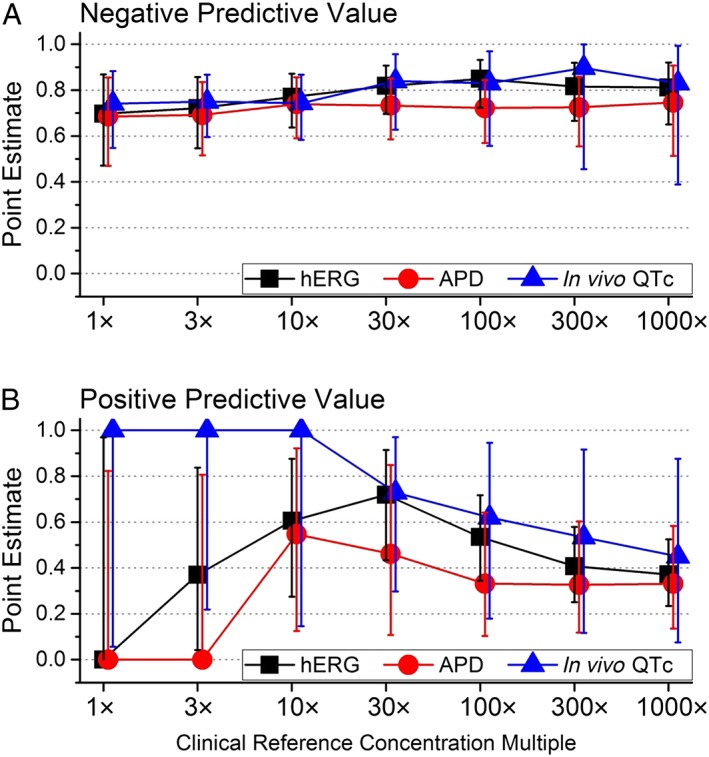
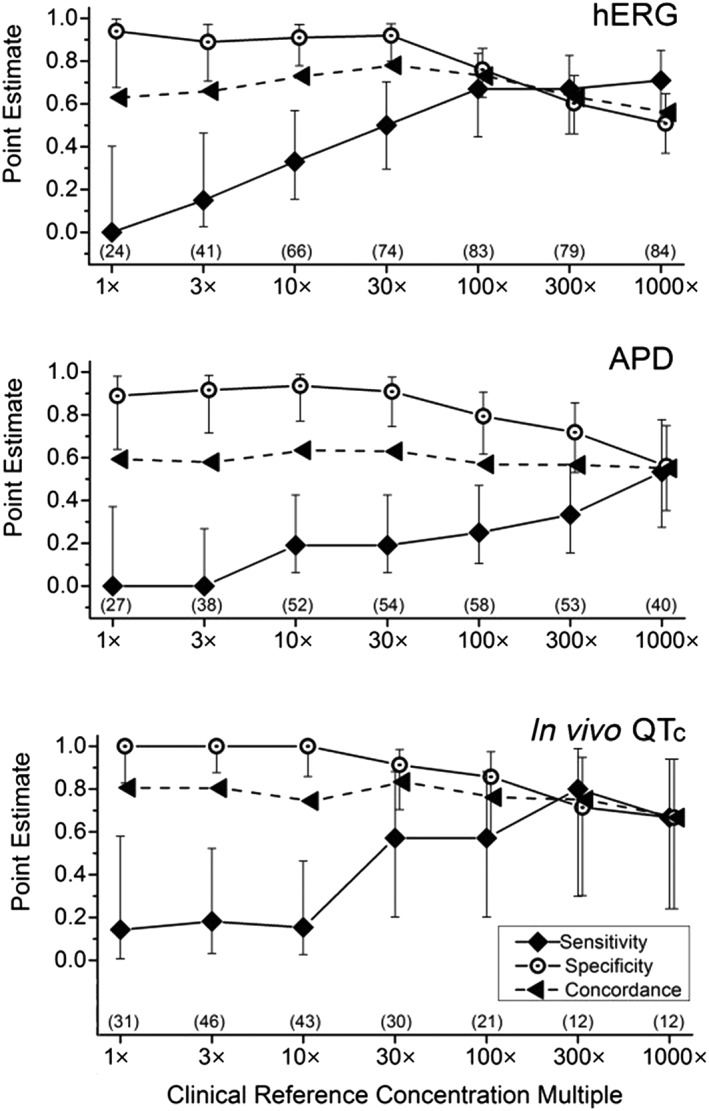
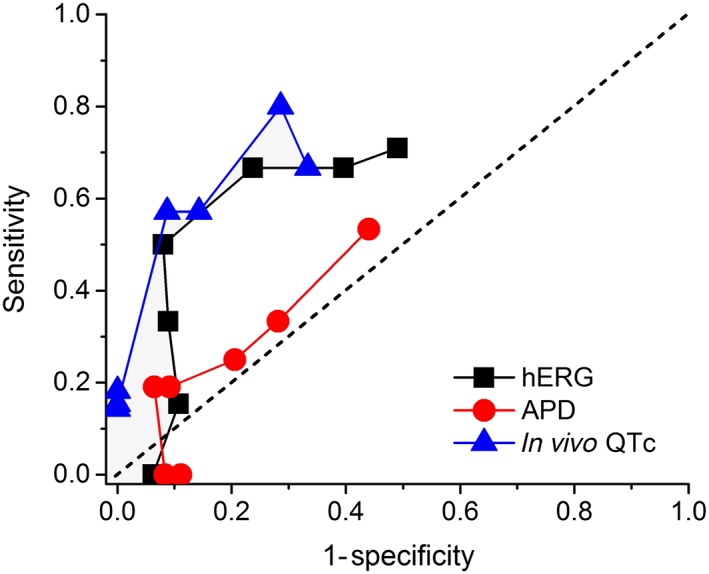
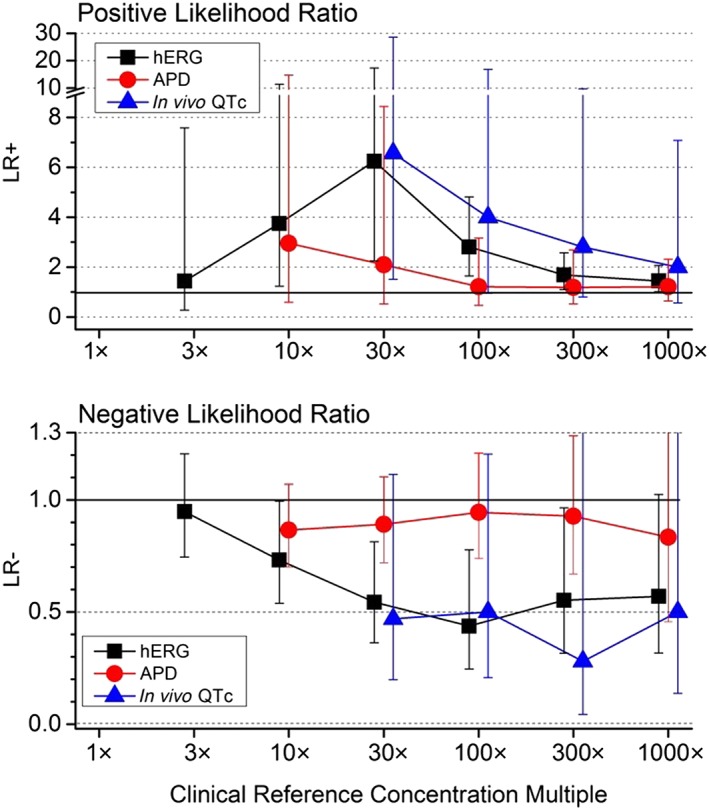
The predictive performance of three non-clinical assays was compared with clinical thorough QT study outcomes based on free clinical plasma drug concentrations using sensitivity and specificity, receiver operating characteristic (ROC) curves, positive (PPVs) and negative predictive values (NPVs) and likelihood ratios (LRs).
Non-clinical assays demonstrated robust specificity (high true negative rate) but poor sensitivity (low true positive rate) for clinical QTc prolongation at low-intermediate (1×-30×) clinical exposure multiples. The QTc assay provided the most robust PPVs and NPVs (ability to predict clinical QTc prolongation). ROC curves (overall test accuracy) and LRs (ability to influence post-test probabilities) demonstrated overall marginal performance for hERG and QTc assays (best at 30× exposures), while the APD assay demonstrated minimal value.
The predictive value of hERG, APD and QTc assays varies, with drug concentrations strongly affecting translational performance. While useful in guiding preclinical candidates without clinical QT prolongation, hERG and QTc repolarization assays provide greater value compared with the APD assay.
将非临床指标(如心室复极延迟)转化为临床校正心率后的 QT 间期(QTc)延长(尖端扭转型室性心动过速致心律失常的生物标志物)仍然是药物发现和监管评估中的一个问题。我们回顾性分析了美国食品和药物管理局数据库中的 150 项药物申请,以确定已建立的非临床体外 IKr 电流人 Ether-a-go-go 相关基因(hERG)、动作电位持续时间(APD)和体内(QTc)复极测定在检测和预测临床 QTc 延长方面的应用。
根据游离临床血浆药物浓度,使用敏感性和特异性、接收者操作特征(ROC)曲线、阳性(PPV)和阴性预测值(NPV)和似然比(LR)比较三种非临床测定方法与临床全面 QT 研究结果的预测性能。
非临床测定在低至中等(1×-30×)临床暴露倍数时,对临床 QTc 延长显示出较强的特异性(高真阴性率),但敏感性差(低真阳性率)。QTc 测定提供了最稳健的 PPV 和 NPV(预测临床 QTc 延长的能力)。ROC 曲线(整体测试准确性)和 LR(影响后测概率的能力)显示 hERG 和 QTc 测定的总体表现边际(在 30×暴露时最佳),而 APD 测定则表现出最小的价值。
hERG、APD 和 QTc 测定的预测价值不同,药物浓度对转化性能有很大影响。虽然在指导没有临床 QTc 延长的临床前候选药物方面有用,但 hERG 和 QTc 复极测定比 APD 测定提供了更大的价值。