Soonchunhyang Institute of Medi-bio Science (SIMS), Soonchunhyang University, 25, Bongjeong-ro, Dongnam-gu, Cheonan-si, 31151, South Korea.
Center for Stem Cell Biology, Sloan-Kettering Institute, New York, NY, 10065, USA.
Mol Brain. 2017 Nov 28;10(1):53. doi: 10.1186/s13041-017-0340-9.
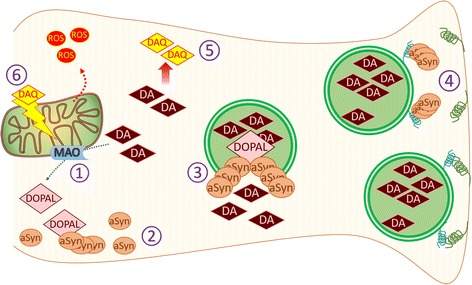
Parkinson's disease (PD) is a chronic and progressive neurodegeneration of dopamine neurons in the substantia nigra. The reason for the death of these neurons is unclear; however, studies have demonstrated the potential involvement of mitochondria, endoplasmic reticulum, α-synuclein or dopamine levels in contributing to cellular oxidative stress as well as PD symptoms. Even though those papers had separately described the individual roles of each element leading to neurodegeneration, recent publications suggest that neurodegeneration is the product of various cellular interactions. This review discusses the role of oxidative stress in mediating separate pathological events that together, ultimately result in cell death in PD. Understanding the multi-faceted relationships between these events, with oxidative stress as a common denominator underlying these processes, is needed for developing better therapeutic strategies.
帕金森病(PD)是黑质多巴胺神经元的慢性进行性神经退行性疾病。这些神经元死亡的原因尚不清楚;然而,研究表明线粒体、内质网、α-突触核蛋白或多巴胺水平可能参与导致细胞氧化应激以及 PD 症状。尽管这些论文分别描述了导致神经退行性变的每个因素的作用,但最近的出版物表明,神经退行性变是各种细胞相互作用的结果。本综述讨论了氧化应激在介导最终导致 PD 细胞死亡的各种病理事件中的作用。理解这些事件之间的多方面关系,以及氧化应激作为这些过程的共同基础,对于开发更好的治疗策略是必要的。