Usein Codruţa-Romaniţa, Ciontea Adriana Simona, Militaru Cornelia Mãdãlina, Condei Maria, Dinu Sorin, Oprea Mihaela, Cristea Daniela, Michelacci Valeria, Scavia Gaia, Zota Lavinia Cipriana, Zaharia Alina, Morabito Stefano
Cantacuzino National Institute of Research, Bucharest, Romania.
Carol Davila University of Medicine and Pharmacy, Bucharest, Romania.
Euro Surveill. 2017 Nov;22(47). doi: 10.2807/1560-7917.ES.2017.22.47.17-00148.
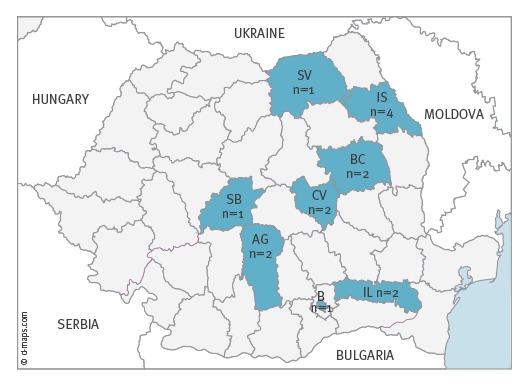
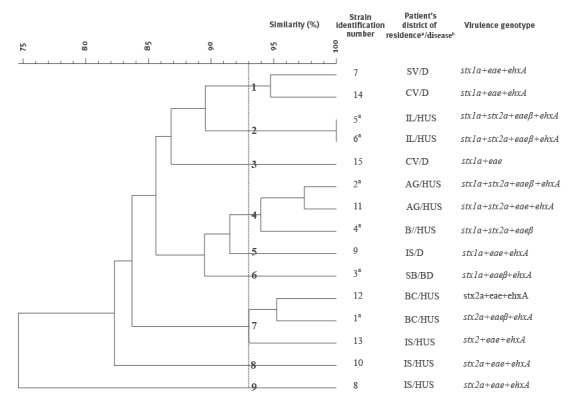
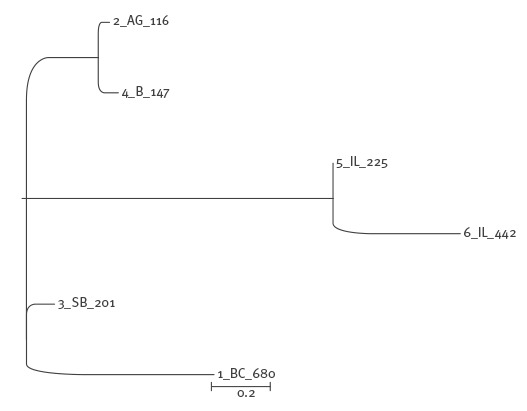
IntroductionAt the beginning of 2016, an increase in paediatric haemolytic uremic syndrome (HUS) cases was observed in Romania. The microbiological investigations allowed isolation of Shiga toxin-producing (STEC) O26 as the causative agent from most cases. An enhanced national surveillance of HUS and severe diarrhoea was established across the country following the identification of the first cases and was carried out until August 2016. A total of 15 strains were isolated from 10 HUS and five diarrhoea cases. Strains were characterised by virulence markers (i.e. type/subtype, , genes), phylogroup, genetic relatedness and clonality using PCR-based assays, PFGE and multilocus sequence typing (MLST). The first six strains were further characterised by whole genome sequencing (WGS). Five PCR-defined genotypes were distinguished. All strains from HUS cases harboured and , with or without , while strains from diarrhoea cases carried exclusively and genes. PFGE resolved strains into multiple pulsotypes, compatible with a certain geographic segregation of the cases, and strains were assigned to phylogroup B1 and sequence type (ST) 21. WGS confirmed the results of conventional molecular methods, brought evidence of O26:H11 serotype, and complemented the virulence profiles. This first description of STEC O26 strains from cases in Romania showed that the isolates belonged to a diverse population. The virulence content of most strains highlighted a high risk for severe outcome in infected patients. Improving the national surveillance strategy for STEC infections in Romania needs to be further considered.
引言
2016年初,罗马尼亚观察到小儿溶血尿毒综合征(HUS)病例增加。微生物学调查从大多数病例中分离出产志贺毒素大肠杆菌(STEC)O26作为病原体。在确认首例病例后,在全国范围内建立了对HUS和严重腹泻的强化国家监测,并持续至2016年8月。共从10例HUS病例和5例腹泻病例中分离出15株菌株。使用基于PCR的检测、脉冲场凝胶电泳(PFGE)和多位点序列分型(MLST)对菌株进行毒力标记(即类型/亚型、、基因)、系统发育群、遗传相关性和克隆性特征分析。前六株菌株进一步通过全基因组测序(WGS)进行特征分析。区分出五种PCR定义的基因型。所有HUS病例的菌株均携带和,有或无,而腹泻病例的菌株仅携带和基因。PFGE将菌株分为多个脉冲型,与病例的一定地理隔离相符,菌株被归为B1系统发育群和序列型(ST)21。WGS证实了传统分子方法的结果,提供了O26:H11血清型的证据,并补充了毒力谱。对罗马尼亚病例中STEC O26菌株的首次描述表明,分离株属于一个多样化的群体。大多数菌株的毒力成分突出了感染患者发生严重后果的高风险。需要进一步考虑改进罗马尼亚STEC感染的国家监测策略。