Rooney Mary F, Porter Richard K, Katz Lisa M, Hill Emmeline W
UCD School of Agriculture and Food Science, University College Dublin, Belfield, Dublin 4, Ireland.
School of Biochemistry and Immunology, Trinity Biomedical Sciences Institute (TBSI), Trinity College Dublin, Dublin 2, Ireland.
PLoS One. 2017 Nov 30;12(11):e0186247. doi: 10.1371/journal.pone.0186247. eCollection 2017.
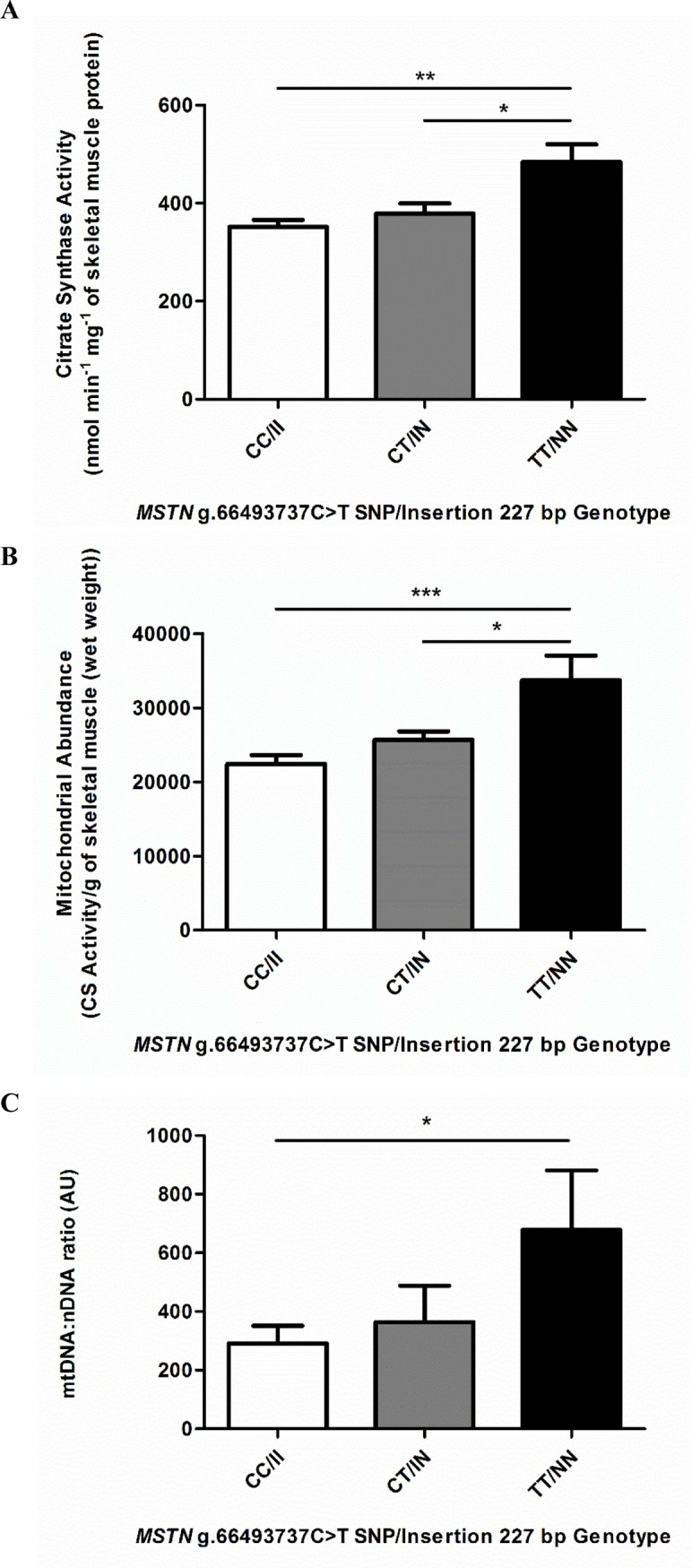
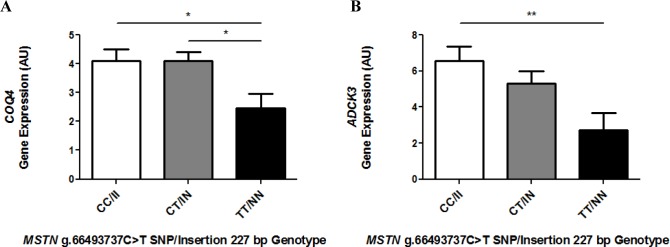
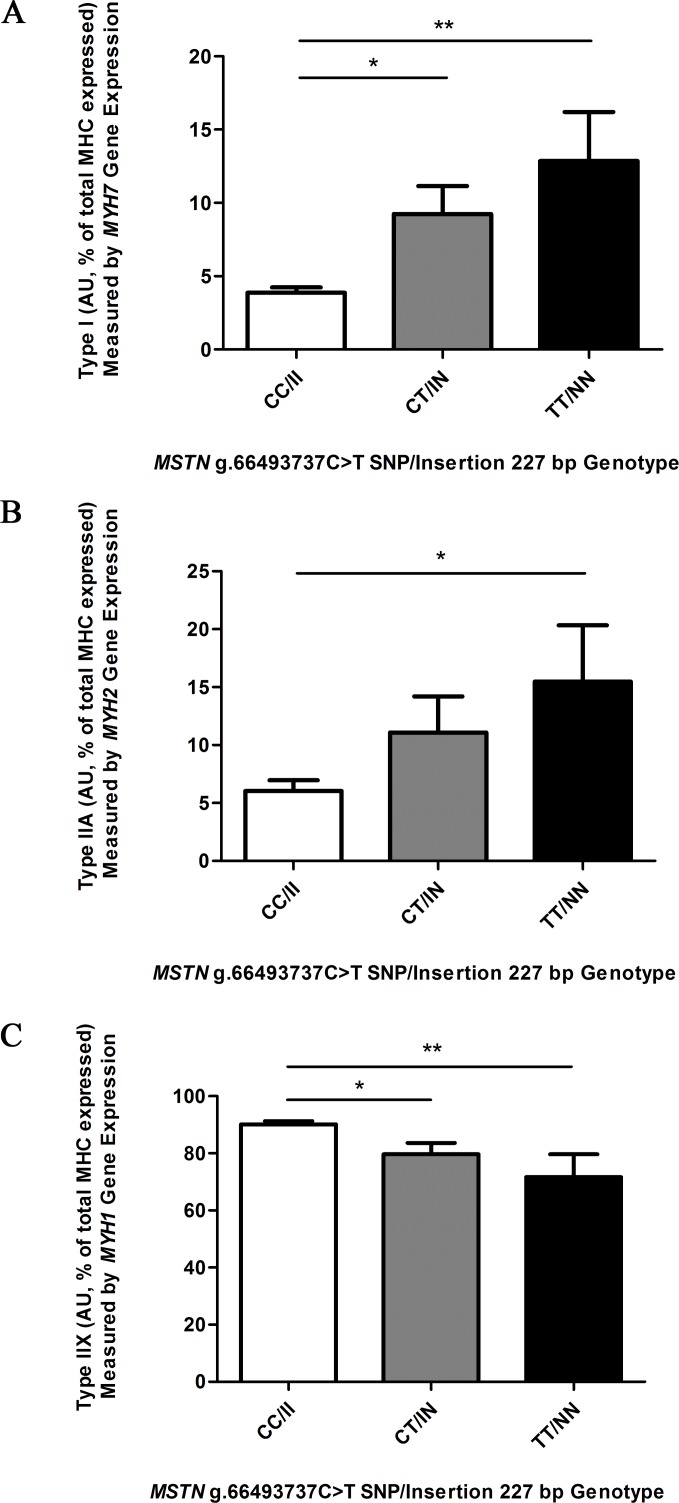
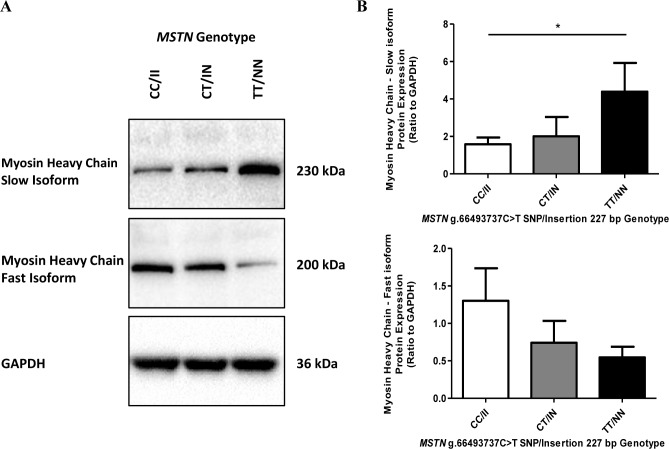
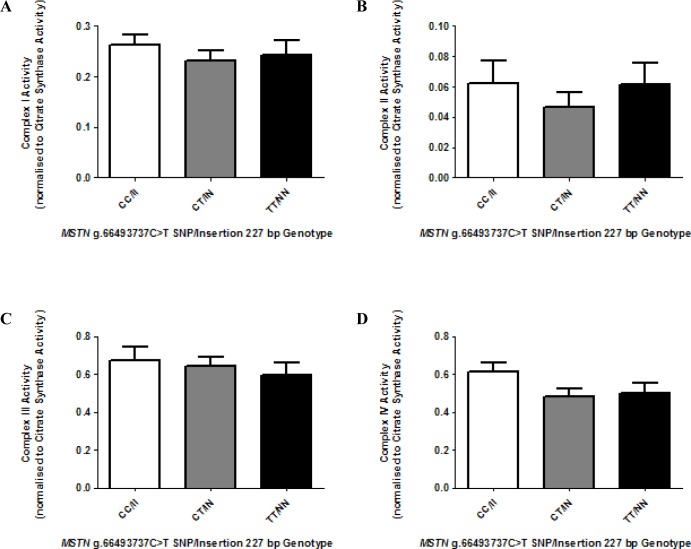
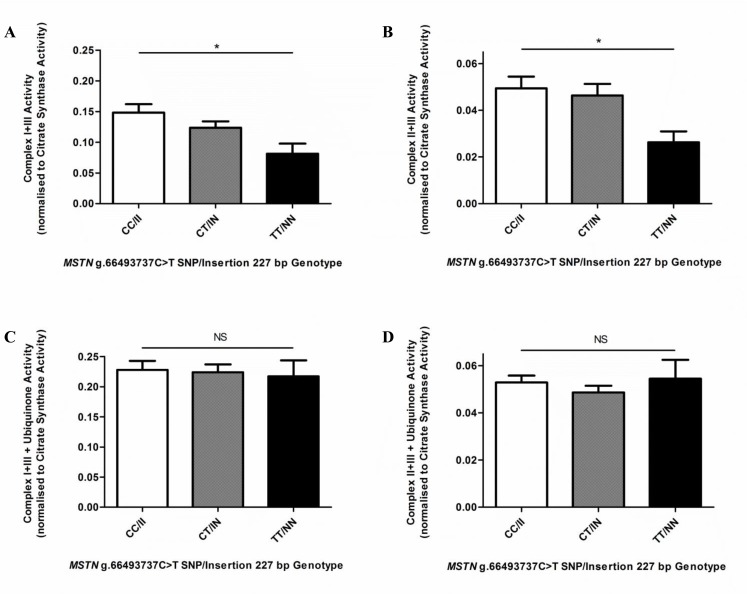
Variation in the myostatin (MSTN) gene has been reported to be associated with race distance, body composition and skeletal muscle fibre composition in the horse. The aim of the present study was to test the hypothesis that MSTN variation influences mitochondrial phenotypes in equine skeletal muscle. Mitochondrial abundance and skeletal muscle fibre types were measured in whole muscle biopsies from the gluteus medius of n = 82 untrained (21 ± 3 months) Thoroughbred horses. Skeletal muscle fibre type proportions were significantly (p < 0.01) different among the three MSTN genotypes and mitochondrial content was significantly (p < 0.01) lower in the combined presence of the C-allele of SNP g.66493737C>T (C) and the SINE insertion 227 bp polymorphism (I). Evaluation of mitochondrial complex activities indicated higher combined mitochondrial complex I+III and II+III activities in the presence of the C-allele / I allele (p ≤ 0.05). The restoration of complex I+III and complex II+III activities following addition of exogenous coenzyme Q1 (ubiquinone1) (CoQ1) in vitro in the TT/NN (homozygous T allele/homozygous no insertion) cohort indicated decreased coenzyme Q in these animals. In addition, decreased gene expression in two coenzyme Q (CoQ) biosynthesis pathway genes (COQ4, p ≤ 0.05; ADCK3, p ≤ 0.01) in the TT/NN horses was observed. This study has identified several mitochondrial phenotypes associated with MSTN genotype in untrained Thoroughbred horses and in addition, our findings suggest that nutritional supplementation with CoQ may aid to restore coenzyme Q activity in TT/NN horses.
据报道,马的肌肉生长抑制素(MSTN)基因变异与比赛距离、身体组成和骨骼肌纤维组成有关。本研究的目的是检验MSTN变异影响马骨骼肌线粒体表型这一假设。在n = 82匹未经训练(21±3个月)的纯种马臀中肌的全肌肉活检样本中测量了线粒体丰度和骨骼肌纤维类型。三种MSTN基因型之间的骨骼肌纤维类型比例存在显著差异(p < 0.01),并且在单核苷酸多态性g.66493737C>T(C)的C等位基因和227 bp SINE插入多态性(I)同时存在时,线粒体含量显著降低(p < 0.01)。线粒体复合物活性评估表明,在存在C等位基因/I等位基因时,线粒体复合物I+III和II+III的联合活性较高(p≤0.05)。在TT/NN(纯合T等位基因/纯合无插入)组中,体外添加外源性辅酶Q1(泛醌1)(CoQ1)后,复合物I+III和复合物II+III活性的恢复表明这些动物体内辅酶Q减少。此外,观察到TT/NN马中两个辅酶Q(CoQ)生物合成途径基因(COQ4,p≤0.05;ADCK3,p≤0.01)的基因表达降低。本研究确定了未经训练的纯种马中与MSTN基因型相关的几种线粒体表型,此外,我们的研究结果表明,用CoQ进行营养补充可能有助于恢复TT/NN马的辅酶Q活性。