Hart Heledd, Lim Lena, Mehta Mitul A, Chatzieffraimidou Antonia, Curtis Charles, Xu Xiaohui, Breen Gerome, Simmons Andrew, Mirza Kah, Rubia Katya
Department of Child & Adolescent Psychiatry, Institute of Psychiatry, Psychology and Neuroscience, King's College London, London, United Kingdom.
Department of Neuroimaging, Institute of Psychiatry, Psychology and Neuroscience, King's College London, London, United Kingdom.
PLoS One. 2017 Nov 30;12(11):e0188744. doi: 10.1371/journal.pone.0188744. eCollection 2017.
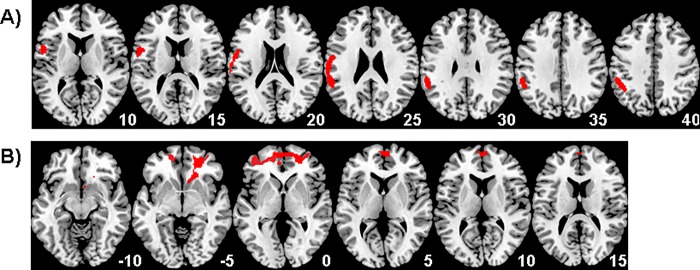
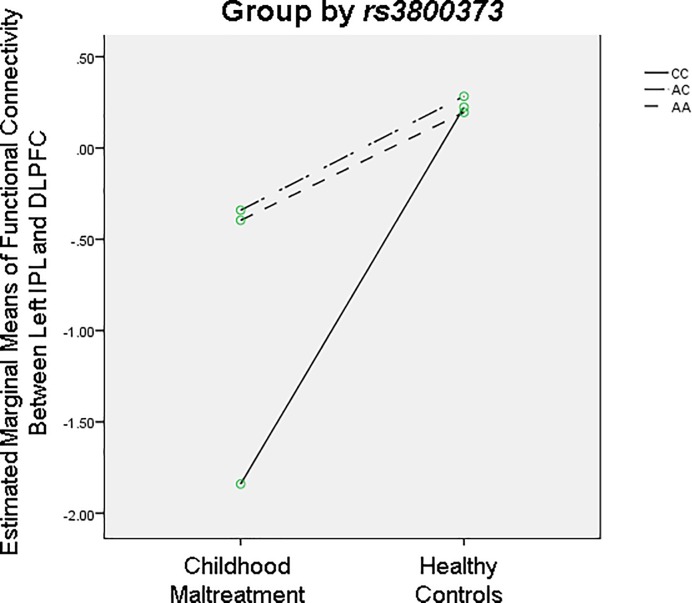
Childhood maltreatment is associated with attention deficits. We examined the effect of childhood abuse and abuse-by-gene (5-HTTLPR, MAOA, FKBP5) interaction on functional brain connectivity during sustained attention in medication/drug-free adolescents. Functional connectivity was compared, using generalised psychophysiological interaction (gPPI) analysis of functional magnetic resonance imaging (fMRI) data, between 21 age-and gender-matched adolescents exposed to severe childhood abuse and 27 healthy controls, while they performed a parametrically modulated vigilance task requiring target detection with a progressively increasing load of sustained attention. Behaviourally, participants exposed to childhood abuse had increased omission errors compared to healthy controls. During the most challenging attention condition abused participants relative to controls exhibited reduced connectivity, with a left-hemispheric bias, in typical fronto-parietal attention networks, including dorsolateral, rostromedial and inferior prefrontal and inferior parietal regions. Abuse-related connectivity abnormalities were exacerbated in individuals homozygous for the risky C-allele of the single nucleotide polymorphism rs3800373 of the FK506 Binding Protein 5 (FKBP5) gene. Findings suggest that childhood abuse is associated with decreased functional connectivity in fronto-parietal attention networks and that the FKBP5 genotype moderates neurobiological vulnerability to abuse. These findings represent a first step towards the delineation of abuse-related neurofunctional connectivity abnormalities, which hopefully will facilitate the development of specific treatment strategies for victims of childhood maltreatment.
童年期受虐与注意力缺陷有关。我们研究了童年期虐待以及虐待与基因(5-羟色胺转运体基因连锁多态性区域[5-HTTLPR]、单胺氧化酶A基因[MAOA]、FK506结合蛋白5基因[FKBP5])的相互作用对未服用药物的青少年在持续注意力任务期间大脑功能连接的影响。利用功能磁共振成像(fMRI)数据的广义心理生理交互作用(gPPI)分析,比较了21名年龄和性别匹配的遭受严重童年期虐待的青少年与27名健康对照者在执行一项参数调制的警觉任务时的功能连接,该任务要求在持续注意力负荷逐渐增加的情况下进行目标检测。行为学上,与健康对照者相比,遭受童年期虐待的参与者漏报错误增加。在最具挑战性的注意力条件下,相对于对照组,受虐参与者在典型的额顶叶注意力网络,包括背外侧、额内侧和额下以及顶下区域,表现出连接性降低,且存在左半球偏向。FK506结合蛋白5(FKBP5)基因单核苷酸多态性rs3800373的风险C等位基因纯合个体中,与虐待相关的连接异常情况加剧。研究结果表明,童年期虐待与额顶叶注意力网络功能连接降低有关,且FKBP5基因型会调节对虐待的神经生物学易感性。这些发现是描绘与虐待相关的神经功能连接异常的第一步,有望促进针对童年期受虐受害者制定具体的治疗策略。