Ren Bo, Liu Hui, Gao Hang, Liu Shutong, Zhang Zehui, Fribley Andrew M, Callaghan Michael U, Xu Zhixiang, Zeng Qinghua, Li Yulin
The Key Laboratory of Pathobiology, Ministry of Education, Jilin University, Changchun 130021, China.
Pathology, The Second Affiliated Hospital of Zhejiang University School of Medicine, Hangzhou 310009, China.
Oncotarget. 2017 Oct 10;8(54):93039-93050. doi: 10.18632/oncotarget.21750. eCollection 2017 Nov 3.
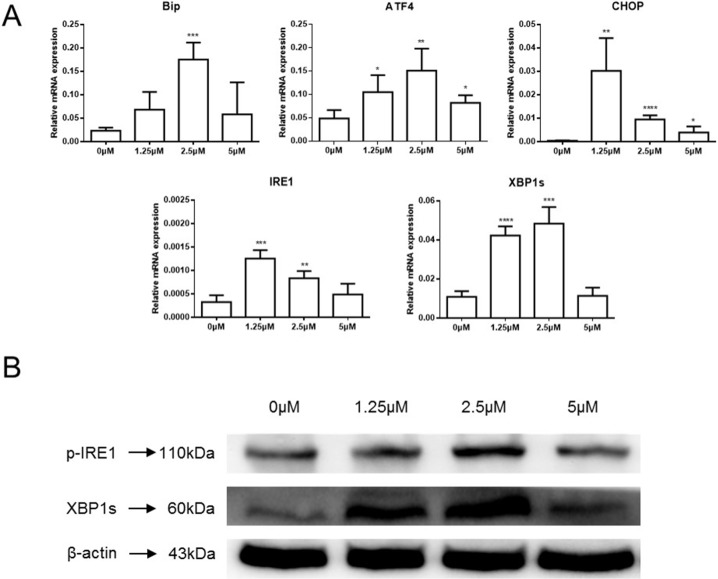
Hepatocellular carcinoma (HCC) is one of the most serious and deadly diseases worldwide with limited options for effective treatment. Biomarker-based active compound targeting therapy may shed some light on novel drugs for HCC. The endoplasmic reticulum (ER) stress and unfolded protein response (UPR) play important roles in the regulation of cell fate and have become novel signaling targets for the development of anticancer drugs. Celastrol, a triterpene from traditional Chinese medicine, has been reported to possess anti-tumor effects on various cancers. We, along with several other research groups, have recently reported that UPR was induced by celastrol in several different cancers, including hepatocellular carcinoma. However, UPR status in HCC still remains unclear. The role of ER stress and autophagy in response to celastrol also has yet to be elucidated. Our results demonstrated that celastrol could cause G2/M phase rest and inhibit proliferation in HepG2 and Bel7402. Exposure to celastrol resulted in the activation of the intrinsic apoptotic pathway, via ER stress and the UPR. In murine syngeneic model studies celastrol inhibited H22 tumor growth via the induction of ER stress and apoptosis. Our study suggests that celastrol is a potential drug for HCC therapy via targeting ER-stress/UPR.
肝细胞癌(HCC)是全球最严重、最致命的疾病之一,有效治疗选择有限。基于生物标志物的活性化合物靶向治疗可能为HCC的新药研发带来一些启示。内质网(ER)应激和未折叠蛋白反应(UPR)在细胞命运调控中起重要作用,已成为抗癌药物研发的新信号靶点。雷公藤红素是一种来自中药的三萜类化合物,据报道对多种癌症具有抗肿瘤作用。我们和其他几个研究小组最近报道,雷公藤红素在包括肝细胞癌在内的几种不同癌症中可诱导UPR。然而,HCC中的UPR状态仍不清楚。ER应激和自噬在雷公藤红素反应中的作用也有待阐明。我们的结果表明,雷公藤红素可导致HepG2和Bel7402细胞G2/M期阻滞并抑制其增殖。暴露于雷公藤红素会通过ER应激和UPR激活内源性凋亡途径。在小鼠同基因模型研究中,雷公藤红素通过诱导ER应激和凋亡抑制H22肿瘤生长。我们的研究表明,雷公藤红素是一种通过靶向ER应激/UPR治疗HCC的潜在药物。