Rossi Diego C P, Gleason Julie E, Sanchez Hiram, Schatzman Sabrina S, Culbertson Edward M, Johnson Chad J, McNees Christopher A, Coelho Carolina, Nett Jeniel E, Andes David R, Cormack Brendan P, Culotta Valeria C
Department of Biochemistry and Molecular Biology, Johns Hopkins University Bloomberg School of Public Health, Baltimore, Maryland, United States of America.
Departments of Medicine and of Medical Microbiology and Immunology, University of Wisconsin, Madison, Madison, Wisconsin, United States of America.
PLoS Pathog. 2017 Dec 1;13(12):e1006763. doi: 10.1371/journal.ppat.1006763. eCollection 2017 Dec.
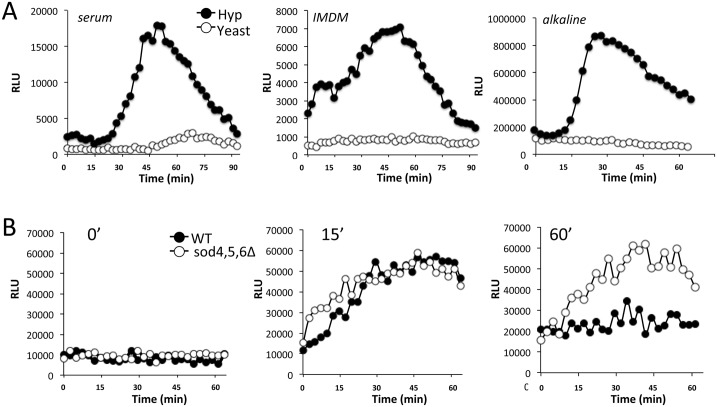
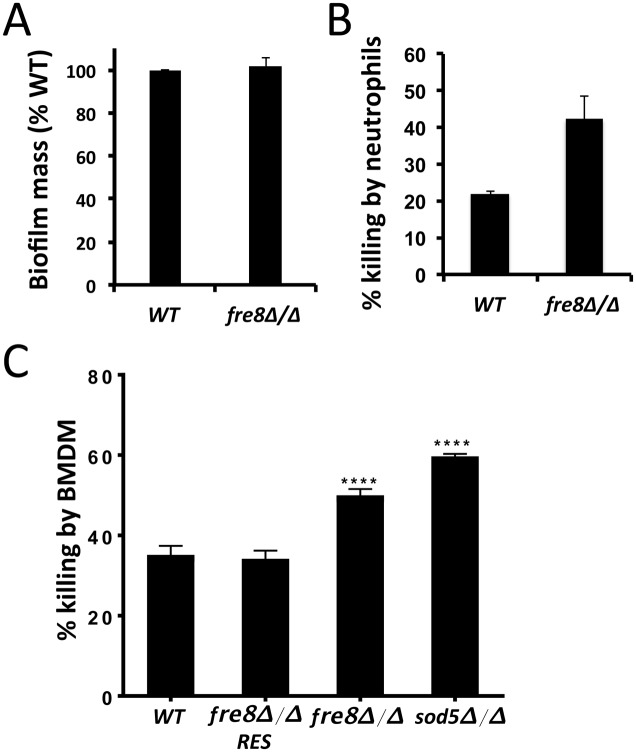
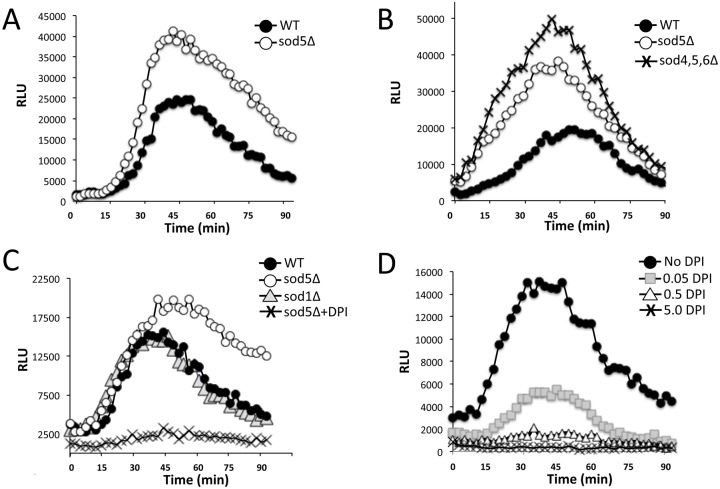
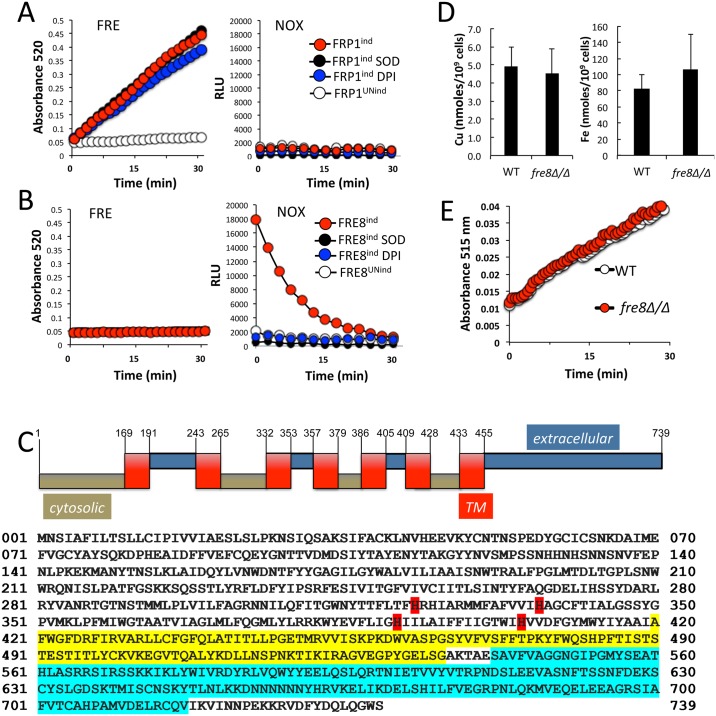
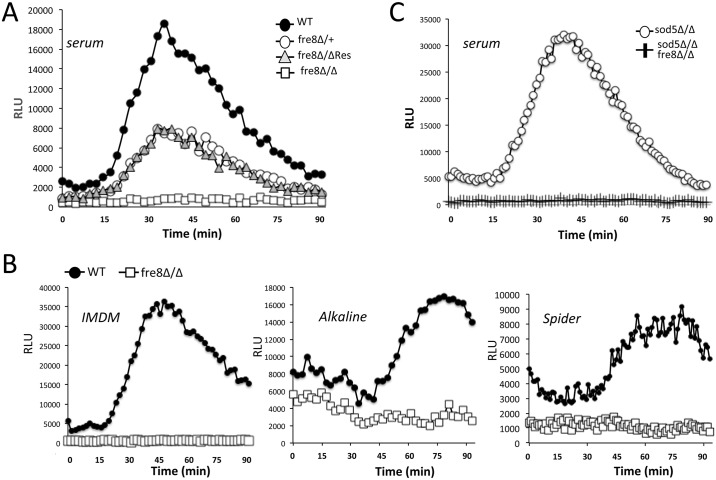
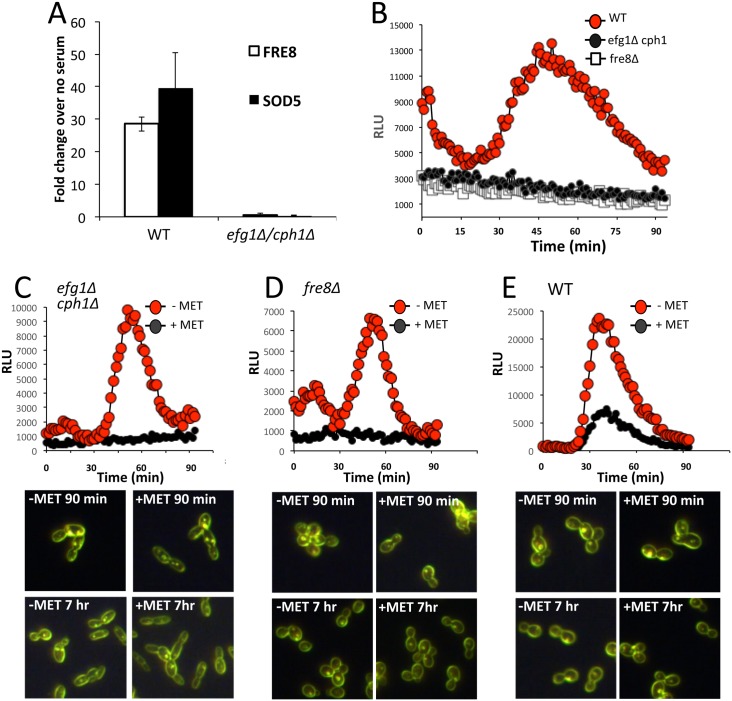
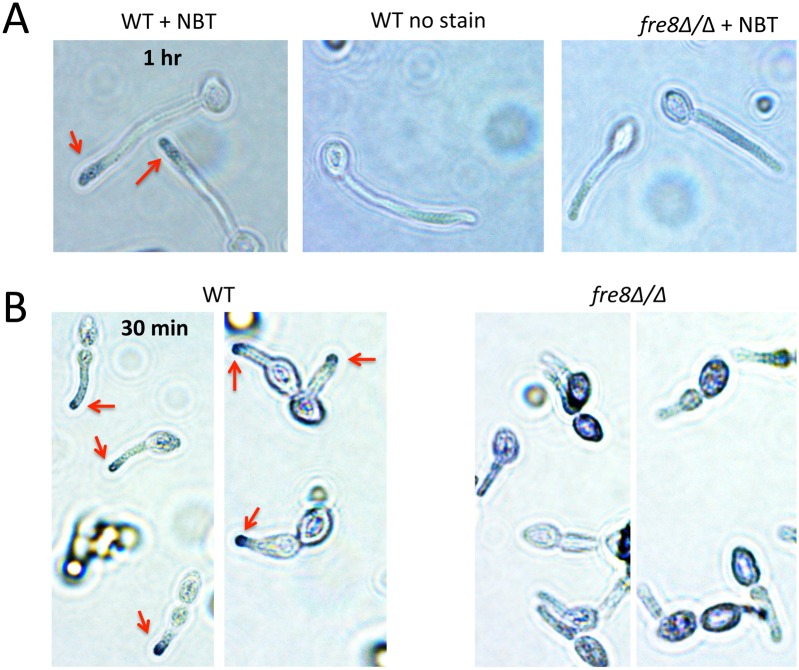
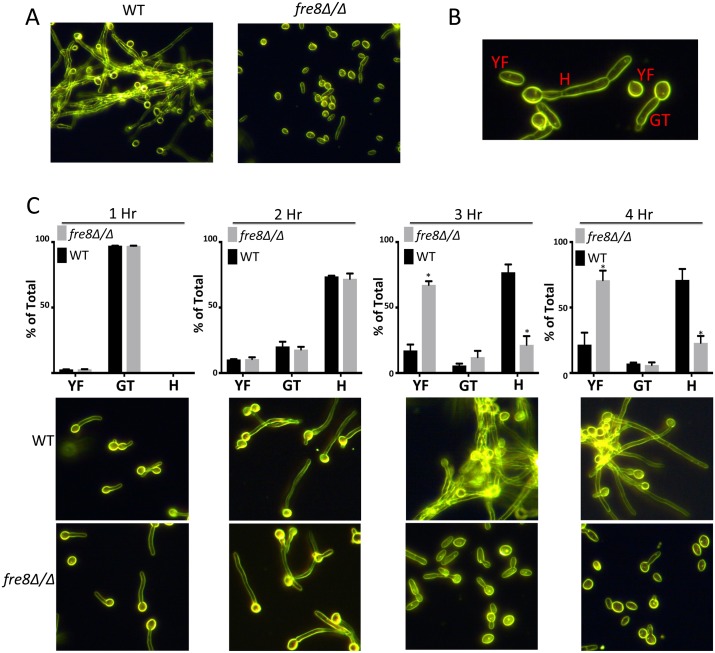
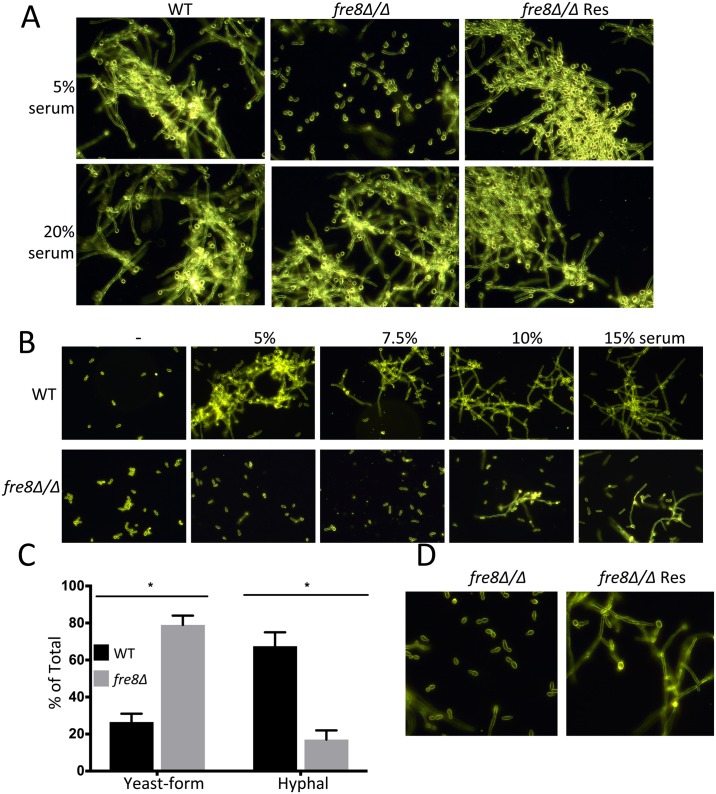
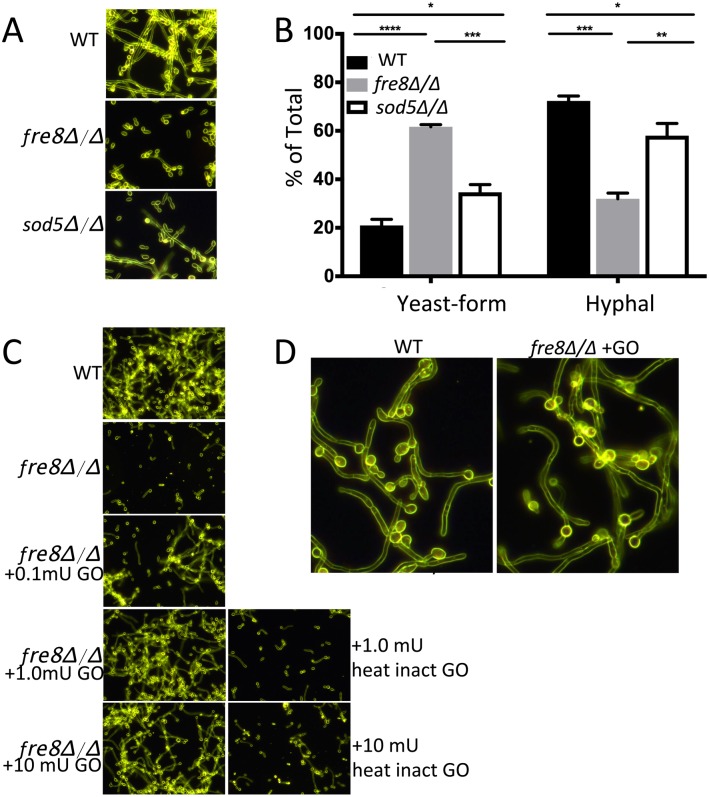
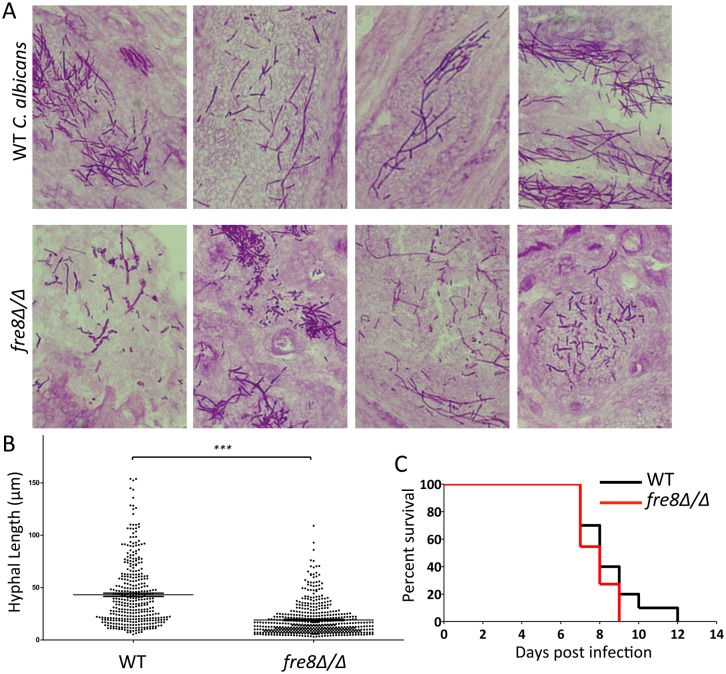
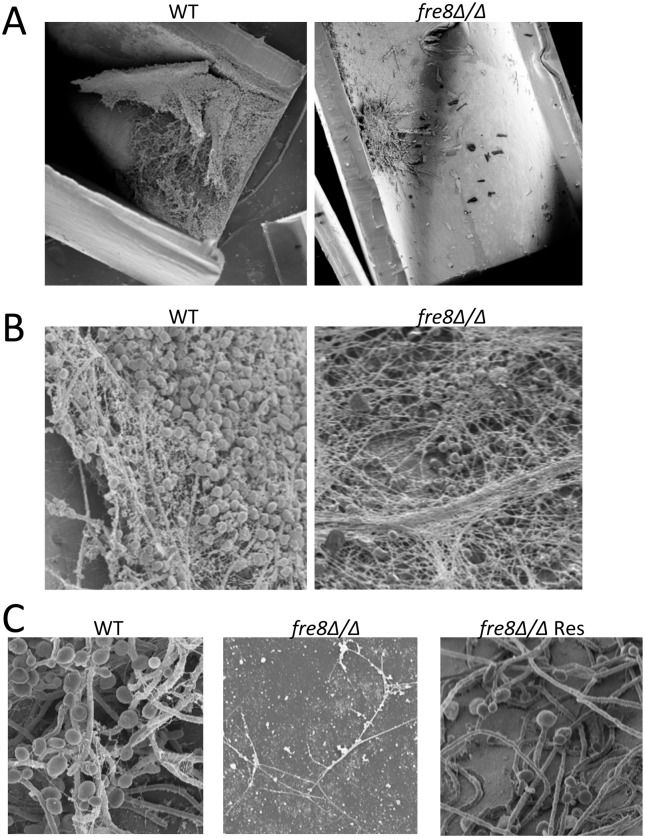
Until recently, NADPH oxidase (NOX) enzymes were thought to be a property of multicellularity, where the reactive oxygen species (ROS) produced by NOX acts in signaling processes or in attacking invading microbes through oxidative damage. We demonstrate here that the unicellular yeast and opportunistic fungal pathogen Candida albicans is capable of a ROS burst using a member of the NOX enzyme family, which we identify as Fre8. C. albicans can exist in either a unicellular yeast-like budding form or as filamentous multicellular hyphae or pseudohyphae, and the ROS burst of Fre8 begins as cells transition to the hyphal state. Fre8 is induced during hyphal morphogenesis and specifically produces ROS at the growing tip of the polarized cell. The superoxide dismutase Sod5 is co-induced with Fre8 and our findings are consistent with a model in which extracellular Sod5 acts as partner for Fre8, converting Fre8-derived superoxide to the diffusible H2O2 molecule. Mutants of fre8Δ/Δ exhibit a morphogenesis defect in vitro and are specifically impaired in development or maintenance of elongated hyphae, a defect that is rescued by exogenous sources of H2O2. A fre8Δ/Δ deficiency in hyphal development was similarly observed in vivo during C. albicans invasion of the kidney in a mouse model for disseminated candidiasis. Moreover C. albicans fre8Δ/Δ mutants showed defects in a rat catheter model for biofilms. Together these studies demonstrate that like multicellular organisms, C. albicans expresses NOX to produce ROS and this ROS helps drive fungal morphogenesis in the animal host.
直到最近,人们还认为NADPH氧化酶(NOX)是多细胞生物所特有的,其中NOX产生的活性氧(ROS)在信号传导过程中发挥作用,或通过氧化损伤攻击入侵的微生物。我们在此证明,单细胞酵母和机会性真菌病原体白色念珠菌能够利用NOX酶家族的一个成员产生ROS爆发,我们将其鉴定为Fre8。白色念珠菌可以以单细胞酵母样出芽形式存在,也可以以丝状多细胞菌丝或假菌丝形式存在,并且Fre8的ROS爆发始于细胞向菌丝状态转变时。Fre8在菌丝形态发生过程中被诱导,并在极化细胞的生长尖端特异性地产生ROS。超氧化物歧化酶Sod5与Fre8共同被诱导,我们的发现与一个模型一致,即细胞外的Sod5作为Fre8的伙伴,将Fre8衍生的超氧化物转化为可扩散的H2O2分子。fre8Δ/Δ突变体在体外表现出形态发生缺陷,在细长菌丝的发育或维持方面尤其受损,这种缺陷可通过外源性H2O2得到挽救。在播散性念珠菌病小鼠模型中,白色念珠菌入侵肾脏的过程中,体内也同样观察到fre8Δ/Δ在菌丝发育方面的缺陷。此外,白色念珠菌fre8Δ/Δ突变体在大鼠导管生物膜模型中表现出缺陷。这些研究共同表明,与多细胞生物一样,白色念珠菌表达NOX以产生ROS,并且这种ROS有助于驱动真菌在动物宿主中的形态发生。