Department of Neuroscience, Genentech, Inc., South San Francisco, CA
Department of Neuroscience, Genentech, Inc., South San Francisco, CA.
J Cell Biol. 2018 Feb 5;217(2):459-472. doi: 10.1083/jcb.201709069. Epub 2017 Dec 1.
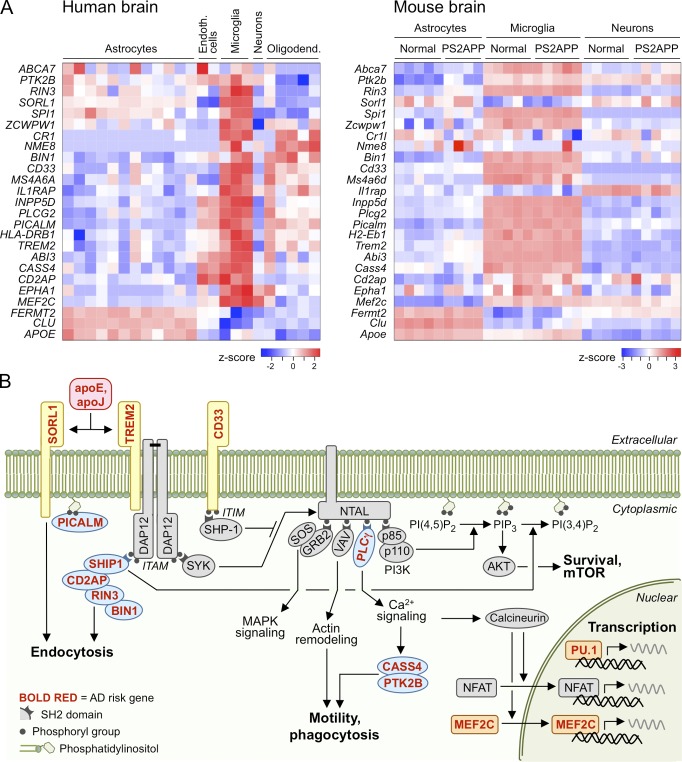
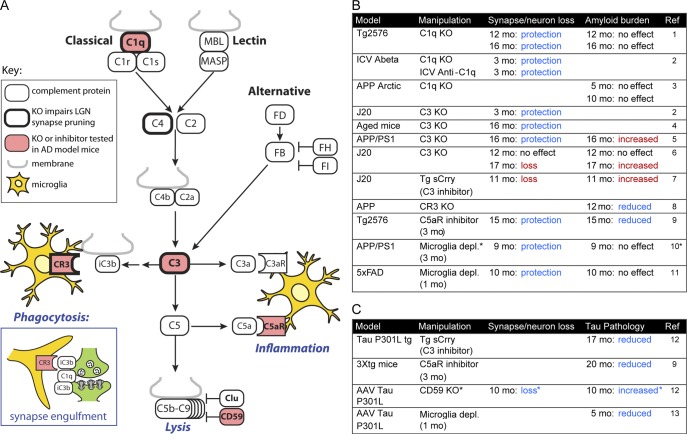
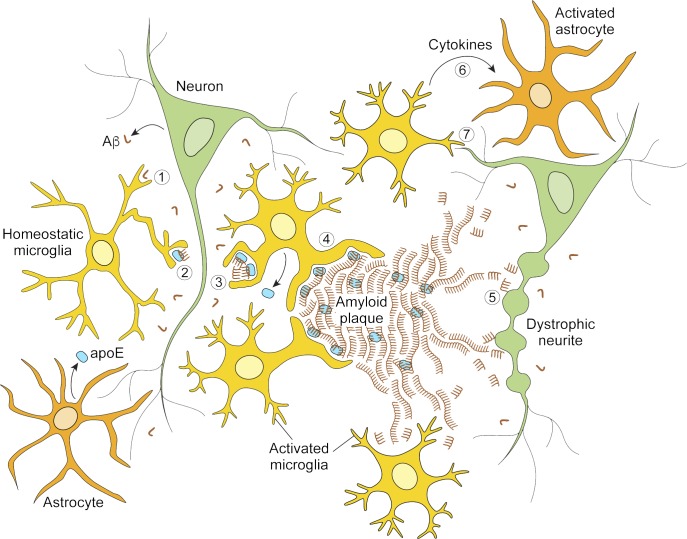
Proliferation and activation of microglia in the brain, concentrated around amyloid plaques, is a prominent feature of Alzheimer's disease (AD). Human genetics data point to a key role for microglia in the pathogenesis of AD. The majority of risk genes for AD are highly expressed (and many are selectively expressed) by microglia in the brain. There is mounting evidence that microglia protect against the incidence of AD, as impaired microglial activities and altered microglial responses to β-amyloid are associated with increased AD risk. On the other hand, there is also abundant evidence that activated microglia can be harmful to neurons. Microglia can mediate synapse loss by engulfment of synapses, likely via a complement-dependent mechanism; they can also exacerbate tau pathology and secrete inflammatory factors that can injure neurons directly or via activation of neurotoxic astrocytes. Gene expression profiles indicate multiple states of microglial activation in neurodegenerative disease settings, which might explain the disparate roles of microglia in the development and progression of AD pathology.
大脑中微胶质细胞的增殖和激活,集中在淀粉样斑块周围,是阿尔茨海默病(AD)的一个显著特征。人类遗传学数据表明,微胶质细胞在 AD 的发病机制中起着关键作用。大多数 AD 的风险基因在大脑中的微胶质细胞中高度表达(许多是选择性表达)。越来越多的证据表明,微胶质细胞可以预防 AD 的发生,因为微胶质细胞的活动受损和对β-淀粉样蛋白的反应改变与 AD 风险的增加有关。另一方面,也有大量证据表明,激活的微胶质细胞可能对神经元有害。微胶质细胞可以通过吞噬突触来介导突触的丧失,可能通过补体依赖性机制;它们还可以加剧 tau 病理学,并分泌炎症因子,直接或通过激活神经毒性星形胶质细胞来损伤神经元。基因表达谱表明,在神经退行性疾病的情况下,微胶质细胞存在多种激活状态,这可能解释了微胶质细胞在 AD 病理发展和进展中的不同作用。