Department of Physical Performance, Norwegian School of Sport Sciences, Ullevål Stadion, Post Box 4014, 0806, Oslo, Norway.
Eur J Appl Physiol. 2018 Feb;118(2):271-281. doi: 10.1007/s00421-017-3767-x. Epub 2017 Dec 1.
In elite cross-country skiing, double poling is used in different terrain. This study compared O-cost and kinematics during double poling with four different pole lengths [self-selected (SS), SS - 5 cm, SS + 5 cm, SS + 10 cm] at Low versus Moderate incline.
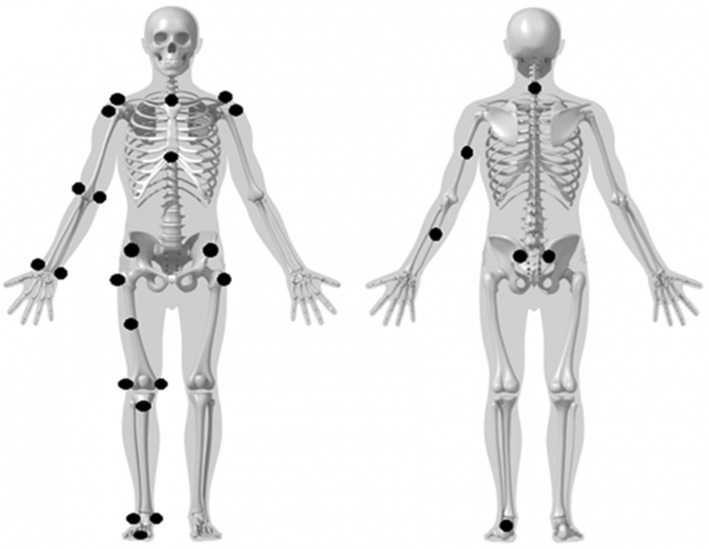
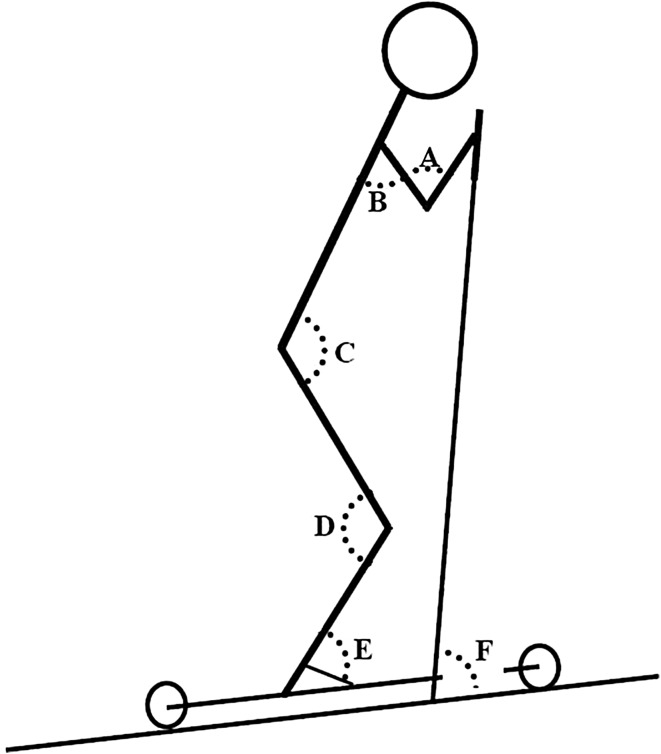
Thirteen highly trained male cross-country skiers (mean ± SD 23 ± 3 years; 182 ± 4 cm; 77 ± 6 kg) completed eight submaximal trials with roller skis on a treadmill at two conditions: "Low incline" (1.7°; 4.5 m s) and "Moderate incline" (4.5°; 2.5 m s) with each of the four pole lengths. O-cost and 3D body kinematics were assessed in each trial.
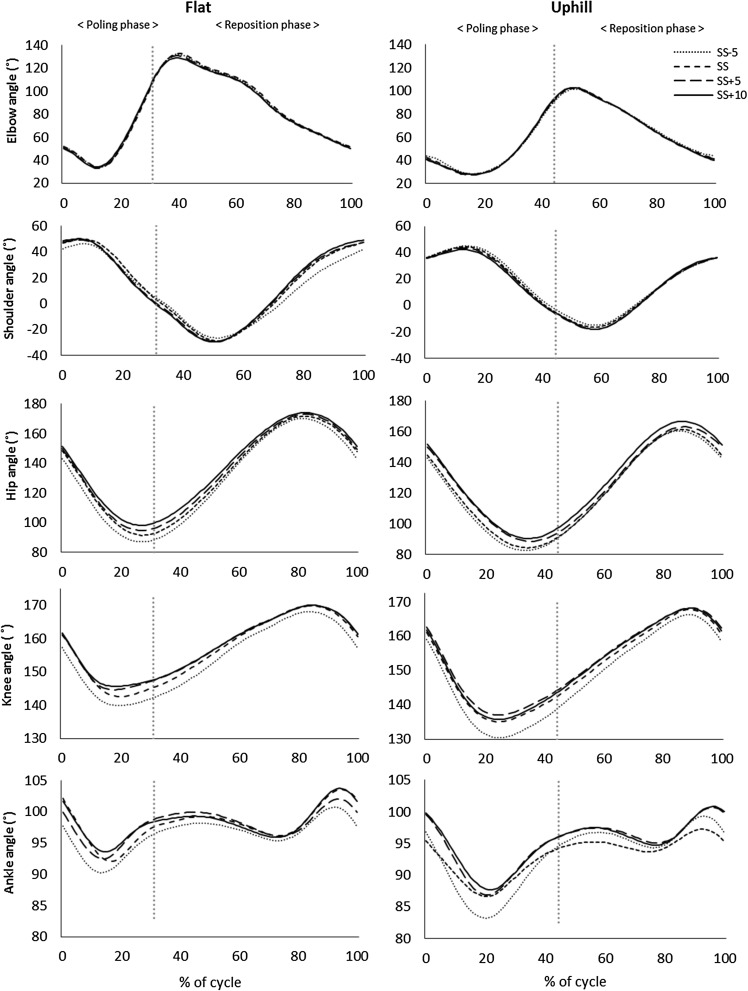
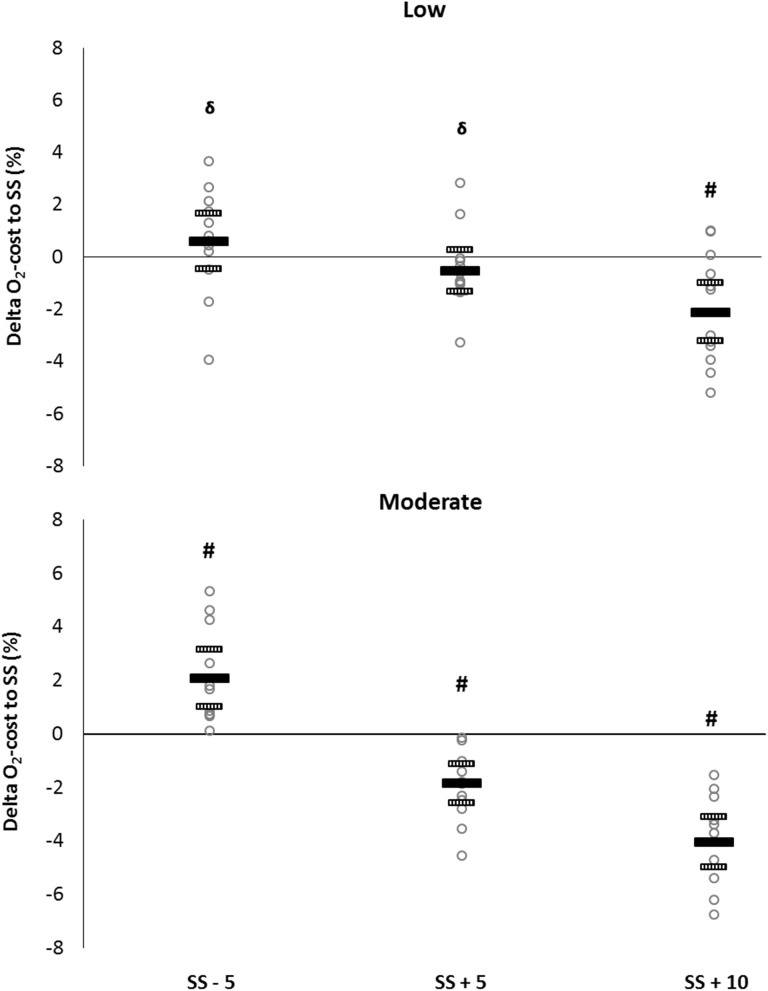
In Low incline, SS + 10 cm induced a lower O-cost than all the other pole lengths [P < 0.05; effect size (ES) 0.5-0.8], whereas no differences were found between the remaining pole lengths (P > 0.05; ES 0.2-0.4). In Moderate incline, significant differences between all pole lengths were found for O-cost, with SS - 5 cm > SS > SS + 5 cm > SS + 10 cm (P < 0.05; ES 0.6-1.8). The relative differences in O-cost between SS and the other pole lengths were greater in Moderate incline than Low incline (SS - 5 cm; 1.5%, ES 0.8, SS + 5 cm; 1.3%, ES 1.0, and SS + 10 cm; 1.9%, ES 1.0, all P < 0.05). No difference was found in cycle, poling or reposition times between pole lengths. However, at both conditions a smaller total vertical displacement of center of mass was observed with SS + 10 cm compared to the other pole lengths.
Increasing pole length from SS - 5 cm to SS + 10 cm during double poling induced lower O-cost and this advantage was greater in Moderate compared to Low incline.
在精英越野滑雪中,双支撑技术用于不同的地形。本研究比较了在低坡度和中坡度下,使用四种不同杆长(自选杆长[SS]、SS-5cm、SS+5cm、SS+10cm)进行双支撑时的 O 成本和运动学。
13 名受过高度训练的男性越野滑雪运动员(平均年龄 ± 标准差 23 ± 3 岁;182 ± 4 厘米;77 ± 6 公斤)在两种条件下使用跑步机上的滚轮完成了 8 次次最大试验:“低坡度”(1.7°;4.5m/s)和“中坡度”(4.5°;2.5m/s),每种条件下使用四种杆长中的一种。在每次试验中评估 O 成本和 3D 身体运动学。
在低坡度下,SS+10cm 的 O 成本低于其他所有杆长[P<0.05;效应量(ES)0.5-0.8],而其余杆长之间没有差异(P>0.05;ES 0.2-0.4)。在中坡度下,所有杆长的 O 成本存在显著差异,SS-5cm>SS>SS+5cm>SS+10cm(P<0.05;ES 0.6-1.8)。在中坡度下,SS 与其他杆长之间 O 成本的相对差异大于低坡度(SS-5cm;1.5%,ES 0.8,SS+5cm;1.3%,ES 1.0,SS+10cm;1.9%,ES 1.0,均 P<0.05)。在周期、支撑和重新定位时间方面,杆长之间没有差异。然而,在两种条件下,与其他杆长相比,SS+10cm 的质心总垂直位移较小。
在双支撑过程中,将杆长从 SS-5cm 增加到 SS+10cm 会降低 O 成本,并且在中坡度下与低坡度相比,这种优势更大。