Wu Zhai, Xu Ye, Cai Minggang, Cheng Sha-Yen, Chen Huorong, Huang Dongren, Chen Kai, Lin Yan, Li Tianyao, Liu Mengyang, Deng Hengxiang, Ni Minjie, Ke Hongwei
Fujian Provincial Key Laboratory for Coastal Ecology and Environmental Studies, Xiamen University, Xiamen 361102, China.
Coastal and Ocean Management Institute, Xiamen University, Xiamen 361102, China.
J Toxicol. 2017;2017:2458293. doi: 10.1155/2017/2458293. Epub 2017 Oct 19.
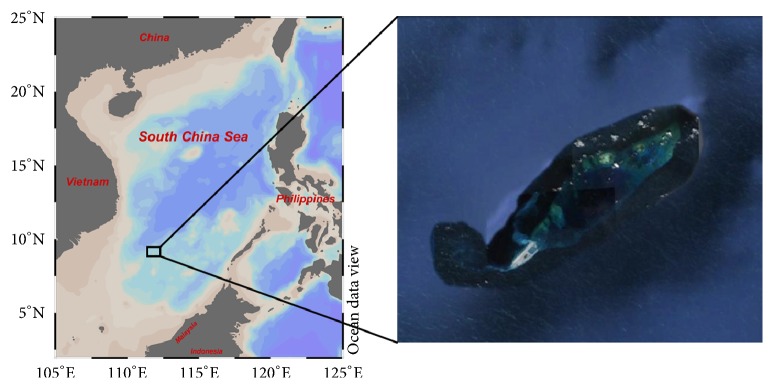
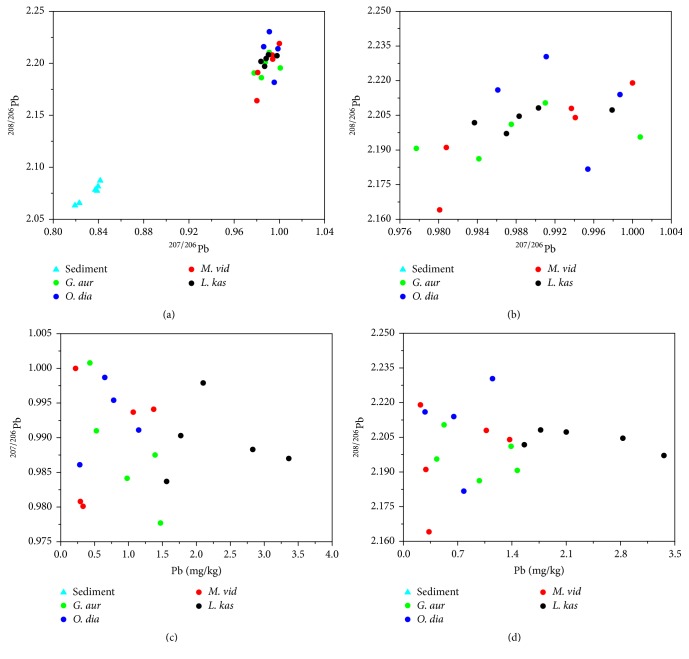
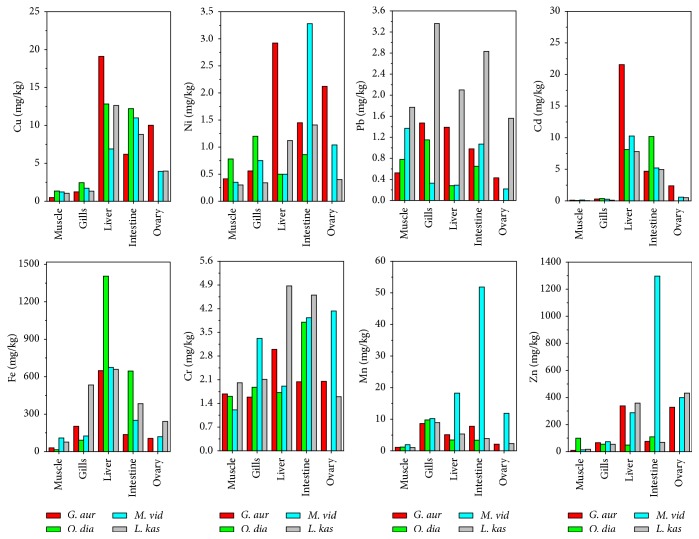
In order to assess the bioaccumulation of metals associated with gender, tissues, and their potential ecological risk, four species of fish were collected from the Yongshu Island in the Southern South China Sea. Metals and stable Pb isotopes in their tissues (muscle, gill, liver, intestine, and ovary) were determined. The concentrations of metals (mg/kg, dry weight) in these species were ND-21.60 (Cd), 1.21-4.87 (Cr), 0.42-22.4 (Cu), 1.01-51.8 (Mn), 0.30-3.28 (Ni), 6.04-1.29 × 10 (Zn), 14.89-1.40 × 10 (Fe), and 0.22-3.36 (Pb). In general, the liver and intestine absorbed more metals than the other tissues. Metals accumulation can be influenced by gender and feeding behavior and in fact, female fish and dietary exposure are more prone to accumulate metals. In addition, Pb isotopic ratios indicated that all species had significant biological fractionation, which may not make them good tracers for source identification. The metal concentrations of most samples were lower than the national standard values of the FAO (USA), which suggested that human consumption of these species may not cause health risks. However, since the surrounding areas are developing rapidly, the potential environmental risk of metals will intensify and should receive more attention.
为了评估与性别、组织相关的金属生物累积及其潜在生态风险,从中国南海南部的永暑岛采集了四种鱼类。测定了它们组织(肌肉、鳃、肝脏、肠道和卵巢)中的金属和稳定铅同位素。这些物种中金属的浓度(mg/kg,干重)分别为:镉(未检出-21.60)、铬(1.21-4.87)、铜(0.42-22.4)、锰(1.01-51.8)、镍(0.30-3.28)、锌(6.04-1.29×10)、铁(14.89-1.40×10)和铅(0.22-3.36)。总体而言,肝脏和肠道比其他组织吸收更多的金属。金属积累会受到性别和摄食行为的影响,实际上,雌鱼和饮食暴露更容易积累金属。此外,铅同位素比值表明所有物种都有显著的生物分馏,这可能使它们不太适合作为源识别的良好示踪剂。大多数样本的金属浓度低于粮农组织(美国)的国家标准值,这表明人类食用这些物种可能不会造成健康风险。然而,由于周边地区发展迅速,金属的潜在环境风险将会加剧,应受到更多关注。