Berdis Anthony J
Department of Chemistry, Cleveland State University, Cleveland, OH, United States.
Center for Gene Regulation in Health and Disease, Cleveland State University, Cleveland, OH, United States.
Front Mol Biosci. 2017 Nov 21;4:78. doi: 10.3389/fmolb.2017.00078. eCollection 2017.
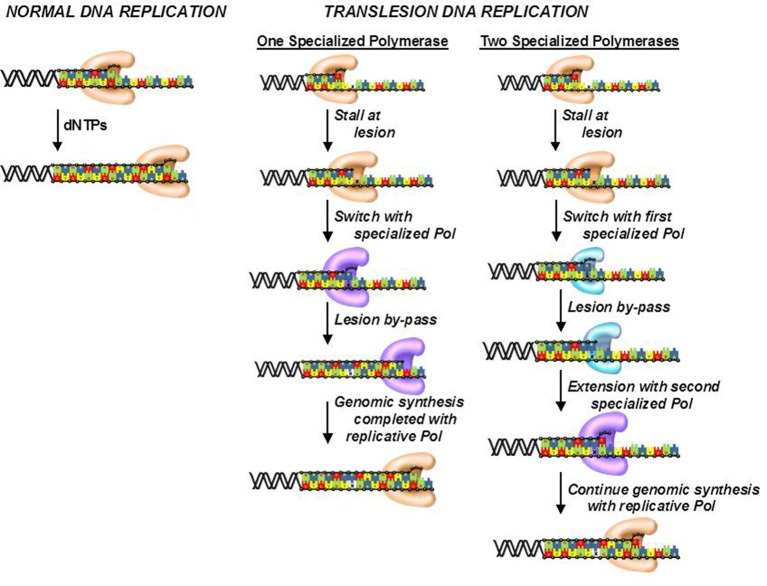
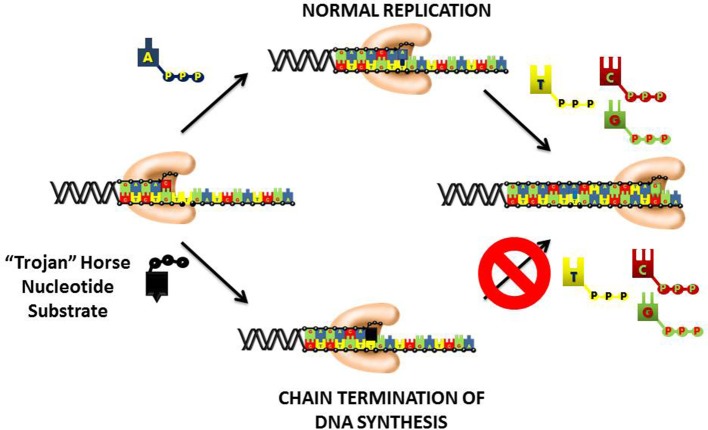
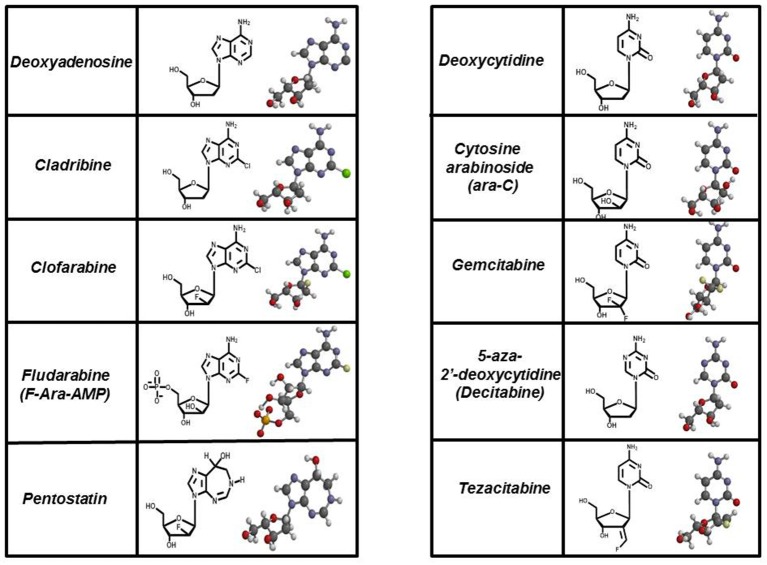
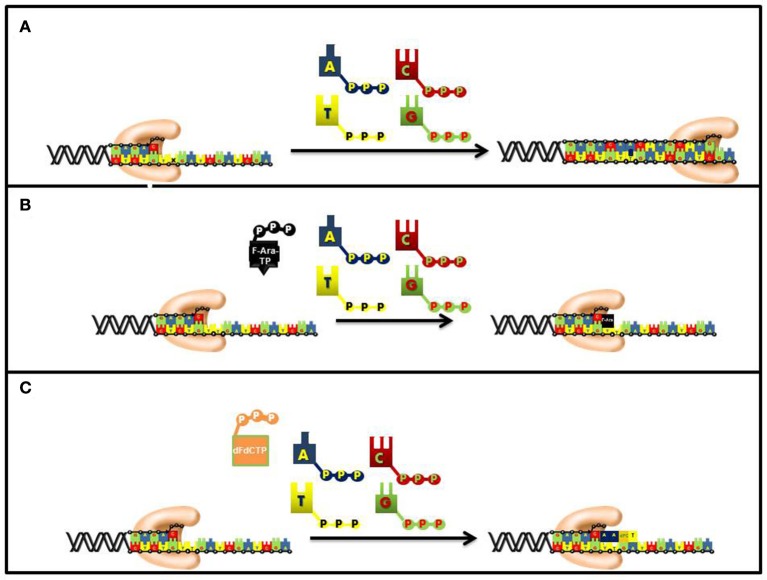
Inhibiting DNA synthesis is an important therapeutic strategy that is widely used to treat a number of hyperproliferative diseases including viral infections, autoimmune disorders, and cancer. This chapter describes two major categories of therapeutic agents used to inhibit DNA synthesis. The first category includes purine and pyrmidine nucleoside analogs that directly inhibit DNA polymerase activity. The second category includes DNA damaging agents including cisplatin and chlorambucil that modify the composition and structure of the nucleic acid substrate to indirectly inhibit DNA synthesis. Special emphasis is placed on describing the molecular mechanisms of these inhibitory effects against chromosomal and mitochondrial DNA polymerases. Discussions are also provided on the mechanisms associated with resistance to these therapeutic agents. A primary focus is toward understanding the roles of specialized DNA polymerases that by-pass DNA lesions produced by DNA damaging agents. Finally, a section is provided that describes emerging areas in developing new therapeutic strategies targeting specialized DNA polymerases.
抑制DNA合成是一种重要的治疗策略,广泛用于治疗多种过度增殖性疾病,包括病毒感染、自身免疫性疾病和癌症。本章介绍了用于抑制DNA合成的两大类治疗药物。第一类包括直接抑制DNA聚合酶活性的嘌呤和嘧啶核苷类似物。第二类包括DNA损伤剂,如顺铂和苯丁酸氮芥,它们通过改变核酸底物的组成和结构来间接抑制DNA合成。重点描述了这些抑制作用针对染色体和线粒体DNA聚合酶的分子机制。还讨论了与这些治疗药物耐药性相关的机制。主要关注点是了解特殊DNA聚合酶在绕过DNA损伤剂产生的DNA损伤方面的作用。最后,有一部分内容描述了针对特殊DNA聚合酶开发新治疗策略的新兴领域。