Motamedi Maryam, Akbarzadeh Mohammad Ali, Safari Saeed, Shahhoseini Mehrnoosh
Emergency Department, Shohadaye Tajrish Hospital, Shahid Beheshti University of Medical Sciences, Tehran, Iran.
Cardiovascular Research Center, Modarres Hospital, Shahid Beheshti University of Medical Sciences, Tehran, Iran.
Emerg (Tehran). 2017;5(1):e81. doi: 10.22037/emergency.v5i1.18805. Epub 2017 Oct 15.
The use of vagal nerve stimulation is identified as a proper treatment option in patients with stable supraventricular tachycardia (SVT). This study aimed to assess the success of Valsalva maneuver via a handmade device in reversion of SVT.
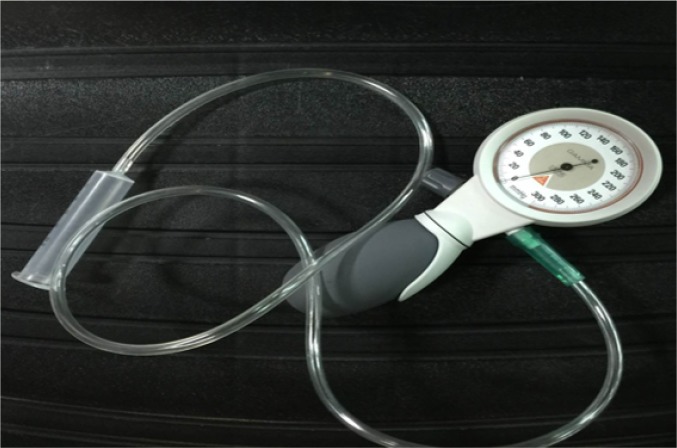
In this quasi experimental study, using a handmade device, vagus nerve stimulation was performed for SVT patients presenting to emergency department or cardiac intervention unit and the success rate and its related factors were assessed.
100 patients with the mean age of 53.05 ± 13.70 years were studied (67% female). 12 (12%) cases were unable to do the maneuver. Out of the 88 (88.0%) patients who could perform the maneuver, 75 (85.2%) cases were unsuccessful. Dysrhythmia was controlled in 6 (6.8%) cases on the first attempt and in 7 (8.0%) cases on the second one (14.8% total success rate). 12 of the 13 cases (92.3%) with successful maneuver had history of SVT (p = 0.031). There was not any significant association between success rate and sex (p = 0.084), age (p = 0.744), or other medical histories (p ≥ 0.05).
Based on the results of the present study, the success rate of Valsalva maneuver with the mentioned handmade device was calculated to be 14.8%. The only independent related factor of successful reversion was SVT history.
迷走神经刺激被认为是稳定型室上性心动过速(SVT)患者的一种合适治疗选择。本研究旨在评估通过一种自制装置进行瓦尔萨尔瓦动作(Valsalva maneuver)转复SVT的成功率。
在这项准实验研究中,使用自制装置对就诊于急诊科或心脏介入科的SVT患者进行迷走神经刺激,并评估成功率及其相关因素。
共研究了100例患者,平均年龄为53.05±13.70岁(67%为女性)。12例(12%)患者无法完成该动作。在能够完成该动作的88例(88.0%)患者中,75例(85.2%)转复失败。首次尝试时有6例(6.8%)患者的心律失常得到控制,第二次尝试时有7例(8.0%)患者得到控制(总成功率为14.8%)。13例转复成功的患者中有12例(92.3%)有SVT病史(p = 0.031)。成功率与性别(p = 0.084)、年龄(p = 0.744)或其他病史(p≥0.05)之间无显著关联。
根据本研究结果,使用上述自制装置进行瓦尔萨尔瓦动作的成功率为14.8%。成功转复的唯一独立相关因素是SVT病史。