Wang Yu-Jie, Li Lin, Song Wei-Juan, Zhou Yan-Jun, Cao Meng-Da, Zuo Xiang-Rong, Wei Ji-Fu
Research Division of Clinical Pharmacology, The First Affiliated Hospital of Nanjing Medical University, Nanjing, Jiangsu, China.
Department of Critical Care Medicine, The First Affiliated Hospital of Nanjing Medical University, Nanjing, Jiangsu, China.
Oncotarget. 2017 Oct 13;8(53):90796-90807. doi: 10.18632/oncotarget.21822. eCollection 2017 Oct 31.
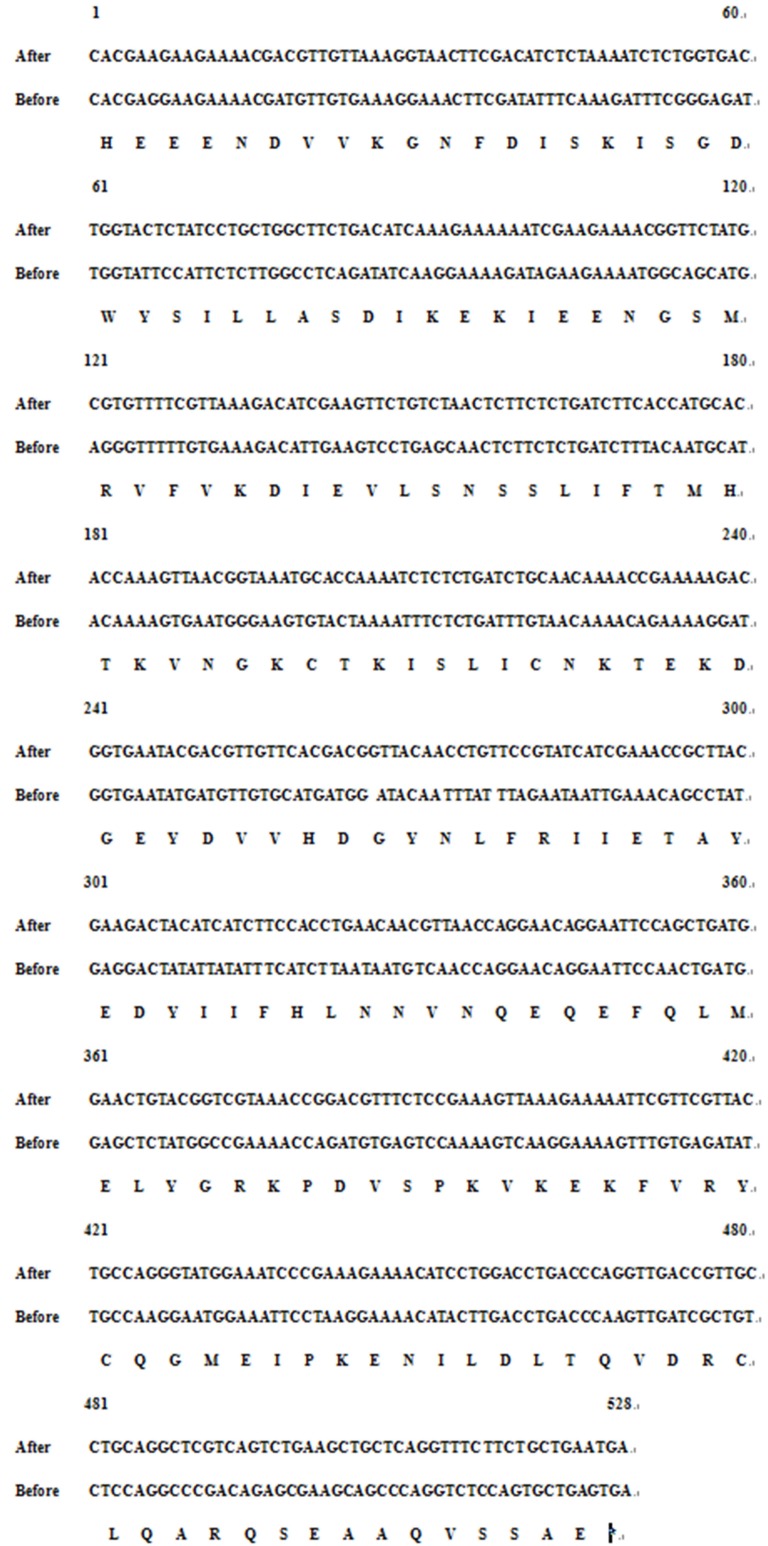
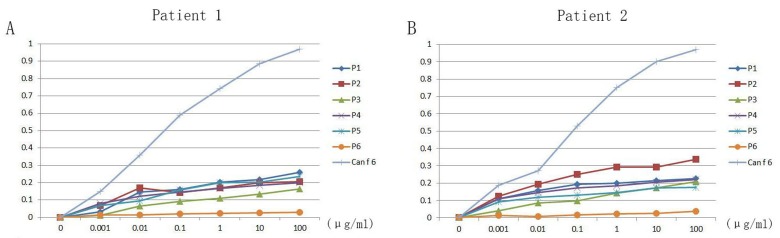
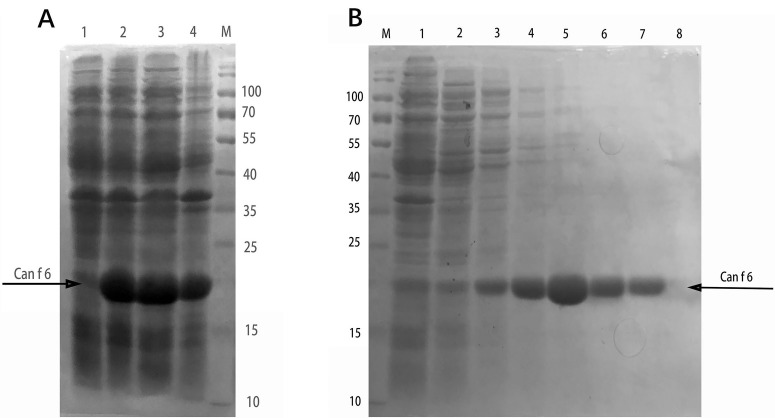
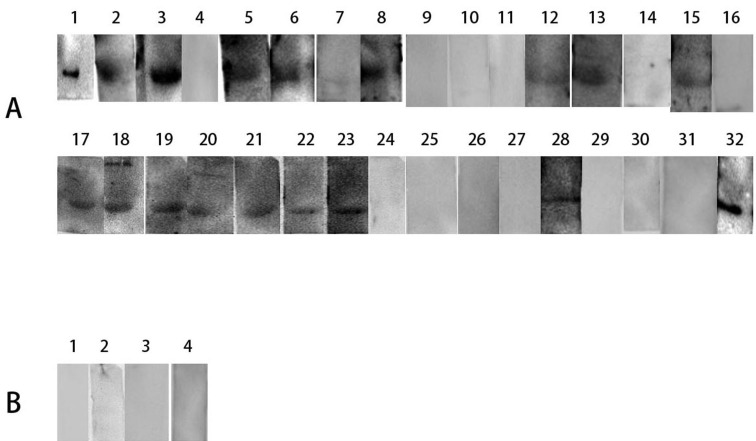
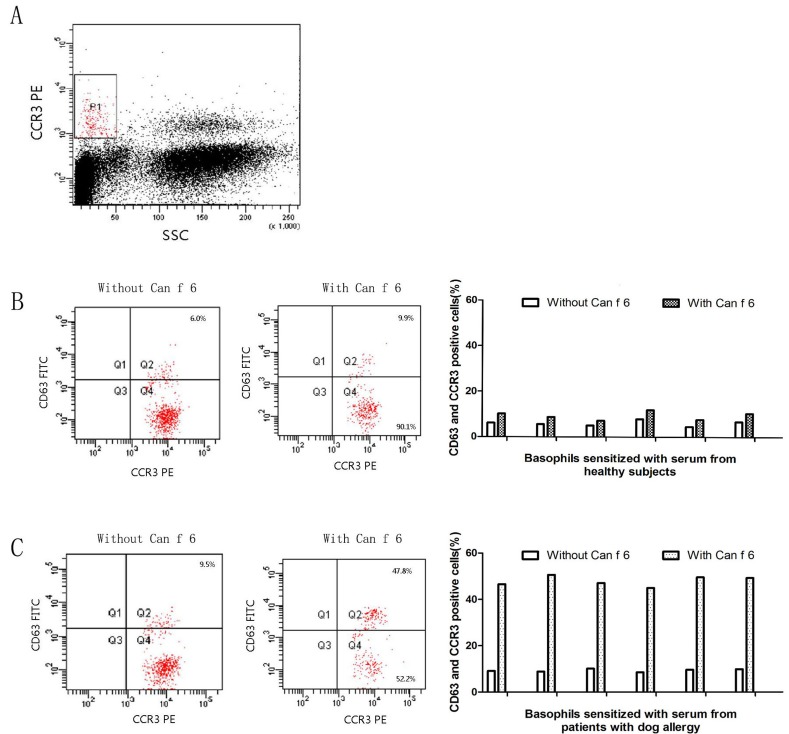
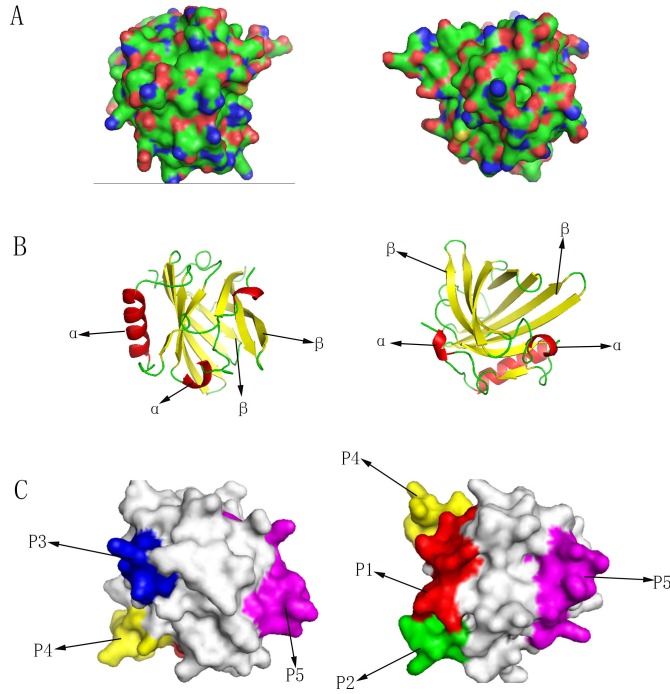
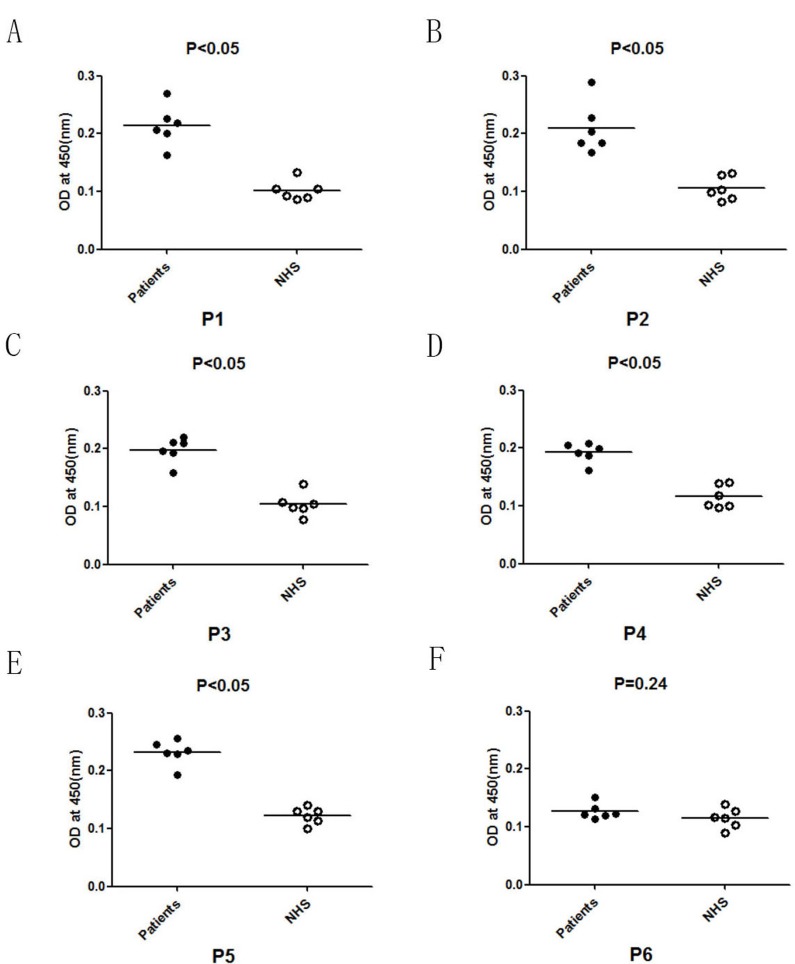
Dog allergy is common worldwide. However, the allergenicity of dog allergy is still unclear in China as well as in special group, such as children. In this study, we chose Can f 6, a major dog allergen which belongs to the lipocalin to study its allergenicity in Chinese dog allergic children. Can f 6 gene was subcloned into pET-28a vector and transformed into BL21 (DE3) cells for expression. The recombinant Can f 6 was purified by nickel affinity chromatography, identified by SDS-PAGE, and tested for its allergenicity by Western blot with sera and basophil activation test. Secondary structures, B cell epitopes and homology modeling of Can f 6 were predicted by using a series of bioinformatical approaches. And the verification of B cell epitopes was detected by ELISA. The recombinant allergen showed an explicit band with the molecular weight of 20 kDa by SDS-PAGE. Sera from 56.3 % (18/32) of dog-allergic children patients reacted with Can f 6. The induction of the expression of CD63 and CCR3 of dog allergic children in passively sensitized basophils was up to approximately 5.0 times higher than healthy subjects. The secondary structure of Can f 6 contains 3 α-helices, 9 β-sheets and random coils. Five B cell epitopes of Can f 6 were predicted and were confirmed successfully by ELISA. The results showed Can f 6 is a major allergen in Chinese children, which provides a basis for further study of Can f 6 in diagnosis and treatment of symptoms in children in China. The structural information of Can f 6 will help to form a foundation for the future design of vaccines and therapies for Can f 6 related allergies.
犬类过敏在全球范围内都很常见。然而,在中国以及儿童等特殊群体中,犬类过敏的致敏性仍不明确。在本研究中,我们选取了犬主要变应原Can f 6(属于脂质运载蛋白)来研究其在中国犬类过敏儿童中的致敏性。将Can f 6基因亚克隆到pET - 28a载体中,并转化到BL21(DE3)细胞中进行表达。重组Can f 6通过镍亲和层析法纯化,经SDS - PAGE鉴定,并通过血清免疫印迹和嗜碱性粒细胞活化试验检测其致敏性。使用一系列生物信息学方法预测Can f 6的二级结构、B细胞表位和同源建模。通过ELISA检测B细胞表位的验证情况。经SDS - PAGE分析,重组变应原呈现出一条分子量为20 kDa的清晰条带。56.3%(18/32)的犬类过敏儿童患者血清与Can f 6发生反应。在被动致敏的嗜碱性粒细胞中,犬类过敏儿童CD63和CCR3表达的诱导水平比健康受试者高出约5.0倍。Can f 6的二级结构包含3个α螺旋、9个β折叠和无规卷曲。预测了Can f 6的5个B细胞表位,并通过ELISA成功验证。结果表明Can f 6是中国儿童的主要变应原,为进一步研究Can f 6在中国儿童症状诊断和治疗中的应用提供了依据。Can f 6的结构信息将有助于为未来针对Can f 6相关过敏的疫苗和治疗方法设计奠定基础。